Posted in Trips at 12:00 on 13 February 2023
On the trip back from St Margaret’s Hope to Scotland (which Orcadians, rather than ‘the mainland,’ call the nearest part of Britain – to them ‘the mainland’ is Orkney’s largest island) we passed the gun batteries on South Ronaldsay.
These are I think called the Hoxa Battery.
There were gun emplacements here in both World Wars to protect Scapa Flow. These remains have the look of World War two constructions.


In 2017 I photographed them from a bit further away.
No Comments »
Posted in History, Museums, Trips at 20:00 on 29 November 2017
Interior exhibits. On entering there is a display of photographs of ships in Scapa Flow and pieces of naval equipment/relics from both World Wars.
There was also a model of Scapa Flow showing dispositions of the interned German High Seas Fleet ships after WW1 but before the Grand Scuttle.
Island of Hoy to right, Fara left middle, Flotta towards top:-

Island of Hoy to bottom left, Rysa Little to bottom right, Fara top middle:-

Island of Hoy to bottom (Lyness to right,) Fara in middle ground, Rysa Little to left. Flotta top right:-

A naval torpedo, part cutaway:-

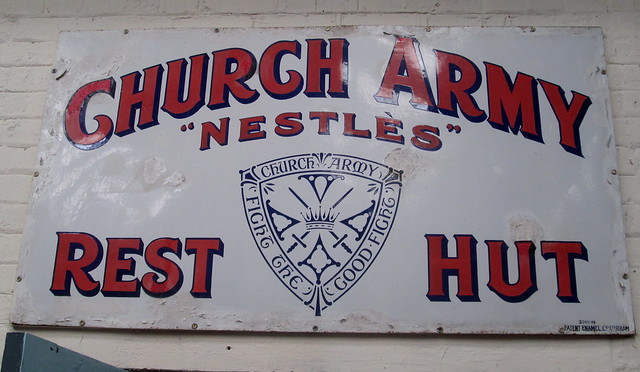
A typical 1930s room:-
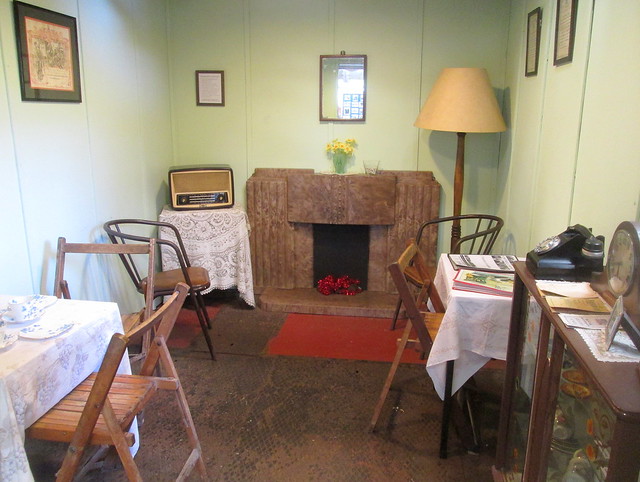
Compton Mackenzie‘s battledress! Apparently he owned a couple of the Orkney islands, was stationed there and donated this uniform:-
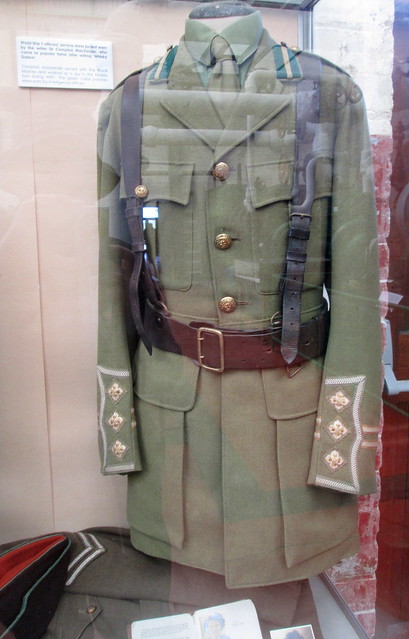
Church Army Rest Hut sign. This was above the present day café inside which we had a very nice cake and coffee. It was done out in 1940s style. Unfortunately it was so well patronised I felt unable to take a photo. I had meant to go back for one but the ferry departure time crept up on us before I could:-
No Comments »
Posted in History, Reading Reviewed at 12:00 on 23 September 2017
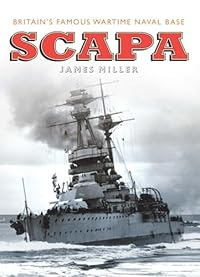
Britain’s Famous Wartime Naval Base
Birlinn, 2000, 191 p.
As its subtitle implies this is a short history of the use of Scapa Flow in Orkney as a base for British naval operations. These had marginal beginnings in the Napoleonic Wars but the emergence of Germany as a potential enemy and a threat to North Sea and Atlantic shipping during the run up to the Great War led to proposals for the main British fleet to be stationed there. The outbreak of war saw these brought to fruition and Scapa and Orkney quickly became a home to thousands of men – and in World War 2 many women, who on their nights out were apparently strictly chaperoned. The locals were also in great demand for dances and such. Unlike in the rest of the UK in wartime food was reasonably plentiful on Orkney due to its fertility. Eggs were in good supply and there was never a shortage of mutton!
The book is replete with photographs, with a readily accessible text. The caption to a photo of the men of the Ness Battery in front of a hut mentions the strap designed to hold the hut down during strong winds.
The main incidents are all here; the HMS Vanguard explosion, the loss of HMS Hampshire, the collision of HMS Opal and HMS Narborough, the internment of the German High Seas Fleet in 1918, its Grand Scuttle in 1919, the sinking of HMS Royal Oak, the building of the Churchill Barriers and the Italian Chapel. A quick, easy history of the UK naval presence in Orkney.
Pedant’s corner:- fiand (find – all five instances of this word in this book were spelled in that odd way,) Grand Fleet commander Admiral Sir George Callaghan (is referred to thereafter as Cunningham,) stripped the ships off anything of use (stripped the ships of anything of use.)
No Comments »
Posted in Trips at 20:00 on 27 August 2017
Hoy and a boat on Scapa Flow:-

Hoy from ferry across Scapa Flow. The island in the middleground, with the lighthouse, is Cava:-

A yacht on Scapa Flow, Hoy behind:-

Yacht and SS Hamnavoe from Scapa Flow. Island of Graemsay in middle ground:-

No Comments »
Posted in History, Trips at 12:00 on 15 August 2017
Dedicated to St Nicholas this was one of only two round mediæval churches in Scotland.

Opposite view. Scapa Flow to rear right:-

Round Church window:-

No Comments »
Posted in History, Museums, War Memorials at 20:13 on 13 August 2017
Almost the first thing you notice making your way out of the ferry terminal at Lyness on Hoy, apart from the last remaining oil tank servicing what was the naval base there and the building housing the Lyness Naval Museum is two flags and two upright stone markers.
This is the Arctic Convoy Memorial. Some of the convoys’ ships sailed from Scapa Flow.
Memorial from road:-

Memorial Plaza:-

Memorial Dedication:-

Russian Inscription and Flag. (I note that the flag, strictly, should be that of the USSR):-

Russian inscription:-

British Inscription and Flag:-

British Inscription:-

No Comments »
Posted in Trips, War Graves, War Memorials at 12:00 on 8 August 2017
On the night of 8th October, 1939, the German submarine U-47, under the command of Günther Prien, penetrated the defences of Scapa Flow, Orkney, through Holm Sound and Kirk Sound. Her first two torpedo salvos missed all but an anchor chain but her third struck HMS Royal Oak. Within fifteen minutes the ship had sunk with the loss of 833 British sailors out of the crew of 1,234 men and boys. Many of their bodies were unrecoverable and remain on the ship. A few are interred at Lyness Naval Cemetery on Hoy.
For his feat Prien was awarded the Knight’s Cross of the Iron Cross, the first sailor of a U-boat and the second member of the Kriegsmarine to receive this decoration.
To prevent any further such attacks a series of barriers known as the Churchill barriers was built between four of the southern Orkney islands to connect them to each other and the mainland. The one shown below (picture from the Royal Oak’s Wikipedia page) crosses what was Kirk Sound.

For decades afterwards the Royal Oak, a designated war grave on which diving is therefore prohibited, leaked oil into Scapa Flow before the leak was sealed off.
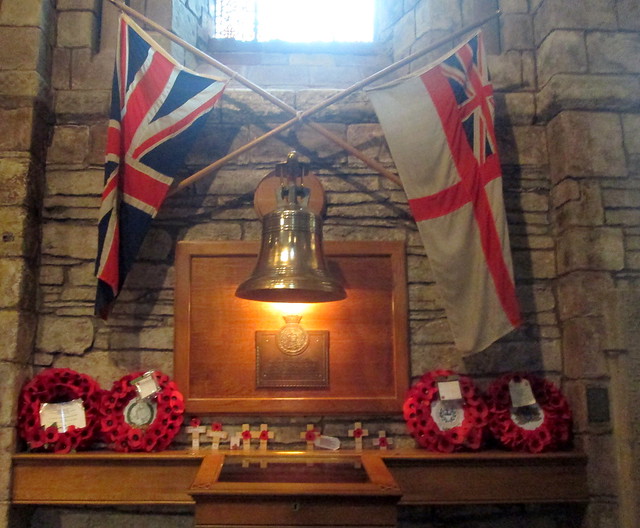
A memorial to HMS Royal Oak is set into the north wall of Kirkwall’s St Magnus Cathedral. There is a dedication plaque, a book of remembrance listing the names, with a page turned every day, surmounted by the ship’s bell.
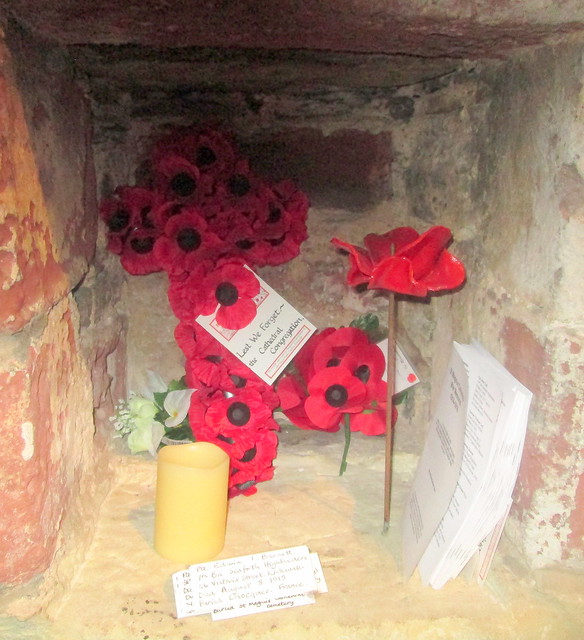
Further along the same wall lies another site of more general remembrance, a niche containing poppies and candles.
No Comments »
Posted in Art, History, Trips at 12:00 on 9 July 2017
Stromness (the name is derived from the Norse Straumsnes [headland protruding into the tidal stream]) is Orkney’s second biggest town but that doesn’t mean it’s big. It has just under 2,200 residents.
It has a brilliant Art Gallery called the Pier Arts Centre with several works by Barbara Hepworth, Ben Nicholson and Stanley Cursiter among others. Well worth a visit – and it’s free.
Stromness Museum does have an entry charge but the ticket gives you entry for a week. It is also interesting with exhibits covering Stromness’s sailing hostory and from the Grand Scuttle of 1919 but also many examples of stuffed animals etc that may nowadays be frowned upon.
Here’s a view I took of North Stromness from the hills above:-

In this one most of the town is hidden under the brow of the hill but part of the harbour can be seen with Scapa Flow in the background beyond:-

Both in the previous photo and the one below of Stromness from the south the Northlink Ferries ship ferry Hamnavoe can be seen docked at the terminal. (The picture on the link is no longer accurate. The ferry company has a newer livery now.) Quite often when we walked down into the town along by the harbour the Hamnavoe would be there. Hamnavoe is an old name for Stromness, meaning peaceful harbour.

Looking south from Stromness, Scapa Flow in left distance:-

The High Street and those leading off it are very narrow. High Street:-

This one is quite cheekily named Khyber Pass:-

No Comments »