Posted in History, Trips at 12:00 on 14 January 2025
I mentioned the village of Aldborough some years ago. The day we went the English Heritage site was closed. In September 2023 it was open.
It’s a small site up a lane in the village but it opens out into somethig more substantial. There is also a small museum attached.
We wandered round both.
Roman perimeter wall/ditch:-

A smaller (closed off) building on the site contains a Roman mosaic:-

Another mosaic:-

Information in the museum about the above two:-

This one was under glass in the museum:-

No Comments »
Posted in Architecture, History, Trips at 12:00 on 18 December 2021
The land on which Chesters Fort was uncovered belonged to a man called John Clayton. His house is right beside the site of the fort:-
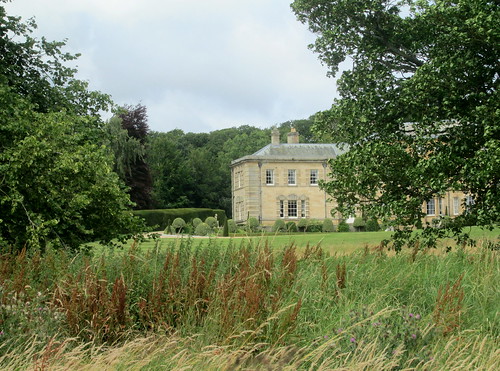
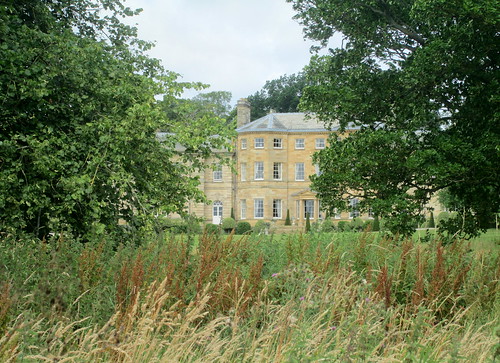
There’s some elegant topiary, not to mention a lovely tree, in its grounds:-
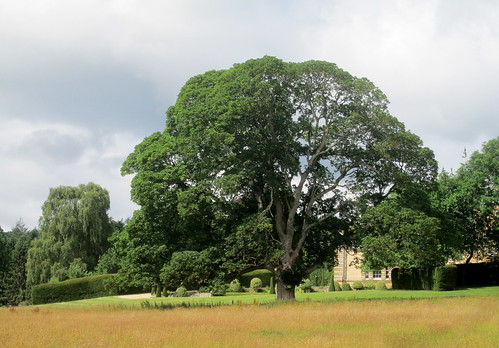
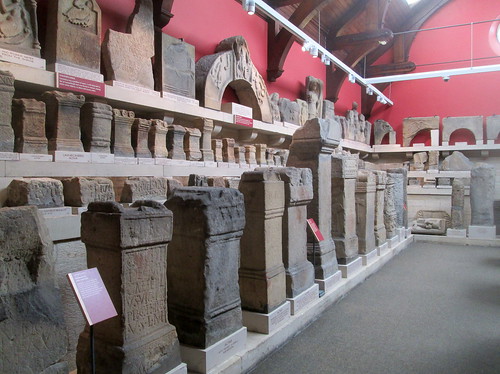
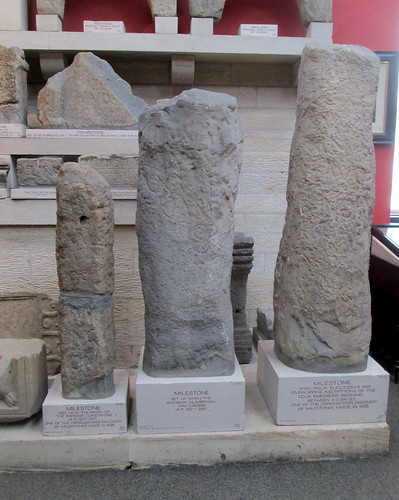
Just beyond the English Heritage entrance to Chesters Fort, past the path leading to the ruins is the Chesters Museum where many of the artefacts uncovered by the excavations are displayed.
Hadrian’s Wall Milestones:-
Statue of Juno Regina, Juno Regina was a popular deity among the Roman soldiery:-

There was a piece of soldier’s graffiti carved in the shape of a man’s genitals on one of the displayed pieces which I was going to go back to photograph. Unfortunately this was just after last year’s lockdown was lifted and a man with no mask started to cough loudly in the museum room’s enclosed space so I thought I had better make myself scarce and hence missed my opportunity.
No Comments »
Posted in Curiosities, History, Trips, War Memorials at 12:00 on 6 June 2021
On the way back up from Peterborough we stopped off at the village of Aldborough in Yorkshire.
There are Roman remains there but the English Heritage site was shut due to Covid restrictions so we couldn’t access them. Maybe another time.
Aldborough is one of those English villages centred round a village green. It’s slightly unusual in that the green still has a maypole.


The other part of the green has a lovely oak tree on it:-

There was the obligatory church (St Andrew’s):-


Another historical hangover is the presence of stocks:-

The memorial you can see beyond the stocks in the photo above was erected on the 50th anniversary of an air crash where due to the skill of the pilot the aeroplane narrowly avoided Aldborough. All seven crew were killed.

This stone is just along from the memorial. It records where MPs for Aldborough and Boroughbridge were elected in the days before the Great Reform Act of 1832. Was Aldborough a rotten borough?

1 Comment »
Posted in History, Trips at 15:00 on 18 August 2010
Quite a lot of years ago now we holidayed with the boys, as they were then, in Yorkshire. On the way down we went through Corbridge. The town is now bypassed east/west by the A69 (it wasn’t then.) There was/is a lovely wee square in the centre where we stopped for a picnic lunch all those years ago.
Back then we had noticed a sign to Roman remains so checked it out. We didn’t have time to stay long so only peeked in to the site over the hedge.
This year, on the way from Durham, the good lady and I (on our own now) took time to visit and go round the site. We like to do a bit of culture. The entrance fee included the hire of a handset that gave descriptions of the various areas. After strolling through the very informative museum we went onto the site proper where the handsets were very useful.
The area is quite extensive and I took a few pictures. The first is from the museum. Then from northwest, northeast, southeast, southwest. You can see the museum building in the third and fourth photos. There are extra information boards scattered here and there.


The original fort grew to become a town. There were two large granaries. Their remains are just in front of the museum.
These are both from the north.

Closer to musuem

To left of above
There was apparently a strongroom towards the south of the site. These are thought to be the steps down to it.

The excavated remains are under the aegis of English Heritage and well worth a visit if you’re into history.
No Comments »


