Archives » Dumbarton

Luss

Luss is a village on the shores of Loch Lomond in the west of Scotland. It’s about twelve or so miles from Dumbarton.

It was the village where most of the outside shots for the Scottish Television (STV) soap opera Take the High Road were filmed.

Luss from the village pier:-

Luss, from Loch Lomond,

Part of Luss from the other side of the pier:-

Luss From Loch Lomond

Luss Church:-

Luss Church, Loch Lomond, Dunbartonshire, Scotland

In the churchyard there is a Viking hogback stone:-

Viking hogback stone, grave, Luss, Loch Lomond

Just up from the church there is this curious bridge which seems to cross a small inlet of Loch Lomond:-

Loch Lomond, Bridge,Church

Loch Lomond Bridge, Luss

near Loch Lomond, Luss, Scotland, trees

In the village itself there’s this cottage with (shallow) cat slide dormer windows:-

Cat Slide Cottage, Luss, Scotland

The Loch Lomond Arms is at the top of the road down to the pier:-

Loch Lomond Arms, Luss

Dumbarton Rock and The Rock

On our visit to the town last March we also had a look in Dumbarton town centre. The Artizan Shopping Centre has seen better days. That day many of its premises did not have tenants. Covid can only have made that worse.

Some of the empty units had been brightened up though by having huge photographs of Dumbarton Rock pasted onto their frontages. These are crops of the photos I took of those huge photos.

Dumbarton  Rock, west Dunbartonshire, Scotland

Dumbarton  Rock, west Dunbartonshire, Scotland

The Rock is a beautiful sight, isn’t it?. And that’s a lovely sky.

This cracking shot of Dumbarton Rock and Dumbarton Football Stadium (aka The Rock) was posted in 2020 in a blog I follow:-

Dumbarton Rock and The Rock

And this view was in a newsletter from Dumbarton FC:-

The Rock and the Rock

Municipal Buildings and Boer War Memorial, Dumbarton

In March last year we were over in Dumbarton again – no doubt for a football match.

However we also took the chance to have a look at the old Municipal Buildings which date from long before local government reorganisation in the 1960s – at a time when the town had a Town Council.

Arch and Municipal Buildings, Dumbarton:-

Memorial Arch and Municipal Buildings, Dumbarton

The plaque attached to the arch describes it as one of the tower arches of St Mary’s Collegiate Church, founded 1450. The arch was moved in 1850 to make way for the railway station and again in 1907 to its present location:-

Plaque on Memorial Arch at Dumbarton Municipal Buildings

Boer War Memorial, Dumbarton, Municipal Buildings behind. The memorial is inscribed, “Erected by the citizens of Dumbarton in memory of those who left the burgh to fight for their country in South Africa and who laid down their lives during the progress of the war 1899-1902.”:-

Boer War Memorial, Dumbarton

Dumbarton 1-0 Cove Rangers

SPFL Tier 3, The Rock, 12/12/20.

Our first ever game against the visitors – and we got a welcome win.

It probably wasn’t that long ago but I can’t remember the last time we beat a team above us in the league.

Watching on the live stream is a peculiar experience. It seemed even more nerve-racking than actually being at a game. It didn’t help that, once again, as against Clyde, we were holding out for a win – this time only for 40 mins rather than the majority of the game.

It was fairly even in the first half but I felt Cove always looked more comfortable on the ball than us. We had the first effort on target though, a fairly centrally aimed Ross Forbes free-kick. Our failure to score despite some pressure (and no truly clear-cut chances) is the sort of thing that can come back to bite you. And it almost did as Cove forced Kevin Dabrowski in goal into two very good saves indeed and a further block outside his near post. Then Rico Quitongo danced round the defender on the bye-line and cut it back to Jaime Wilson who hit it fiercely but nearly straight at their keeper. Half-time 0-0.

Not long after, we were ahead – from an unlikely source. Nat Wedderburn – a strong presence in midfield throughout – bulleted a Ross Forbes corner into the net on 50 minutes, his first goal for the club.

From then on Cove pushed forward and we did not seem to be able to find an out ball. Hence the racked nerves. They did hit the post late on and it seemed the ball must go in but it trundled along the goal line for what seemed like ages before Stuart Carswell cleared it sideways – Kevin Dabrowski having to dive over his clearance.

We did manage to venture forward in the last few minutes but the final whistle still came as a relief.

So we’re now two points off third place and five clear of ninth.

It’s a tricky visit to Montrose (in fourth) next week though.

Dumbarton Rock, Dumbarton Football Club and Dumbarton Football Stadium

Someone on the football forum Pie & Bovril posted this video as seen on You Tube and made by a user called Footy Adventures.

It had great views of Dumbarton Rock and The Rock. Not to mention the town and surroundings.


PS. I can confirm that from Annbank (over the River Clyde,) Dumbarton Rock does look like a recumbent elephant.

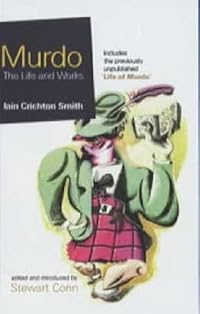
Murdo, The Life and Works by Iain Crichton Smith

Birlinn, 2001, 285 p, plus xiii p Introduction by Stewart Conn.

 Murdo, The Life and Works cover

In my review of his collection After the Dance I mentioned Smith’s very-unScottish deployment of humour. This is most evident in the pieces presented by his Murdo persona, which is, as the book’s title implies, very much to the fore here.

Murdo, the Life and Works is divided into three sections Murdo, Thoughts of Murdo and Life of Murdo.

In the first, Murdo has given up his job at a bank in order to write a novel about a man who has given up his job at a bank in order to write a novel. Every morning he stares at the blank piece of paper in front of him and out of the window to look at the White Mountain (which he tells himself one day he must climb,) throughout the day he fortifies himself with cups of tea and every evening the sheet of paper is still blank. When he ventures outside the house his encounters with others tend to the bizarre, his behaviour beyond eccentric. His wife’s parents think she should leave him, while she herself thought she had understood him when they married but is now not so sure. At one point Murdo ruminates that, “Those who approach most closely to the condition of the animal are the ones most likely to survive. And Woolworths. Woolworths will live forever.” How wrong he was in that last assumption.

The second contains a multitude of diverse snippets of Murdo’s thoughts and writings – notes, letters, manifestos, poetry and observations – replete with wordplay and allusion and including some of his tales of Free Church adherent and private detective Sam Spaid who strides down the mean streets of Portree (and sometimes travels as far as Inverness.) Some of these animadversions appeared in After the Dance. There is also an account by Murdo he gave of a talk on the humanity of Robert Burns as revealed by the text of To a Mouse.

A preface to the third section says that Smith used the word Murdo instead of I in the autobiography which follows to distance himself from his memories as outlined there – including some of Dumbarton. Of course Murdo must contain aspects of Smith himself but as Murdo these are undoubtedly exaggerated. Many of Murdo’s opinions have certainly been adopted by Smith for comedic or satiric purposes. This section also contains Murdo’s reminiscences of the Scottish literary scene and its characters.

In contrast to his days staying there Dumbarton, says Murdo, is “much improved” principally because it now has a Sue Ryder shop (plus other charity shops.) Murdo scours the shelves of these, as of those elsewhere, in search of books.

As an illustration of a certain kind of Scottish discourse at one point one of his interlocutors, when asked about availability for some project or other, says, “‘I don’t know about Tuesday. That’s my Hate the Catholics night.’”

Note for the sensitive; this contains the word ‘dagoes.’

Pedant’s corner:- ‘Bridge over Troubled Waters’ (a common misprision, the song’s title is “Bridge over Troubled Water”,) “smoothe away” (smooth,) fifth equals (strictly that should be fifths equal,) “The Comunn Gaidhealach have even produced” (has even produced,) “by the bye” (by the by,) corn-beef (corned beef,) “barely bree” (barley bree,) “in the the brine” (only one ‘the’,) Harris’ (Harris’s,) Holmes’ (Holmes’s,) aquaducts (aqueducts,) an opened parenthesis never closed (x 2,) “the world of the army was not Murdo’s work” (not Murdo’s world makes more sense,) “didn’t consider Donalda threat” (didn’t consider Donalda a threat,) “jelly fish” (jellyfish,) jsut (just.)

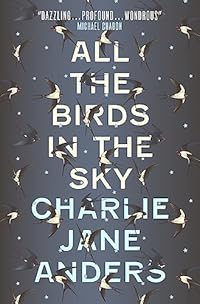
All the Birds in the Sky by Charlie Jane Anders

Titan Books, 2016, 429 p.

 All the Birds in the Sky cover

This, Anders’s first novel, is a blend of Fantasy and Science Fiction which starts off reading like YA fiction but soon enough makes clear that it deals with adult matters too. Patricia Delfine very early in her life realises she is a witch when birds begin to talk to her and she can talk back. She also has a conversation with a speaking tree – The Tree. In school her path crosses that of Laurence Armstead, a so-called techno-geek, who invents for himself a two-second time machine for travel only into the future, and later builds an AI he calls CH@NG3M3. For both of them schooldays are a kind of purgatory, as they are picked on and bullied. Their home lives are little better, both using the other as a means of convincing their parents they are out doing what is desired for them rather than what they wish for themselves. Mixed in with all this is an assassin called Mr Rose who gets a job as counsellor at their school in order to monitor their activities. Despite appearing intermittently in the novel Mr Rose’s function is not really clearly defined.

Later the children’s lives diverge as Patricia finds the company of other witches (whose old division into Healers and Tricksters was patched over many years before.) She is always being warned by them of the dangers of Aggrandisement. It seems just about anything she does can be interpreted in this way. Laurence is recruited by Milton Dirth to work on his project to build a wormhole machine to take humans to another planet. In the background there is a large degree of environmental degradation which makes this construction seem worthwhile and in daily life an electronic device called a Caddy somehow engineers people’s lives to be better through apparently serendipitous meetings and the like. How all these things are connected and Patricia and Laurence’s coming together in adult life are central to the story.

There are some observations on human nature. In one of their conversations Laurence says to Patricia “‘no matter what you do, people are going to expect you to be someone you’re not. But if you’re clever and work your butt off, then you get to be surrounded by people who expect you to be the person you wish they were.’”

Oddly, despite the novel being written in USian I noticed the British usages, “a total wanker,” “for some emergency nookie,” and “one intense wank fantasy.” In addition I was delighted to see the phrase “head for the Dumbarton.” (The Dumbarton is a bridge over San Francisco Bay – the southernmost. Its name derives from Dumbarton Point, itself named after my home town.)

Though it has some flaws, All the Birds in the Sky is overall an impressive debut.

Pedant’s corner:- epicenter [sic] (it was a centre,) a missing comma before a quotation mark, a capital letter after a colon, “none of the computers were connected” (none .. was connected,) “‘to lay low’” (lie low,) Patricia at one point is said to have reasonably fullish breasts but later they are described as small, “Here’s what Isobel said to Laurence, just before the earthquake hit” is a poor – a dreadful – way to start a flashback.

Dumbarton, River Leven and River Clyde from Dumbarton Rock

These are the good lady’s photographs. She took them while I was at one of the play-off games at The Rock, in May last year.

River Leven and Dumbarton from Dumbarton Rock:-

River Leven and Dumbarton from Dumbarton Rock

River Leven and Dumbarton with Ben Lomond in background:-

River Leven at Dumbarton, Ben Lomond in Background

Rivers Leven and Clyde at Dumbarton:-

Rivers Leven and Clyde at Dumbarton

River Leven and Dumbarton From Dumbarton Rock. As a child the good lady used to play on the rocks on the riverside below where this was taken from:-

View of River Leven and Dumbarton From Dumbarton Rock

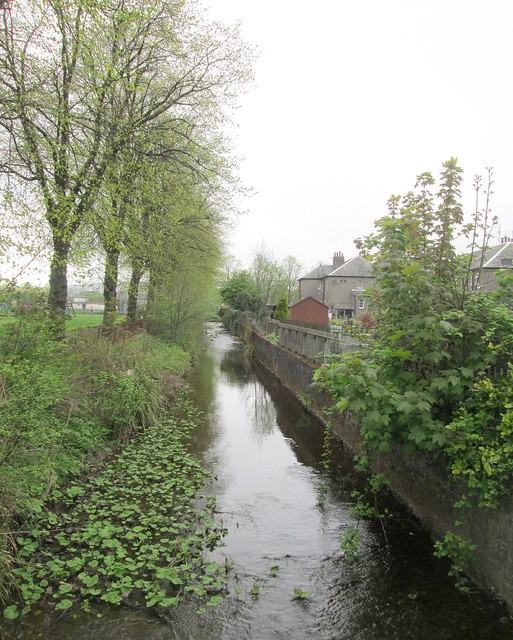
Somewhere else she used to play was in this burn by the Swing Park. Well, that’s what it was always called when I was young. It’s apparently known officially as the East End Park:-

Burn by the Swing Park, Dumbarton

Dumbarton Rock and River Leven

I think my only previous posting about Dumbarton Rock was here. Those photos were taken from across the River Clyde at Langbank in the former Renfrewshire.

There is a more familiar view from the quayside (of the River Leven) at Dumbarton itself:-

River Leven and Dumbarton Rock

Dumbarton Rock from River Leven

Boats on River Leven, Dumbarton:-

Boats on River Leven, Dumbarton

River Leven, Boats and Levengrove Park:-

River Leven, Boats and Levengrove Park, Dumbarton

Nordfjord, Norway

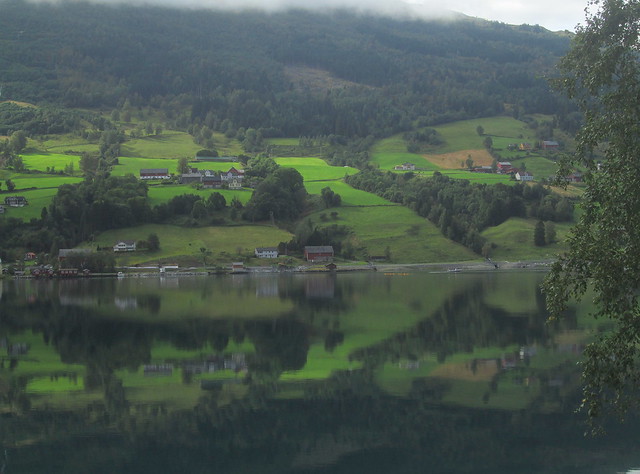
Reflections in Nordfjord, Olden, Norway:-

More Reflections in Nordfjord, Olden, Norway

Misty mountain and reflections in Nordfjord:-

Reflections in Nordfjord, Olden, Norway

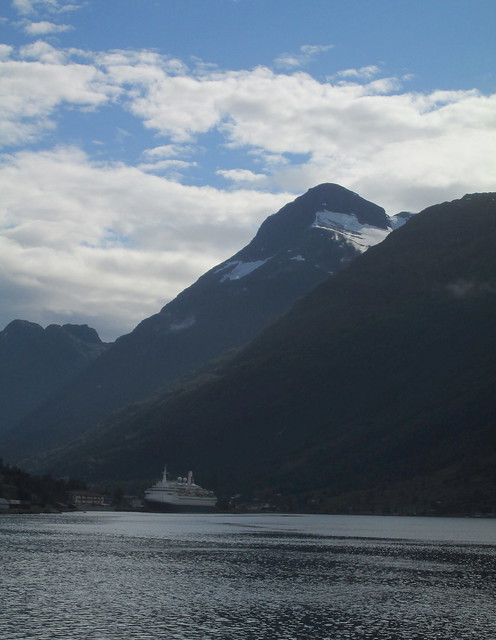
Head of Nordfjord, Norway, looking towards Olden, SS Black Watch in background:-

View in Olden, Norway

SS Black Watch and hill overlooking Nordfjord:-

SS Black Watch and Hill, Olden, Norway

SS Black Watch berthed, Olden, Norway:-

SS Black Watch Berthed, Olden, Norway

Most of this set of photos were taken on a walk we made from Olden towards Loen Fjord. As we were making our way a strange disturbance of the water on Nordfjord made its way in from the seaward end of the fjord. I supposed it might have been the tide coming in but we were so far from the open sea there were no waves as such.

The views and the open water to the left as we made our way westwards with the hills on the other side reminded me of the road from Helensburgh, 8 miles north of Dumbarton, towards Rhu and the Gareloch. The mouth of Loen Fjord (photo taken from Nordfjord, when sailing away from Olden) is flanked by higher mountains though:-

Loen Fjord, Norway

free hit counter script