Hodderscape, 2024, 296 p. £16.99. Reviewed for ParSec 10.
 Welcome to the Grand Abeona Hotel, a once (and still) luxury spacefaring hotel, now a little down on its luck but still presenting a sumptuous face to the universe. Curtis tells us it has ‘class.’ Well, maybe, but as described it has – for 2774 – a decidedly (but deliberate) retro aesthetic, a restrained colour palette, an analogue appearance. Internal communication is by printed paper slips sent in sealed tubes through hydraulic glass pipes. It even has an old-style cinema (which hosts The Shit Movie Club.)
Its manager in 2814, Carl, blagged his way onto the hotel forty years earlier by pretending to be a porter/bell boy. Its 2774 manager Nina took him on and he has worked his way up. Absorbing waifs and strays – or inadvertent stay-ons – seems to be the hotel’s only recruitment policy as this is how Daphne – who bears an echo of the second Mrs De Winter in that she was in service to a domineering employer (but was sent back to retrieve a forgotten muff not aware she was on the last shuttle out) – comes on board. A measure of her diffidence is that Daphne speaks in a s-s-stutter. Back in the day the Abeona used to roam the galaxy almost at random but since Nina’s retirement its schedule has become more regular.
Background information and commentary are vouchsafed to us through intermittent ‘dispatches’ from someone known as The Lamplighter. Through these we discover the political system in this corner of the universe is exploitative. Various planets are systematically stripped of their resources, the workers on these worlds exposed to a harsh existence and left with little to themselves at the end. All this is overseen by a seemingly immortal Emperor, the Great Patrician, against whom the Lamplighter rails in his missives, disseminating descriptions of the Empire as decadent, stagnant, over-stretched, propped up by propaganda and the toil of the workers, and – worse – providing salacious intimate details about the Emperor, suggesting his longevity is merely through the creation of a succession of clones whose heads lie pickled on a shelf somewhere in the Imperial Palace. By decree, all thoughts of life forms outside ‘the Pyramid of Consciousness’ (at the top of which are humans and whose supreme pinnacle is of course the Emperor) are “Absurd, Anti-intellectual and Not allowed.”
Is Curtis perhaps being a little unimaginative here? Emperors and Empires have been a bit passé in SF for some considerable while, after all. And yet they do seem to be making something of a comeback (though under other designations) in the world where her book will be read. I also wondered about the economics of such a travelling resort, we are given no information about such mundanities beyond the fact that maintenance is most likely being skimped.
Successive chapters focus on events occurring to individuals on the ship, mostly hotel workers but with the odd passenger/guest added in – with a potted biography provided for every one of them.
Someone is sending poems, specifically sonnets, and Shakespearean ones at that, to various recipients but this strand seems to be a bit of a red herring and soon peters out.
The Shit Movie Club meets once a week and its present offer is an “over-acted, badly written, glitzy, teeth-rotting affair of the highest order” called Friends from Beyond and is of course a violation of the Pyramid of Consciousness. The staff love it.
A minor strand deals with the Problem Solvers’ Conference held on the hotel, whose attendees have been given a message to decode. Linguist Professor Azad and maths whizz Ooly Mall (a mathemagician) are drawn as one of the pairs to try to solve the puzzle. Their findings trouble them.
The main plot revolves around the identity of the Lamplighter. His, or her, dispatches used to be sent from chance locations but now are seemingly on a steady rota. As a result, agents of the Emperor have come to suspect he, or she, travels on the ship. They are ruthless in their investigations.
There is no dazzling new concept here, no innovation – the story is set in a hotel after all, the events could occur in any similar establishment (or cruise ship) – no deep insight into the human condition, but Curtis writes well enough, though her characters can be broadly brushed. It’s not meant to be anything more than entertainment (which that world in which it will be read certainly sorely needs) but in that it succeeds.
The following did not appear in the published review.
Pedant’s corner:- “when he arrived into the lobby” (when he arrived in the lobby.) “‘Aviary law states’” (last time I checked an aviary was for birds. Whatever else it is the Grand Abeona is not a bird. ‘Aviation law’ will not do. ‘Space law’? ‘Interplanetary law’?) “rose to a fresh crescendo” (No, no, no. The crescendo is the rise, not its peak,) “outside of” (just ‘outside,’ no ‘of’,) “the hoi polloi” (I know people misuse the phrase in this way but ‘hoi’ actually means ‘the’ so this reads as ‘the the polloi’.) “‘Who’s language is it?’” (Whose language is it?) “hung a pair of necklaces, either sides of a waxing crescent and waning gibbous, becoming on occasion a whole full moon as they overlapped” (the ‘either’ is odd, ‘moon’ ought to follow gibbous, and the image conjured up actually makes no sense; how can a pair of necklaces resemble both a crescent and a gibbous moon? The geometry is wrong,) Ralf (previously Ralph,) “didn’t ordain to respond” (didn’t deign to respond.) “He was knelt up on the seat” (He was kneeling up on the seat,) “the throw blanket folded neatly on” (just ‘a throw folded neatly on’.) “There were around the half a dozen people still in the running” (There were around half a dozen people…,) “the mesh underside of the catwalk” (not ‘of’, and it ought to simply be ‘the mesh of the catwalk’,) an unindented new paragraph, “a truckload of idiotic aristocrats set to work” (a truckload … sets to work,) “Ephraim relished in the rules” (Ephraim relished the rules,) “bearing down on the Uwade” (bearing down on Uwade,) “his sock draw” (sock drawer,) “same with the trouser draw” (trouser drawer,) “a place to lay low” (to lie low. Annoyingly, ‘lie low’ was used later,) “reached a painful crescendo” (no: ‘reached a painful climax’,) “that clunk-hiss of decompressing air” (it’s not air that escapes when you open a drinks can, it’s CO2,) “vocal chords” (vocal cords,) “the sense he was sat beside her” (sitting, or, seated.)

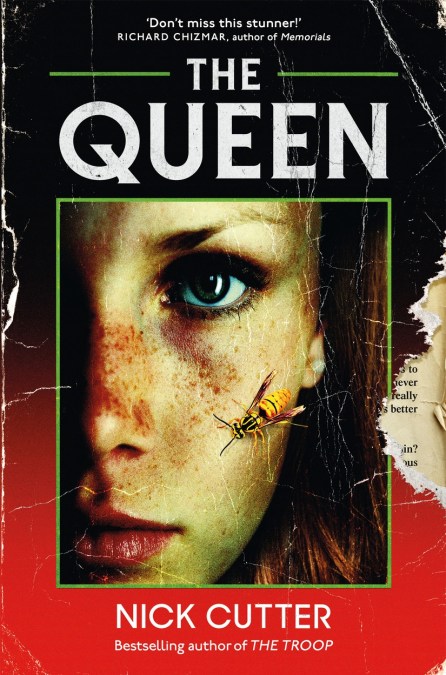
 Two books arrived last week for me. I was away over the weekend and so didn’t get round to noting them here until now.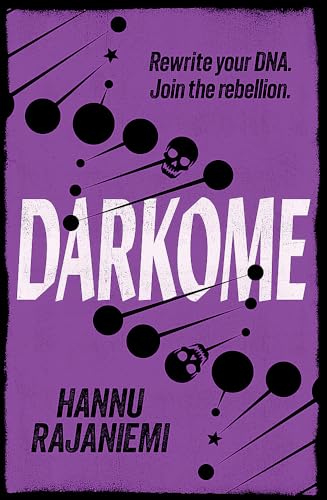
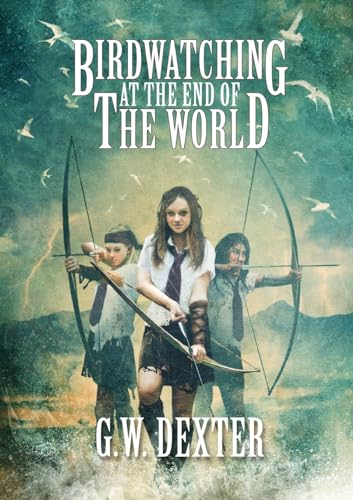 Hot off the presses and to be read for
 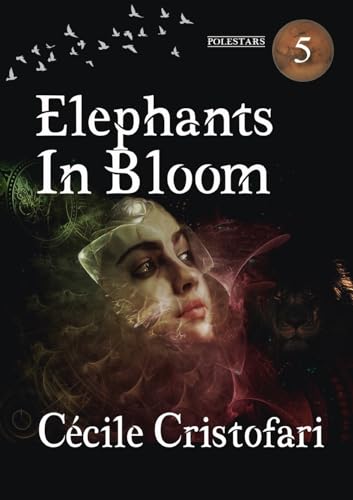 This is the author’s first collection of short stories. Ten of them appeared in a variety of publications over the past five years, eight are original to this book. Each is provided with an authorial afterword. Some of these mention Cristofari’s French background and the latitude she gains as a writer from having two languages to draw on. She casts her net wide, with settings ranging from prehistory through to the present day and beyond. A common thread running through them is ecological collapse and possible recovery from it, in perhaps a sign of recent events some feature characters living in the aftermath of a pandemic.
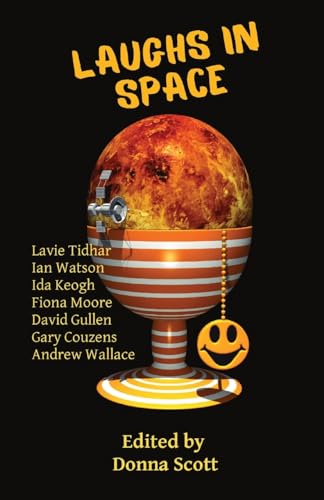 Hard on the heels of me finishing Nordic Visions for review for
  I happened to be in my local library the other day. The good lady and myself were looking at the new books section when she said, “What is speculative fiction?”
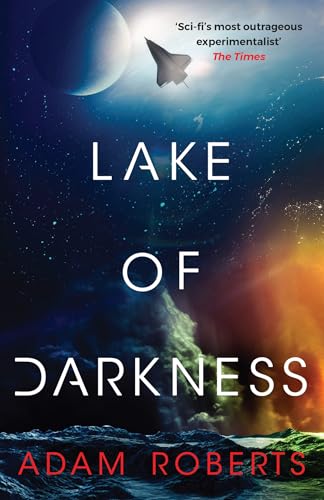 Yesterday, Lake of Darkness, the latest novel from Adam Roberts, was handed over by our postman.
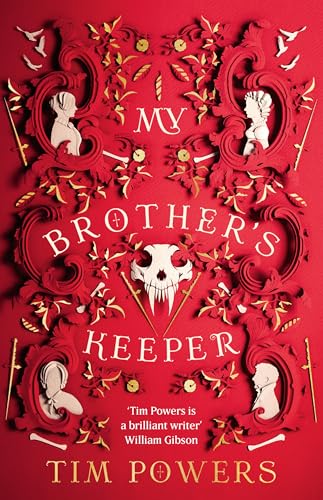 The Yorkshire Moors make an ideal setting for tales of the uncanny. A thin place. Remote, wild, desolate, atmospheric, and above all, wuthering. A world beyond the world. It is easy to imagine strange goings on, mysterious creatures, ghosts, hidden menace, inhabiting the landscape. But we don’t have to. The Brontë sisters (well, Emily) already did. And now, so too has Tim Powers in a story whose central focus is on the Brontë family and Emily’s dog, Keeper, but also incorporates the author’s usual injections of weird. In particular here we have boggarts, gytrashes, barguests, (the latter two being essentially the same thing,) werewolves, a temple on the moors to the Roman goddess Minerva, double-bladed knives called dioscuri, an ancient creature with latent potency buried inside Haworth Church under a slab with an Ogham inscription. Not to mention clandestine human organisations known as the Oblique and the Huberti.