Posted in Architecture, Art Deco, Museums, Trips at 12:00 on 22 December 2025
The Roxy Cinema is fairly prominent as you pass through Ulverston to or from Barrow-in-Furness, standing as it does by the main A 590 road:-

Note rule of three, and banding, plus flagpole.
Entrance, also the entrance to the Laurel and Hardy Museum:-

From south, Art Deco lettering, banding on white background and rule of three in windows:-

View from north:-

No Comments »
Posted in Museums, Trips at 12:00 on 4 June 2025
Jelle Dam was a socialist activist who helped illuminate the living conditions of agricultural workers in rural Friesland.
This replica of his last house is the final exhibit as you go round De Spitkeet anti-clockwise:-

Jelle Dam fared reasonably out of his writing. The interior is well appointed:-


Like many such houses one of the rooms was given over to being a shop selling produce grown on the land (plus some other.) These shops were usually tended to by the wife:-

No Comments »
Posted in Museums, Trips at 12:00 on 31 May 2025
After the Second World War housing was so scarce in the Friesland area that chicken coops were converted to housing. De Spitkeet contains an example of this. It looked fairly substantial to me and homely enough:-


Goats at De Spitkeet. This type of goat is particular to the area:-

No Comments »
Posted in Museums, Trips at 12:00 on 26 May 2025
Another building at De Spitkeet (see previous posts) was called the Jehannes-Hinke Hus:-

Side view:-

Entrance (and bikes):-

Entrance from inside:-

View from entrance:-

Looking back:-

Living room:-

Oven/cooker:-

Box bed:-

Another doll’s hosue:-

Thatched roof and tools:-

No Comments »
Posted in Museums, Trips at 16:00 on 18 May 2025
The Swa Hus type was an attempt to improve the living conditions in rural Friesland.

Swa Hus at De Spitkeet:-

Interiors:-


Doll’s House in Swa Hus:-

Tool room:-

No Comments »
Posted in Museums, Trips at 12:00 on 15 May 2025
This is an even more primitive house than the Earth House at De Spitkeet. The people dug a hole and strengthened it with wooden beams and poles. They further built up the walls and ceilings with grass or heather sods.


Interior:-

A bit further round the grounds of De Spitkeet there was this opening where during World War 2 young men hid from patrols to avoid being taken to Germany to work in factories etc. It must have been better disguised in those days or the bare earth leading to it would have been a giveaway:-

No Comments »
Posted in Museums, Trips at 12:00 on 12 May 2025
The cemetery at De Spitkeet has a wooden belfry. This was because it was believed bells frightened away evil spirits. No-one was buried there for nine years until the belfry was erected.

Part of cemetery with spitkeet earth house:-

Belfry and spitkeet house:-

No Comments »
Posted in Art, Dundee, Museums at 12:00 on 10 May 2025
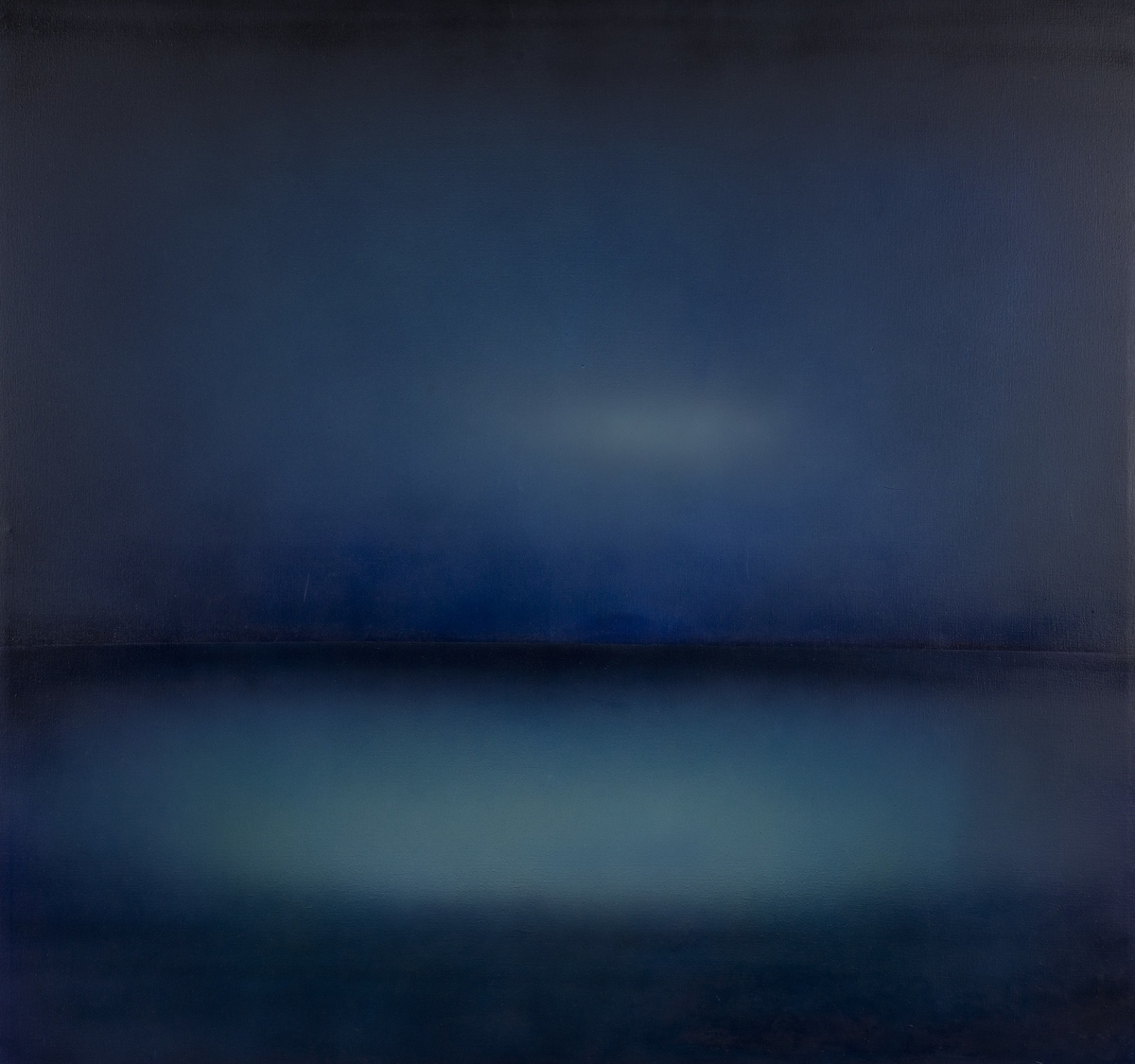
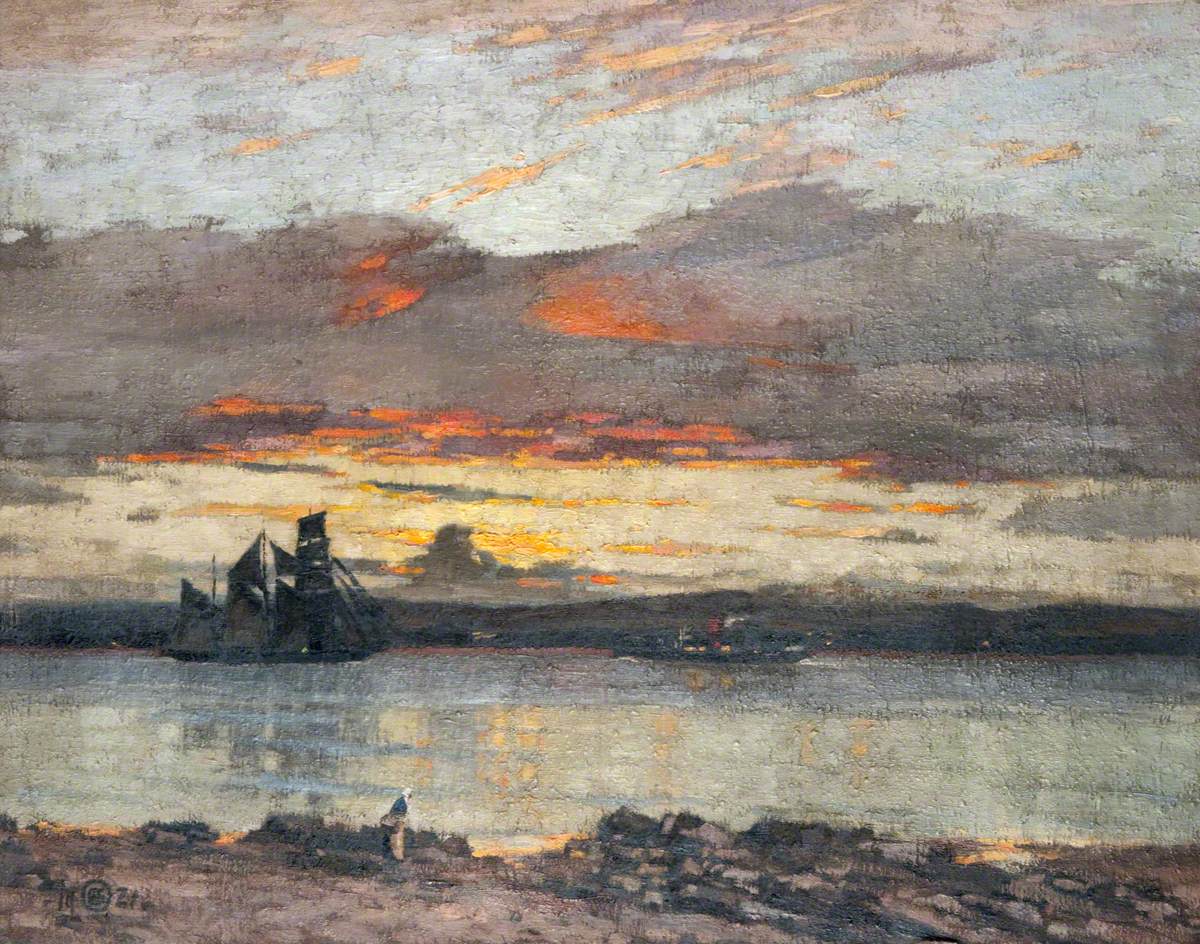
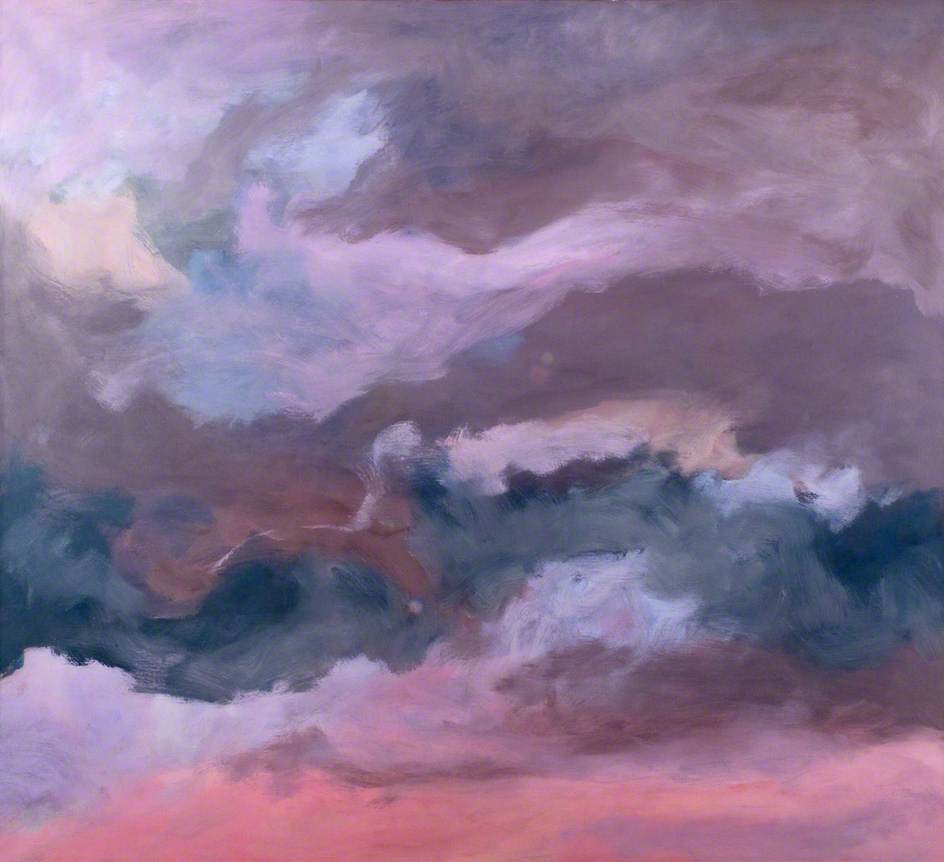
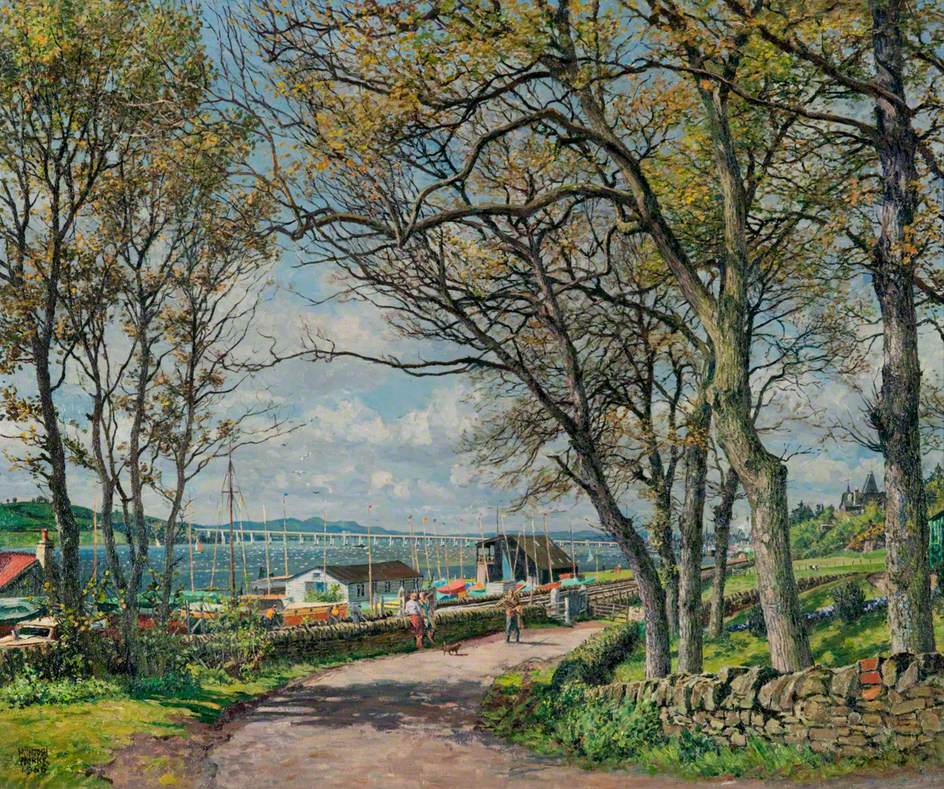
This week I visited Dundee’s McManus Art Gallery and Museum to see the exhibition A Weather Eye. I got to it late. It finishes on Sunday 11/5/25: tomorrow!
Each painting was accompanied on its information board by a Scots word to do with weather or the image depicted.
The quality and interest of course varied.
My highlights were:-
Island by James Howie; accompanied by the word ‘loom’.
Alec Grieve’s Sunset on the Tay; ‘gloamin’.
Storm at Sea Remembered by Jon Schueler; ‘doister’.
The Tay Road Bridge by James McIntosh Patrick; ‘braw’.
Stanley Cursiter’s Rain on Princes Street; ‘evendoon’.
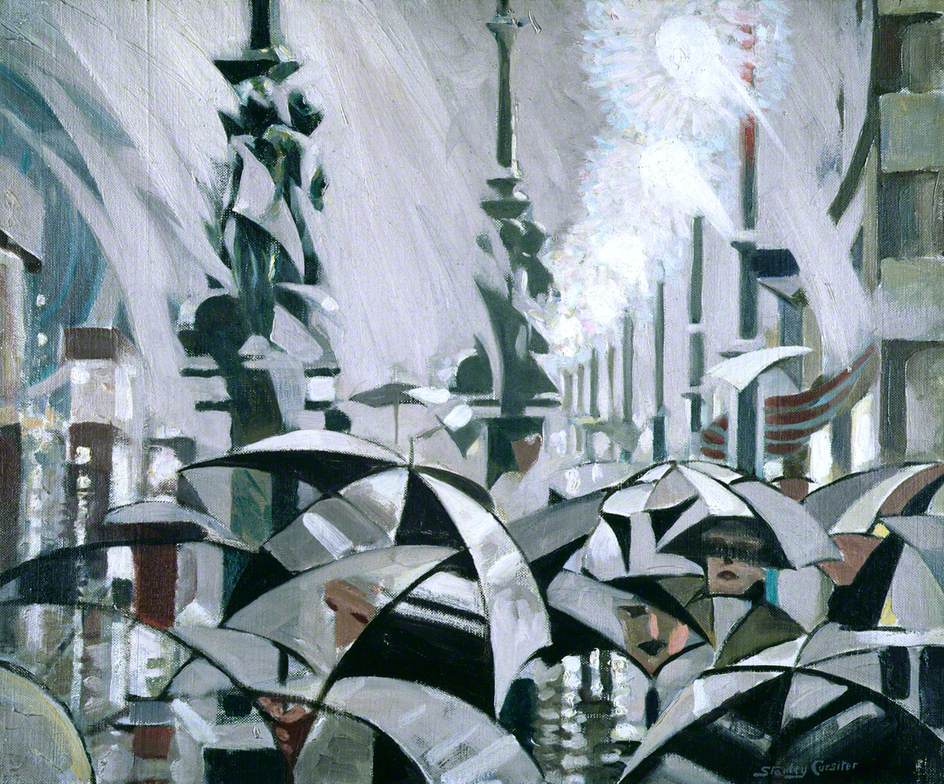
The above were all available to look at on the website Art UK.
The one below wasn’t; so here’s my photo of it.
William Cadenhead’s New Snow, Catlaw; ‘owerblaw’.

2 Comments »
Posted in Museums, Trips at 12:00 on 6 May 2025
There are several examples at De Spitkeet of the types of houses people lived in in the area in times gone by.
Below is a typical Spitkeet turf house:-

Reverse view:-

Entrance:-

Information about. In the Mallemolen museum part there was a photograph from the 1930 with children sleeping on the floor:-

Interior:-

Clogs:-

Fire layout and cooking pot:-

Parents’ bed:-

1 Comment »
Posted in Bridges, Curiosities, Museums, Trips at 12:00 on 3 May 2025
The Spitkeet (see previous post) acreage is centred round a collapsed pingo, a depression formed after ice age permafrost melted. They are usually filled with water. The landscape of Friesland and parts of Groningen Province contains quite a few pingos.
Pingo and bridge:-

The bridge:-

The pingo from the bridge. The Mallemolen (see previous post, is to the left in the middle distance):-

No Comments »
