Archives » Sherlock Holmes

Nights of Plague by Orhan Pamuk

Faber and Faber, 2023, p. Translated from the Turkish, Veba Geceleri, by Rekin Oklap.
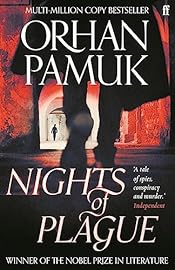
This is not a typical Pamuk novel. For a start it’s not set in Istanbul which has been pretty much a major character in most of his books. Instead, it deals with the fictional Mediterranean island of Mingheria during a 1901 outbreak of bubonic plague which provided the opportunity for its revolt against Ottoman rule. Also, unlike most Pamuk novels. it’s largely told rather than shown. Part of this is that the narration is couched partly as a historical record of the revolution.

Mingheria is supposedly located somewhere northeast of Crete. Its main city, Arkaz, is dominated by a castle on a hill at one side of the harbour entrance but there isn’t adequate anchorage for large modern ships and landfall has to be made by rowing boat.

The present Ottoman Sultan, Abdul Hamid, who was installed as Sultan by a palace coup in which he replaced his brother Murad V, has sent Bonkowski Pasha to combat the outbreak. On the same ship but en route to China as envoys are Murad’s daughter (and therefore Abdul Hamid’s niece) Princess Pakize, until recently kept in seclusion in Istanbul until she married the husband Abdul Hamid procured for her, Doctor Nuri. Hence Nuri is often referred to in the text as “the Doctor and Prince Consort.”

A few days later, after Bonkowski Pasha is murdered having inadvisedly gone walkabout, Princess Pakize and Doctor Nuri are ordered back to Mingheria to investigate his death using the methods of Sherlock Holmes. (Abdul Hamid is an avid consumer of detective fiction.)

Many locals, especially devout Muslims, resist the attempts by the authorities to enforce quarantine. The ensuing confusion allows a Major Kâmil to institute a revolution which overthrows Ottoman rule. The Major (soon Commander) becomes the first leader of independent Mingheria.

Much of the supposed history here is said to be taken from the letters of Princess Pakize to her sister Princess Hatice back in Istanbul, letters which she wrote daily even when the postal service had been suspended. An emphasis on the relationships between Princess Hatice and Nuri and Major Kâmil and his wife Zeynep (nostalgic legends in Mingheria) are a corollary to this.

Several narratorial interpolations reveal that this retrospective history of the founding of the Mingherian state has been written by a descendant of Princess Hatice and Nuri. The final chapter is an envoi from that point of view.

The means by which a new state establishes itself and the myths it comes to believe are subtly portrayed (as are the parallels with the decline of the Ottoman state,) but like most revolutions the Mingherian one soon begins to eat itself. In short order Kâmil and Zeynep are dead due to plague; his successor, the Muslim sect leader and quarantine opposer Sheik Hamdullah, also succumbs to the disease; Princess Hatice is made Mingheria’s Queen but pushed into the background by Nimetullah Effendi with the felt hat; and so on. Relations with the Great Powers, who blockade the island to prevent the plague reaching Europe, are critical to Mingheria’s future.

Pamuk is consummate and always in control but to my mind in Nights of Plague, though there is plenty of story (you could almost say too much) some of the rewards of reading fiction are missing. There is not much here to allow the exploration of character, most of whom are sketched rather than fleshed out, or indeed character development. It is certainly unusually structured for a novel. It is however an exemplary way of writing a critique of Turkish society without going at it head-on; an approach arguably necessary for a writer from a state sensitive to any hint of criticism.

Since he started writing this book in 2016 it is also unlikely to be a reflection on the Covid pandemic, though of course that does now hang over any reading.

Mention of football (albeit only in one sentence) and of the author Orhan Pamuk as being an acquaintance of the narrator – both are museum enthusiasts – are typical Pamuk touches.

It is of course essential reading for Pamuk completists but has enough to recommend it to the merely curious.


Pedant’s corner:- Translated into USian. “the hoi polloi” (hoi means ‘the’; it’s just ‘hoi polloi’, then, no ‘the’,) enormity (employed here to mean ‘hugeness’. It doesn’t; it means ‘monstrousness’,) “off of” (no ‘of’, just ‘off’,) “a particularly tough contingent who was known to mistrust” (a particularly tough contingent which was known to mistrust,) “that he was going be punished” (going to be punished,) a chapter beginning with a sentence of dialogue with no starting quotation mark (I know this is a publisher’s convention but it annoys me,) “the Halifiye sect were being goaded” (the Halifiye sect was being goaded,) “landscapes …. that Sami Pasha had hanged on the walls” (I doubt this meant they were executed: ‘had hung on the walls’,) “arrival to the island” (arrival on the island,) Cretian (Cretan,) “moored to the docks” (moored at the docks,) “was I was finally” (the second ‘was’ is superfluous.)
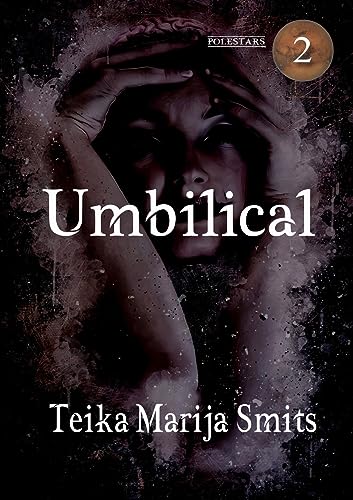
Umbilical by Teika Marija Smits

NewCon Press, 2023, 228 p.  Reviewed for ParSec 9.

This is the author’s first collection of stories, twenty-one in all, plus one poem. Sixteen of them were culled from appearances in a variety of outlets over the past ten years, five are making their first appearance in print. The contents range in genre over SF, fantasy, myth and horror, with stories sometimes crossing over their borders.
In general, literature deals largely with the themes of love, sex and death. Science Fiction tends to be more restrictive (love for example tends to be bypassed and sex for the most part avoided) but its signature feature is in making its metaphors literal. (The outstanding example of that here is the title story, about the bond between a daughter and her mother.) Fantasy, myth and horror act more as warnings and as stripped-down guides to human relationships.

In the first few stories here the theme of death seems to be a connecting thread but this does not then extend to the collection as a whole.

The poem, Icarus Dreams, opens proceedings and partly sets the tone by inviting Icarus to heed his father and rewrite his story. Smits is more than adequately equipped to provide new shapes to old tales. To that end there are herein updated treatments riffing on the Blackbeard and Theseus stories, while the Baba Yaga of Russian folklore meets an AI.

But the author has further strings to her bow. Elsewhere, moles on the skin are a marker of long, perhaps immortal, life, and carry the threat of incarceration to unravel their genetic secrets. We meet an AI repairman whose encounter with his charge becomes reminiscent of 2001: A Space Odyssey. One story (not narrated by Dr Watson) features Sherlock Holmes, but only in a bystanding part as he asks his psychic investigator – and female – cousin to help him. We have tales where a psychological decline follows the break-up of a relationship which had settled into routine, the Green Man appears to rescue a ravaged future Britain, a woman inherits a bookshop with an unusual kind of ghost, AI/human hybrids question each other over their origins – and the nature of God. One story centres on the reliving of bottled memories. There is an African inspired SF/fantasy cross-over. A woman falls in love with her witness protection AI android bodyguard, another tells of the lengths she went to in an attempt to get pregnant, a brother and sister hatch a plot to rescue their twin siblings from VR addiction in a warehouse, a female painter who sells pictures under her brother’s name finds she cannot hide her expertise from J M W Turner (with whom she shares the same reverence for sunlight,) two people celebrate their involvement with the commercial start-up of nuclear fusion at Sellafield, a woman on the point of death remembers incidents from her life while subjectively traversing a fantastical purgatorial maze.

Their telling requires a comprehensive array of authorial registers and Smits handles them all well, with very few infelicities. She is a talent to watch.

Pedant’s corner:- Theseus’ (x 2, Theseus’s,) focussing (x 2, focusing,) a missing comma before a piece of direct speech,  Holmes’ (x 2, Holmes’s, which appeared later,) shrunk (shrank,) focussed (x 3, focused,) sunk (sank,) Geena Davis’ (Davis’s,) “legs akimbo” (I doubt it. It’s extremely difficult to put your feet on your hips,) “and laid down again” (lay down again,) data used as a singular noun (that would be datum, data is plural,) Jesus’ (Jesus’s,) “the settings on each gamer’s capsule isn’t” (the settings … aren’t,)  “‘it’s okay to chop down all the forests and poison the soil.’?” (has that question mark in the wrong place. It ought to be where the full stop is,) “him and Kel had looked to the stars” (he and Kel,) James’ (x 3, James’s; annoyingly employed a few pages later.) “A trail of soapy bubbles stream after his fleeing form” (a trail streams.) Plus points, though, for using maw correctly as a stomach.


The Hound of the Baskervilles by Arthur Conan Doyle

Headline Review, 2006, 213 p One of the 100 best Scottish Books.

The Hound of the Baskervilles cover

This takes the usual form of the Sherlock Holmes story. A client comes to Baker Street to enlist Holmes’s help in unravelling a mystery, in this case a Dr Mortimer, friend of the late Sir Charles of that ilk, who relates the legend of the hound of the title, said to be the curse of the Baskervilles and apparently responsible for Sir Charles’s death and seeking Holmes’s protection for the heir, Henry, about to arrive in the country from overseas. After some preliminary shenanigans in London our narrator Dr Watson is packed off to the Devonshire countryside to seek information and act as a kind of bodyguard while Holmes does his thing, supposedly on other cases but in reality following his own path to the answer. Throw in a few red herrings like the light on the moor at night, disguises of various sorts, people who are not who they pretend to be, and the mix is complete.

The attractions of the form are readily apparent. The book is easy to read, comforting (Holmes rarely fails to set the world to rights,) as well as formulaic. It is not, though, literature of the highest quality. The prose never rises above the workmanlike, the characters are little more than stereotypes and it surely appears on that “100 best” list only because Holmes has become so familiar as a cultural reference point.

The piece of dialogue, “‘Interesting, though elementary,’ said he,” incidentally shows that Doyle did put that word into Holmes’s mouth (though without appending to it, “my dear Watson.”) It also illustrates Doyle’s irritating use of “said he” rather than “he said.”

Pedant’s corner:- “If he would, confine his energies to this all would be well” (surely has an extraneous comma,) rosterer (roisterer is the best fit.)

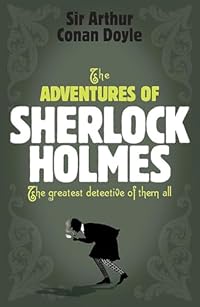
The Adventures of Sherlock Holmes by Sir Arthur Conan Doyle

Headline Review, 2006, 352 p. First published in 1892. One of Scotland’s favourite books.

 The Adventures of Sherlock Holmes cover

Being not much of a fan of crime novels I would not normally have picked this up but it is on that list – it even made the top ten – of Scotland’s favourite books (see link above) of which, having recently ticked off Willa Muir’s Imagined Corners – which is separately among the 100 best Scottish books while this is not – I have worked through all but four now. But it was available at a local Library.

So: how to account for the perennial attraction of these Sherlock Holmes stories? While they are easy to read they are not particularly well-written, being prone to exposition and, taken as a whole, remarkably repetitive in form. Nor are they particularly diverse. Not less than three of the ones here hinge on attempts to thwart possible inheritances. Moreover, our narrator, Dr Watson, is usually not present at the crucial points of an investigation, only for the reveal. And quite often the criminal – or malfeasant, there is not always a crime involved – ends up not being punished.

As to the stories themselves: A Scandal in Bohemia isn’t; either a scandal or set in Bohemia. The Red-headed League is an invented body whose advert is intended to attract applicants for the purposes of diversion from a crime. The perpetrator of the misdemeanour in A Case of Identity is obvious from the moment of its description by the victim. So too from early on is the murderer in The Boscombe Valley Mystery. The Five Orange Pips are the Ku Klux Klan’s equivalent of Treasure Island’s black spot while The Man with the Twisted Lip turns on an ingenious way to make a comfortable living. The Blue Carbuncle is a stolen diamond that ends up in the crop of a Christmas goose. The Speckled Band is a tale of murder by unusual means. The Engineer’s Thumb is barely a mystery at all. The Noble Bachelor’s bride does a bunk almost as soon as the wedding ceremony is over but Holmes soon divines why. The Beryl Coronet is a piece of jewellery entrusted to a banker as security for a loan and part of which is subsequently stolen while in his care. The banker’s dissolute son is given the blame until Holmes gets on the case. Once again the true perpetrator (or at least one of them) is not hard to pick out. The Copper Beeches is the house to which a governess is invited to work but there are odd conditions attached to the post.

Well, I can now say I’ve read Doyle’s Holmes (two years ago I reviewed for Interzone one of James Lovegrove’s homages) but I can’t say I’m keen to repeat the experience. The Hound of the Baskervilles, though, is on that 100 best list. I suppose I can always hope Doyle is better at novel length.

Pedant’s corner:- hurrah for encyclopædias! Otherwise – The King of Scandinavia (there is no such person; but I suppose Conan Doyle did not wish to name actual royalty.) “‘The form do so when the security is good,’” (ought to be “does so” but it was in direct speech,) shrunk (shrank.)

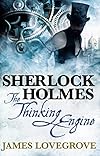
Sherlock Holmes The Thinking Engine by James Lovegrove

Titan Books, 2015, 304 p. Reviewed for Interzone 261, Nov-Dec 2015.

 Sherlock Holmes The Thinking Engine  cover

After The Stuff of Nightmares and Gods of War this is the third of Lovegrove’s Sherlock Holmes novels for Titan Books. (By other hands there are four more with two forthcoming.) The foreword here, supposedly written in 1927 by a retired Dr Watson, places The Thinking Engine in the interstices between the Holmes stories published in The Strand.

Books which extend a franchise, as it were, potentially have to satisfy more than one constituency; devotees of the originals, those of passing acquaintance, the possibility of attracting new adherents – even the odd reviewer unfamiliar with the oeuvre save, perhaps, as part of the general cultural background. Adherents are catered for here by frequent mentions of previous Holmes cases, a couple of diversions on how often Holmes ever used the word “elementary”, sly references to inconsistencies in the canon, several citings of the Reichenbach Falls and an evocation of the Great Grimpen Mire.

The premise of The Thinking Engine promises a foray into Alternative History, a speculative slant to the proceedings, a steampunk ambience. A certain Balliol Professor, Malcolm Quantock, has constructed the Engine of the title, said to be able to solve crimes merely by providing it with all the data required, and newspaper proprietor Lord Knaresfield has offered a prize to anyone who can disprove its accuracy. How can this fail to interest the Great Detective?

The Engine’s first case is that of the murder of a mother and her two daughters for which the prime suspect, the husband and father, has an apparently cast-iron alibi (involving a dog which did not bark.) Holmes, given access to the crime scene by an unusually helpful policeman, Inspector Tomlinson, solves it in short order. So too does the Thinking Engine, a device of whirring rotors and tickertape print-outs (though it later gains a voice based on phonographic disc recordings.) We have to wait a while for this encounter, though, as in the early chapters we are introduced to a pre-fame Harry Houdini, animating the mummy of an Egyptian pharaoh in the midst of night in order to drum up business for an exhibition of antiquities. Such unlikely meetings with the famous in perhaps unfamiliar roles are one of the small pleasures of Alternative History; but here there are few other instances. We are told Charles Lutwidge Dodgson (aka Lewis Carroll) consults the Thinking Engine on a mathematics problem (and appears crushed by its, evidently correct, solution). Later, Home Secretary H H Asquith and the London Police Commissioner visit to assess the Engine’s suitability to aid in the wider aspects of law enforcement.

The Engine’s second case at first seems more trivial. Student Aubrey Bancroft sends poison pen letters to his tutor but is easily unmasked. This affair takes on more sinister attributes when Bancroft is himself poisoned by strychnine contained in a celebratory bottle of champagne. Another apparent piece of nonsense about the crew kidnapping and replacing the arrogant stroke of a rowing VIII ends in the murder of ringleader Hugh Llewellyn. In both of these Watson is conscience-struck by being unable to save the lives of the victims despite being in attendance.

Holmes’s repeated failures to rebut the Engine delight reporter Archie Slater, who takes great pleasure in lambasting him in print. Yet all the cases bear the hallmarks of the perpetrators being manipulated into their acts. A greater intelligence is at work.
Unlike SF, it is the duty of the detective story, of the detective, to restore order to an errant world. Holmes, naturally, does so, but not before exposing himself to danger and humiliation.

Despite occasional USianisms such as, “it’s down to me,” “So you’ve shown up,” “ruckus,” “fit” used as a past tense and instances of possibly unWatsonian usage like, “Oh pish! Think nothing of it,” plus the surely modern, “You reckon you’ve cracked it?” and, “It fair broke my heart,” it’s all very cleverly done and devotees will (I assume) be pleased enough; but lovers of speculative fiction may be less enthralled. The story sticks closely to the Holmesian template, remains firmly down to earth. Far from being an advance on Babbage’s Analytical Engine, the workings of the Thinking Engine are foreshadowed by the business with the mummy, and resolutely quotidian. Its closest comparator (Spoiler!) is a historical machine known as the Mechanical Turk, which Lovegrove himself acknowledges in the text. After this the revelation of the villain of the piece does not come as too great a surprise.

There are neat authorial touches such as Quantock’s allusion to, “paths laid out before me, following the lead of others,” and Watson’s statement that, “It is possible to have refined tastes and peddle dross,” but this book is one mainly for Holmes aficionados.

These comments did not appear in the published review (but “Americanisms” for “USianisms” did):-
Pedant’s corner:- the book is set in 1895 yet Holmes suggests a criminal would be transported to the colonies. Penal transportation had ended by 1868. There are references to Slater’s bookmaker (but off-course betting wasn’t legalised in Britain till 1960.)
Opuses (the plural of opus is actually opera – though I agree that could be confused with a type of musical entertainment,) medieval (mediaeval.) “Whet my whistle” (a confusion with “whet my appetite”? “Whet” means “sharpen”. The correct phrase is “wet my whistle”.) The chemists (it may be plural I suppose but the context suggests otherwise, so chemist’s,) between him and Quantock (“himself” would be less awkward than “him”,) font of all wisdom (I prefer fount,) “when you have quite so clearly lost” (“quite clearly” or “so clearly” but not “quite so clearly”,) one less villain (fewer,) mostly likely (most likely.)

A Literary Gent

In the loosest sense.

This is one of the many sites in Edinburgh associated with men of letters of which the most prominent is of course the Scott Monument.

It’s the statue of Sherlock Holmes which stands in Picardy Place; erected in memory of his creator Arthur Conan Doyle who was born in 1859 near to this site. The Conan Doyle Pub is just over the road in York Place. The childhood home of Robert Louis Stevenson is less than a stone’s throw away from here.

Sherlock Holmes Statue

For Interzone 261

 Sherlock Holmes The Thinking Engine cover

You may have noticed from my sidebar that I am currently reading James Lovegrove’s “Sherlock Holmes The Thinking Engine“. This is for a review to appear in Interzone 261.

free hit counter script