Archives » Ursula Le Guin

Powers by Ursula Le Guin

Orion, 2007. 391p

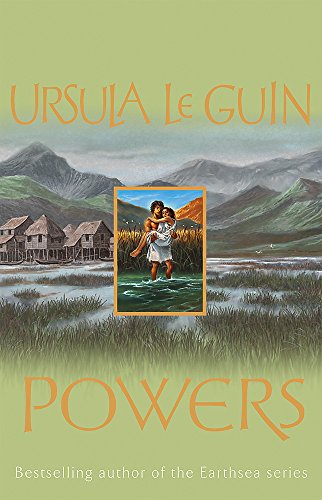
Powers cover

Powers is the third in the Annals Of The Western Shore, Le Guin’s latest story cycle for young adults. Gavir is a boy slave in the Household of Arcamand in the city of Etra. He and his sister are Marsh people stolen from their real home when they were very young. Gavir has visions of the future (the ability to remember things before they happen) but has to keep this talent secret as the city people don’t like those who have such powers.

Le Guin’s description of the relationships in the Household is masterful. The imbalance between the children of the house proper and the slaves is particularly well done. However there seems to be a default antiquity to the scenario – and pre-echoes of Le Guin’s Lavinia which I read recently but was published after Powers – which is perhaps a little too pat. (This could be a criticism of the Annals as a whole.) The inevitable tragedy occurs as Gav’s sister is killed and, in a daze after the burial, he wanders off and becomes a runaway. The remainder of the book is more or less a travelogue as Gav falls into one person’s orbit or another.

The various authorities (powers) with whom Gav comes in contact and in whom he trusts till he learns not to – The Father of Arcamand; Cuga, the hermit who first takes him in; Barna, leader of the runaway slave enclave Gav joins for a while; the elders of his Marsh people to whom he eventually returns – all have different flaws, faces to them which we can see but Gav doesn’t, till changed circumstances force his hand.

Gavir’s power is on the face of it a clever method of foreshadowing but is ultimately unsatisfying as it lessens tension. As a result, though others most certainly are, Gav himself never seems to be in jeopardy. Also, his ability as a seer is never really a focal point of the story, which does rather diminish the (ahem) power of the book’s title.

Not as convincing, then, as the previous instalments in the Annals Of The Western Shore, Gifts and Voices, but Powers is still a Le Guin and consequently a cut above the average.

Final aside. The book’s cover shows a figure, presumably Gavir, fording a river carrying a girl. When he finally does this in the story the girl is actually disguised as a boy.

Lavinia by Ursula Le Guin

Gollancz, 2009. 296p

Lavinia is a historical novel set in mythical antiquity, Bronze Age Italy in the aftermath of the Trojan War. Le Guin has taken a (very) minor character from Virgil’s epic The Aeneid – in the poem Aeneas’s last wife Lavinia has no line of dialogue whatsoever – and given her voice. And a powerful and seemingly authentic voice too. The landscape, homes, religion, politicking, people and battles are all convincingly portrayed. When reading this you feel as if you are there, immersed in prehistory. Even the scenes in the place of oracles where Lavinia talks to the apparition she knows only as the poet – she could merely be dreaming of course – have the stamp of authority. At any rate Lavinia believes in him, and his revelations are borne out by events. There is, too, enough of a body count – foretold by the poet in a long, disturbing list – to satisfy the bloodthirsty.

For Lavinia starts a war. Not by allowing herself to be taken by men, she says (in a beautifully understated inference to the much more famous Helen) but instead by choosing one for herself. I quibble slightly at who actually chooses Aeneas for Lavinia; she is swayed not only by the lack of suitability of the other candidates for her hand but also by her conversations with the poet. Otherwise she is a strong decisive character, who stands up to both her father, the King Latinus, and mother, Amata, and later to Ascanius, Aeneas’s son by his previous marriage.

Given the books context the perennial follies of men are an unsurprising theme of Lavinia, the character and the novel.

Despite its setting the book was on the short list for the BSFA Award for best novel of 2009, which on the face of it is baffling, even if Le Guin is a stalwart of the genres of SF and fantasy. I suppose its proposers could argue that since in the book Lavinia speaks with the ghost of a poet not yet born in her time there is an element of fantasy present. (Le Guin uses the spelling Vergil. I know his Latin name was Vergilius but in my youth the poem was always known as Virgil’s Aeneid.) True too, the past is always a different country. Fictionally it takes as much imagination to invest it with verisimilitude as it does to describe an as yet unrealised (SF) future. Except – sometimes – you can research the past.

This is an admirably realised and executed novel, though, whichever genre you wish to pigeon-hole it with.

Or you could say, as I do, that it is simply an excellent novel, full stop.

A List Of Science Fiction Masterworks

Over at Ian Sales’s blog he has mentioned a meme that seems to come from the SF and Fantasy Masterworks Reading Project.

There seems to be a few more books on Ian’s list than on the Reading Project’s site, in all nearly a hundred. Some appear twice because there are two lists, one in Roman numerals and the other in Arabic.

I suppose the reason that not many of these are recent publications is that it takes time for a book to be appreciated as a masterwork.

The ones in bold I have read. For those starred (*) I have read the short story from which the novel was developed. Those with double stars I believe I read many moons ago but do not now have a copy. The italicised one is in the TBR pile (and has been for donkey’s ages.)

SF Masterworks Index:-

I – Dune – Frank Herbert
II – The Left Hand of Darkness – Ursula K. Le Guin
III – The Man in the High Castle – Philip K. Dick
IV – The Stars My Destination – Alfred Bester
V – A Canticle for Leibowitz – Walter M. Miller, Jr.
VI – Childhood’s End – Arthur C. Clarke

VII – The Moon Is a Harsh Mistress – Robert A. Heinlein
VIII – Ringworld – Larry Niven
IX – The Forever War – Joe Haldeman
X – The Day of the Triffids – John Wyndham

1 – The Forever War – Joe Haldeman
2 – I Am Legend – Richard Matheson
3 – Cities in Flight – James Blish
4 – Do Androids Dream of Electric Sheep? – Philip K. Dick
5 – The Stars My Destination – Alfred Bester
6 – Babel-17 – Samuel R. Delany
7 – Lord of Light – Roger Zelazny
8 – The Fifth Head of Cerberus – Gene Wolfe

9 – Gateway – Frederik Pohl
10 – The Rediscovery of Man – Cordwainer Smith

11 – Last and First Men – Olaf Stapledon
12 – Earth Abides – George R. Stewart
13 – Martian Time-Slip – Philip K. Dick
14 – The Demolished Man – Alfred Bester
15 – Stand on Zanzibar – John Brunner
16 – The Dispossessed – Ursula K. Le Guin
17 – The Drowned World – J. G. Ballard
18 – The Sirens of Titan – Kurt Vonnegut

19 – Emphyrio – Jack Vance
20 – A Scanner Darkly – Philip K. Dick

21 – Star Maker – Olaf Stapledon
22 – Behold the Man – Michael Moorcock
23 – The Book of Skulls – Robert Silverberg
24 – The Time Machine and The War of the Worlds – H. G. Wells

25 – Flowers for Algernon* – Daniel Keyes
26 – Ubik – Philip K. Dick
27 – Timescape – Gregory Benford
28 – More Than Human – Theodore Sturgeon
29 – Man Plus – Frederik Pohl
30 – A Case of Conscience – James Blish

31 – The Centauri Device – M. John Harrison
32 – Dr. Bloodmoney – Philip K. Dick
33 – Non-Stop – Brian Aldiss
34 – The Fountains of Paradise – Arthur C. Clarke
35 – Pavane – Keith Roberts
36 – Now Wait for Last Year – Philip K. Dick
37 – Nova – Samuel R. Delany
38 – The First Men in the Moon – H. G. Wells
39 – The City and the Stars – Arthur C. Clarke
40 – Blood Music – Greg Bear

41 – Jem – Frederik Pohl
42 – Bring the Jubilee – Ward Moore
43 – VALIS – Philip K. Dick
44 – The Lathe of Heaven – Ursula K. Le Guin
45 – The Complete Roderick – John Sladek
46 – Flow My Tears, the Policeman Said – Philip K. Dick
47 – The Invisible Man – H. G. Wells
48 – Grass – Sheri S. Tepper
49 – A Fall of Moondust – Arthur C. Clarke

50 – Eon – Greg Bear

51 – The Shrinking Man – Richard Matheson
52 – The Three Stigmata of Palmer Eldritch – Philip K. Dick
53 – The Dancers at the End of Time – Michael Moorcock
54 – The Space Merchants** – Frederik Pohl and Cyril M. Kornbluth
55 – Time Out of Joint – Philip K. Dick
56 – Downward to the Earth – Robert Silverberg
57 – The Simulacra – Philip K. Dick
58 – The Penultimate Truth – Philip K. Dick
59 – Dying Inside – Robert Silverberg
60 – Ringworld – Larry Niven

61 – The Child Garden* – Geoff Ryman
62 – Mission of Gravity – Hal Clement
63 – A Maze of Death – Philip K. Dick

64 – Tau Zero** – Poul Anderson
65 – Rendezvous with Rama – Arthur C. Clarke
66 – Life During Wartime – Lucius Shepard

67 – Where Late the Sweet Birds Sang – Kate Wilhelm
68 – Roadside Picnic – Arkady and Boris Strugatsky
69 – Dark Benediction – Walter M. Miller, Jr.
70 – Mockingbird – Walter Tevis

71 – Dune – Frank Herbert
72 – The Moon Is a Harsh Mistress – Robert A. Heinlein
73 – The Man in the High Castle – Philip K. Dick
74 – Inverted World, Christopher Priest
75 – Cat’s Cradle, Kurt Vonnegut
76 – The Island of Dr Moreau, HG Wells
77 – Childhood’s End, Arthur C Clarke
78 – The Time Machine, HG Wells
79 – Dhalgren, Samuel R Delany
80 – Helliconia, Brian Aldiss
81 – Food of the Gods, HG Wells

82 – The Body Snatchers, Jack Finney
83 – The Female Man*, Joanna Russ (Edited to add; I have now read this.)
84 – Arslan, MJ Engh

Voices by Ursula K Le Guin

Orion, 2006, 364p

Voices is the second of the Annals Of The Western Shore, the first volume of which, Gifts, I reviewed for Infinity plus.

For a children’s book, Voices mentions surprisingly adult material very early. Our narrator, Memer, of the House of Galva, is revealed to be the child by rape, by invading soldiery named Alds, of a citizen of Ansul. The city was once called Ansul the Wise and Beautiful for its University, Library and architecture but under occupation has remained in ruins, its citizens hungry and fearful.

The Alds, from Asudar in the eastern desert, have a harsh religion which proscribes books. Galvamond, the house where Memer has been brought up, was ransacked repeatedly by the Alds in an effort to find and destroy any books and also the entrance to their version of hell which they believe is concealed there.

Memer’s mother has subsequently died. This is an unusual twist on the absent parents scenario as her father is one of Memer’s hated Alds and is probably still alive (though we never meet him.)

Her first memory is of writing her way into a secret room in the house; a room which contains a host of books – some of which groan or bleed when she touches them – along with other, stranger, manifestations. Galvamond also has in its courtyard an oracular fountain which has not flowed for two hundred years. The house’s patriarch, Sulter Galva, known as The Waylord, was tortured by the city’s occupiers to reveal the house’s secrets but told them nothing. He is the only other person with access to the secret room but does not realise Memer’s knowledge of it until one day she enters while he is there. He teaches her to read.

Orrec and Gry from Gifts arrive in Ansul. He is now a famous travelling poet/storyteller. They have a halflion as a pet. As a result of it spooking one of the Alds’ horses Gry befriends Memer and they come to live in Galvamond for the duration of their stay. Orrec’s presence is later crucial to the unravelling of the plot and the conflict, as is Memer’s role as messenger. Le Guin’s approach to her resolution is again refreshingly out of the ordinary.

All this is conveyed in a clear, liquid prose which flows like a river; everything necessary is there, all the inlets it laps into bear meaning and purpose. The excursions into magic realist territory are not overdone. Le Guin’s assured touch means the book is a delight. Despite being intended for young teenagers Voices is worth reading for anyone who relishes an intriguing story well told, with added insights into the human condition for good measure.

Not Fifteen Books

Ian Sales on his blog mentioned a while back a meme that is going about, where you list the fifteen books that influenced or affected you most and have stayed with you. I don’t know if I can come up with fifteen off the top of my head but here are some.

Dune Messiah by Frank Herbert
The Man In The Maze by Robert Silverberg
The Left Hand Of Darkness by Ursula K Le Guin
Winter’s Children and Hello Summer Goodbye both by Michael G Coney
Lanark by Alasdair Gray
The Private Memoirs And Confessions Of A Justified Sinner by James Hogg
2001: A Space Odyssey by Arthur C Clarke
Pavane by Keith Roberts

The Herbert is there because it was the first Dune book I read (out of the local Public Library, when I devoured any yellow jacketed book in the SF section.) I didn’t know when I picked it up it was a sequel. It still made sense, and is a better novel than Dune anyway. So is Children Of Dune; but the later ones are increasingly forgettable.
The Man In The Maze made me realise what SF could be and do. Silverberg has written books even more impressive but I was on the verge of stopping reading SF till I read this. So Robert Silverberg is to blame for my continuing involvement with the genre.
The Left Hand Of Darkness just blew me away.
All the Michael G Coneys from around that part of his career are superb as I remember. Lump in Mirror Image, Syzygy, Charisma, The Girl With A Symphony In Her Fingers* (aka The Jaws That Bite, The Claws That Catch) and Brontomek! to that list.
Lanark, while being a masterpiece by anyone’s definition also let me know it was actually possible to be Scottish and still get literature of a speculative bent into print.
Confessions Of A Justified Sinner is the prototypic Scottish novel. Jekyll and Hyde, your inspiration was surely here – also, in many senses, my story “Dusk,” despite the fact that stylistically I was more attempting to echo Silverberg. But if you live in Scotland that streak of fatalistic, Calvinistic gloom just gets to you.
2001. Amazingly, I read this before I saw the film. Sense of wonder plus. (At the time.)
Pavane opened up for me the delights of Altered History.

*This, I read only a few years ago, though.

I see the total comes to eight; fourteen if you count all the Coneys. But then I haven’t enumerated all the Silverbergs, nor the Le Guins. And now I think about it there ought to be a Roger Zelazny in there somewhere; any from He Who Shapes, This Immortal, Isle Of The Dead or Doorways In The Sand.

Now, if there were a meme for books that stayed with you for all the wrong reasons!….

Ursula Le Guin

Ursula Le Guin is one of the best, if not the best, Science Fiction and Fantasy writers of the past fifty years. She is now 80.

You can still (until 24/3/09) catch on the BBC iPlayer an interview with her by China Miéville, broadcast on Tue 17/3/09.

Thanks to Zornhau for bringing this to my attention.

My review of Le Guin’s novel Gifts is at Infinity Plus.

The Blind Geometer by Kim Stanley Robinson/The New Atlantis by Ursula K Le Guin

Tor, 1989

The Blind Geometer cover
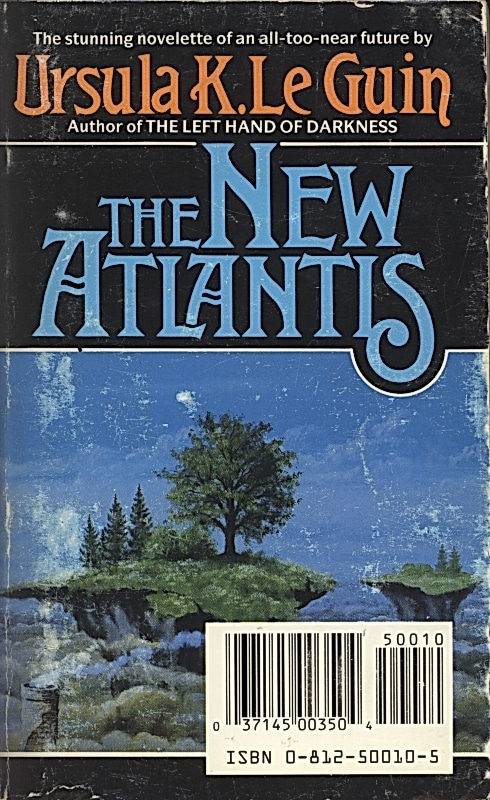
The New Atlantis cover

For those of you unaware of the concept this is one of those Tor Doubles books that twins novellas (puffed as double novels on the cover) by different writers and puts them between the same endpapers; except one story is read from the “front” of the book and the other – upside down in relation to the first – from the “back.” You therefore also get two covers for the price of one. Unfortunately there’s not an easily available picture of either on the internet and Amazon has no copies!

(Edited to add I’ve now found one/two.)

Robinson’s The Blind Geometer was a delight; an example of a story that illustrates one of the reasons why I read Science Fiction. In what other area would you find a piece of fiction featuring n-dimensional geometry and turning on Desargues’s Theorem? The sections are headed by letters (A, AB, AC, BA, O, AO etc) as if they are points or lines in a geometrical drawing. Robinson makes extensive use of (parentheses) [brackets] and {braces} and makes a point of relating this to the language of Geometry. The story even has diagrams. Fantastic.
Okay, the characterisation may not be all that rounded, but the story makes up in brio for any lack in that department. It features a blind narrator, Carlos Oleg Nevsky, a mathematics professor working in the above mentioned field of geometry. This allows Robinson to explore the world view of an unsighted person and the compensations they make, the enhancement of their other senses. An acquaintance asks him to help out with a problem involving a woman who has language difficulties but draws diagrams to communicate with him. This leads Nevsky into a trail of intrigue and danger in which he turns his blindness to advantage in the denouement. I loved it: but it’s not for those who are put off by Maths.

A bonus in this Tor Double is a further Robinson story, The Return From Rainbow Bridge, which could be interpreted as a ghost or doppelganger story or, more science-fictionally, as a two-places-at-one-time story. It is set on a Navajo reservation (Robinson spells it Navaho) and concerns the strange experience of its narrator who tries to take an off-trail short cut back from Rainbow Bridge (the largest natural arch in the world and important to the Navajo in a sacred sense) on his own but eventually receives help from his Navajo guide. Or does he?

Ursula Le Guin’s The New Atlantis is no more than a longish short story set in a corporate state America where marriage is illegal, in a world which is mired in environmental catastrophe, with volcanic eruptions, the old continents sinking and new ones rising from the oceans. Curiously, Le Guin also mentions Navajo (with this spelling.) The protagonist is, of course, married and nothing good results. Le Guin is never less than interesting, though.

This Tor Double’s print size is rather large so you don’t actually get that much content but what a relief to polish off in short order a volume from my not-yet-read shelves.

free hit counter script