Archives » J M Barrie

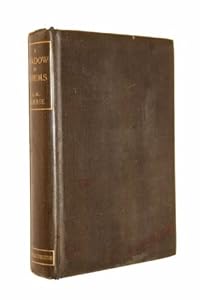
A Window in Thrums by J M Barrie 

Hodder and Stoughton, 1891, 218 p plus iii p Contents.
Again, as in Auld Licht Idylls, our narrator is the local dominie in Thrums, who has a lodging at the home of the McQumpha family; father Hendry, mother Jess, daughter Leeby and son Jamie, who now lives in London. Jess, who is an invalid, has never got over the loss of her other son, Joey, is a fine embroiderer and sits at the window of their house at the top of the brae leading out of Thrums, looking out at the world and hoping to see Jamie coming up the road. Leeby, when younger, was excessively devoted to Jamie and that devotion has spilled over into her caring for Jess which leaves her little time for her own life. Hendry, thoug hard working and honest is more of a background figure.

Along the way Barrie gives us, through the minister, snippets of life in Thrums and of the various characters who lived there. The man who tried to get out of his engagement to one woman because he had taken fancy to another, the older man who came back to the village with a much younger wife and was shunned by his hitherto prospective heirs, the exploits of the town comic.

On Jamie’s last visit Jess is much disturbed by the fact that he has a handkerchief secreted in his clothing. This she takes as a sign that he has a woman friend in London and like many a mother of sons is displeased that another woman could replace her in his affections.

Incidents in the book have parallels with Barrie’s upbringing in Kirriemuir and are reflective of the small town Scots life of his youth which at time of writing would have all but disappeared.

Most of the dialogue is in very broad Scots. Occasionally a Scots word was followed in brackets by its (nearest) equivalent in English. This has the effect of breaking up the narrative. I agree that to readers in England – or elsewhere – these might be required but a glossary would surely suffice for any who are troubled by it. However, the practice did not occur with every Scots word, some of which I therefore had to look up for myself, my Scots vocabulary not being extensive.

Pedant’s corner:- mantlepiece (mantelpiece,) largess (largesse,) youre (you’re,) “therenever was in Thrums” (there never was.)

Auld Licht Idylls by J M Barrie 

Hodder and Stoughton, (this Uniform Edition of Barrie’s works was published between 1928 and 1931,) 243 p. First published in 1888.

This is one of Barrie’s first books and it sits firmly within the Scottish literature tradition in that it looks back on times past and things lost.

Our (unnamed) narrator is the schoolmaster in Thrums, a small village in rural Scotland inhabited mainly by weavers. He describes many of the characters and legendary tales of Thrums and its surrounding area. Only one chapter is from another viewpoint, that of Davit Lunan, who relates his memories of the General Election of 1832.

As a picture of life in the Scotland of the early and mid-nineteenth century this is a valuable historical account. Incidents are varied and illustrative.

Most of the inhabitants of Thrums were Auld Licht adherents, those who preferred the old, extremely strict, church teachings and beliefs. (This is in contrast to the New Lichts, whose beliefs were merely very strict.) There were also some political differences between the two schools of thought. The narrator tells us Auld Lichts were “creatures of habit who never thought of smiling on a Monday.”  (Did they think of smiling at all?)

However, the tales are not without humour. A prospective Minister was giving a favourable impression with his preaching and hence likely to be appointed until a chance gust of wind blew a set of papers from the pulpit thus showing he had been committing the unpardonable affront of reading his sermon. His sin was compounded by the fact he had hidden the offending pages in his Bible.

One husband had lacked the knack of managing women. His wife left him for the house across the wynd but he then, as if she was dead, organised a last wake for her, setting out the customary tables in the street. This so put the wind up her she returned to him.

Another worthy, Bowie, was once heard to say, “‘I am of opeenion that the works of Burns is of an immoral tendency. I have not read them myself, but such is my opeenion.’”

Though I had visited the house in Kirriemuir where he grew up, and seen his grave in the town cemetery, hitherto all I had known of Barrie’s work was that he was the progenitor of Peter Pan, the royalties from which he left to Great Ormond Street Hospital.

Encouraged by reading this one there are two more books in the Thrums trilogy which I will get round to.

Pedant’s corner:- shrunk (shrank – used later,) sprung (sprang,) Shakspeare for Shakespeare (x 2.)

War Graves, Kirriemuir

As well as the grave of J M Barrie, Kirriemuir Cemetery contains several Commonwealth War Graves.

Private W P Brown, RAF, 26/6/1918, aged 17:-

Kirriemuir War Grave

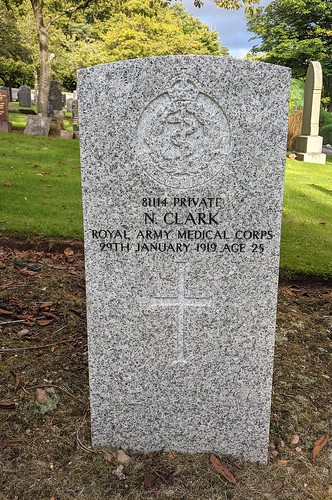
Private N Clark, RAMC, 29/1/1919, aged 25:-

War Grave, Kirriemuir

Private D Lindsay, The Black Watch, 23/9/1919, aged 36:-

Kirriemuir Cemetery, War Grave

In addition this family gravestone had a commemoration of a war death, Robert MacKay Young, killed by enemy action, 28/1/1942. Interred at Reichswald Forest, Cleve:-

War Commemoration, Kirriemuir

Kirriemuir and J M Barrie

Kirriemuir, in Angus, Scotland was the birthplace of playwright and creator of Peter Pan, J M Barrie.

It’s a nice wee town, north of Dundee and a few miles away from Glamis and its Castle which was the childhood home of the late Queen Mother, Elizabeth Bowes-Lyon. (I posted a photo of the War Memorial for Glamis village, on which is the name of her brother, as the Honourable Fergus Lyon, here.)

Many of its buildings are constructed from red sandstone:-

Kirriemuir town square

a street in Kirriemuir.

In the centre of the town there is of course a statue of Peter Pan:-

Peter Pan statue

Barrie’s birthplace is now in the hands of the National Trust for Scotland. The family lived in a room and kitchen on the first floor.

J.M. Barrie's home from street

In a house like this the kitchen is a largish room with a cooking range of some sort and usually what is called a bed recess, which is an alcove designed to fit a box bed into. Probably all the kids in a family would have slept in that bed. Today a kitchen like that would be described as a ‘family room’ as it was multi functional. The ‘room’ usually had a bed recess too and the parents slept in that one. Sometimes the ‘room’ doubled up as a sort of parlour during the day. There were eight children in the Barrie family and what with all of them and the noise of the weaving looms on which his father worked, it must have been a bit lively.

The entrance doorway is round the back:-

J.M. Barrie's childhood homedoor 2

Just across form the entrance is a washhouse which was J M Barrie’s inspiration for the Wendy House in Peter Pan.

washhouse in Kirriemuir

There’s not much light in there but you can see the tub, basket and washboard:-

a washhouse interior

Barrie never forgot his origins. One of his brothers died young and he used this as the genesis of the idea for the ‘boy who never grew up.’ Barrie’s mother could not get over her loss and he himself felt pressure to live up to her perfect memory of his dead brother. Despite his subsequent fame and fortune he was buried in the family plot in Kirriemuir Cemetery (which is up a fairly steep hill from the road leading east out of the town.)

Barrie’s grave. The plaque saying ‘J M Barrie Playwright’ is reasonably new. When I first visited there the grave’s surroundings were much plainer:-

Grave of J M Barrie, Kirriemuir Cemetery

free hit counter script