Morning Tide by Neil M Gunn
Posted in Reading Reviewed, Scottish Fiction, Scottish Literature at 12:00 on 27 August 2022
Chivers, 1993, 371p. First published 1931.

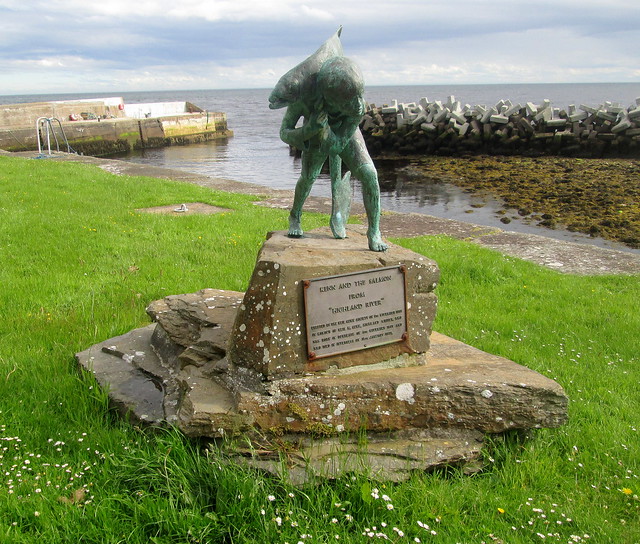
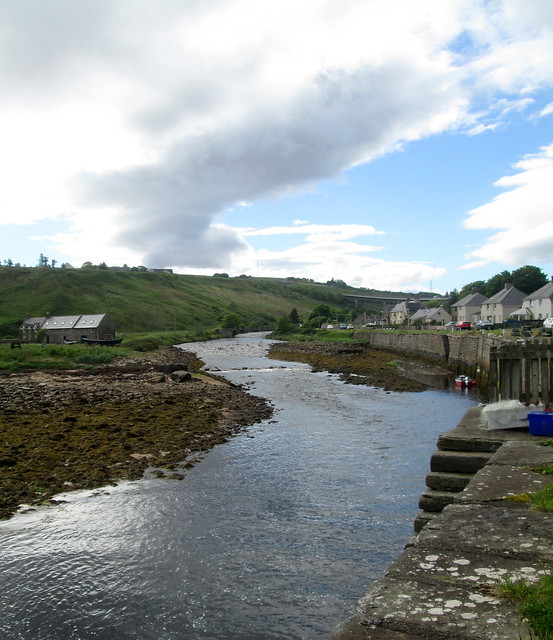
Like Highland River, this is a tale steeped in Gunn’s experience of growing up in the coastal village of Dunbeath in Caithness. The viewpoint character is Hugh MacBeth, youngest son of the family but old enough to be tasked with collecting mussels with which to bait his father’s fishing nets. Part One is a slow unfolding of the realities of living slightly away from the small community but nevertheless enmeshed in it and displays a deep knowledge of the fishing life and empathy for a child on the cusp of early manhood. Hugh’s sister Grace has been away working in a city but recently returned home. He is mildly disturbed by meeting her walking along the road one evening with Charlie Chisholm, with whom his other sister, Kirsty, apparently has an understanding. His father is an accomplished seaman but his mother is opposed to any venturing out in boats by his elder brother Alan, since the McHughs’ other son, Finlay, had drowned several years before. The dramatic climax comes when Alan has offered to take a place in another man’s boat due to a crewman’s indisposition. A storm brews up shortly after the boats are out and a magnificently described passage shows us the perils of trying to make safe harbour in a raging sea and the fears of the women – and men – on the shore. Alan’s boat grounds just outside the harbour mouth but lines cast out from the shore help all to safety. In the meantime Hugh’s father’s boat appears doomed to all the observers when it materialises out of the rolling swells. Yet he times the approach and angle to the small harbour entrance to catch a wave surging into its shelter.
Part Two sees Hugh’s initiation into the company of older men and involvement in a ploy to poach salmon from the upper reaches of the local river, on the return from which he overhears Kirsty and Charlie Chisholm having a serious conversation about their relationship. By this time Alan has resolved to make a life for himself in Australia, an outcome which his mother much prefers to a life on the boats even though she is unlikely ever to see him again.
Hugh’s interactions with his peers and elders and theirs with him and each other are all firmly rooted. Understated love, minor betrayals, low-key heroism, the exigencies of a hard life (when doctors are only available by calling at their houses and even then may be out on a call) are all implied rather than underlined. This is a fine novel.
Pedant’s corner:- Magus (elsewhere Magnus.) “Bows rained on his own face” (Blows rained,) page 40 refers twice to Sandy – this is the name given to another character not in the scene. It is Hugh who is, and Hugh who is meant. “Icredible” (Incredible,) “a light in Morags” (Morag’s,) “tears navigating he zigzag furrows” (the zigzag furrows,) a missing full stop. “Ner’er” (Ne’er,) “a breat of snow” (a breath.) His conused mind” (confused,) “thrust two half-crowns into this pocket” (his pocket.) “He seemed to playing a game” (to be playing a game,) “he grilse rolled in his jersey” (the grilse.) “Cast they bread upon the waters” (Cast thy bread) not yet riches (nor yet riches.)