Posted in Architecture, Bridges at 12:00 on 14 October 2023
St Mary’s Collegiate Church, Haddington is a fine example of church architecture.
Church from approach path:-

The next two photos are stitches:-


The River Tyne flows past the rear of the church and under the Nungate Bridge:-
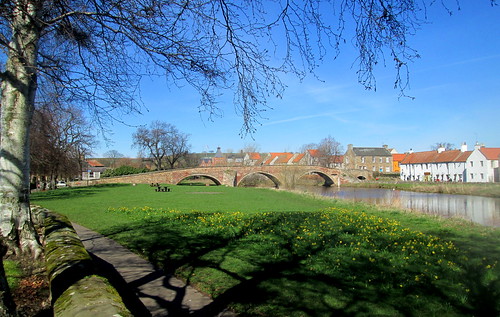
I assume at one time nuns passed through the Nungate on their way to and from the church.
No Comments »
Posted in Architecture, Trips at 12:00 on 5 September 2023
The good lady had for a few years fancied a look at Knaresborough in Yorkshire. We finally visited in November last year.
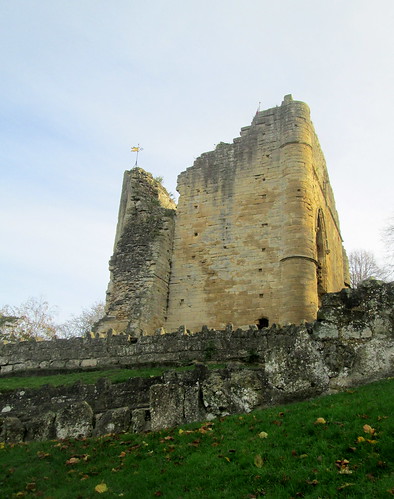
Knaresborough Castle is perhaps the town’s most historical feature.
Castle approach:-
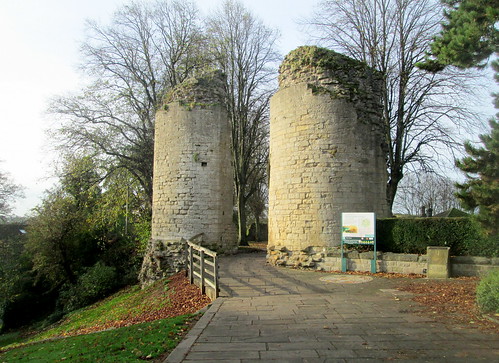
Information Board:-

The first structure you come across, though, is the castle’s Sally Port:-

Information Board:-

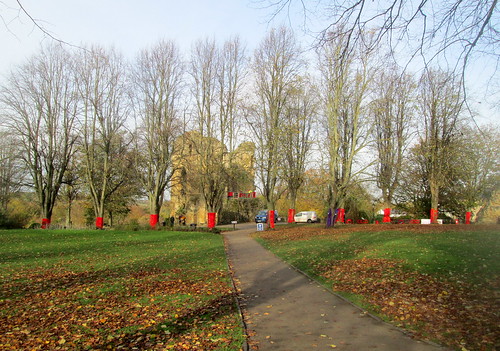
It being November the castle was done up in Remembrance Day colours:-

Including this figure of a World War 2 soldier. The figure of the Great War soldier had not yet been set upright:-

Castle ruins:-

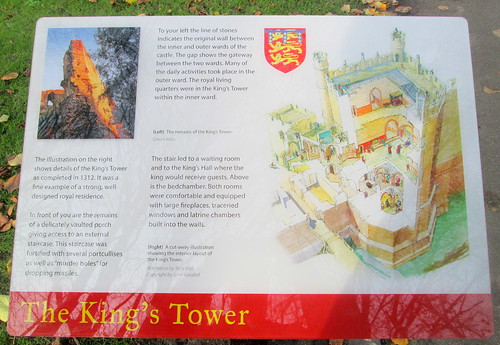
King’s Tower board:-
Castle from below:-
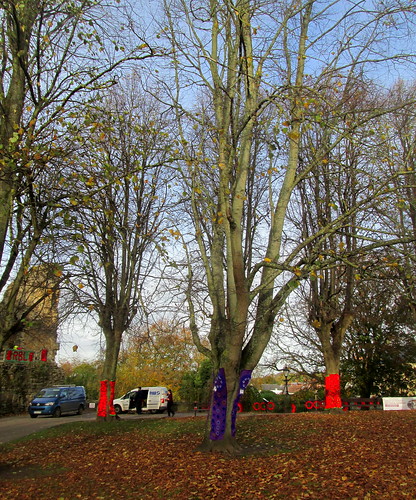
The trees in the surrounding gardens were covered in purple poppies and the more usual red ones. The purple ones commemorate animals that died in war:-
4 Comments »
Posted in Architecture, Art Deco, Trips at 12:00 on 31 July 2023
Galbraith’s, on the corner of Burns Statue Square and Miller Road, Ayr. Curved corner, detailing to top, flagstaff, rule of three in windows to right. (Lower windows completely ruined):-

Art Deco detail:-

Miller Road aspect:-

Curved gable end to Galbraith’s Miller Road facade. Ruined windows, though:-

No Comments »
Posted in Architecture, Art Deco, Trips at 12:00 on 29 July 2023
The Smokehouse, Alloway Place. Curved windows with rule of three, white rendering, flat roof. The upper windows may be original Critall ones. (Or perhaps not, what with their black surround.):-

The windows in the one below are Deco, as are the rooftop projections. The middle portion has an eastern feel though. Overall it’s an odd one. It’s situated on the A 719 where it merges with Main Street.
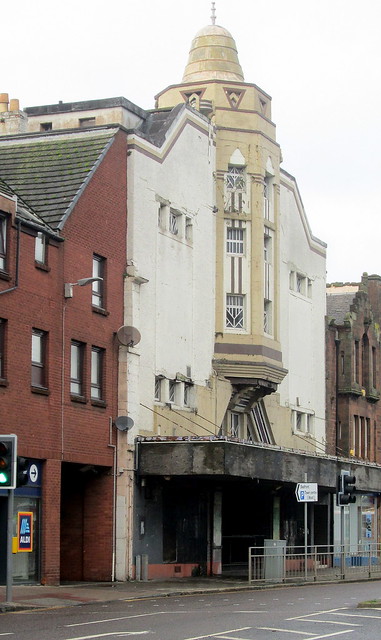
Frontage:-

1 Comment »
Posted in Architecture, Art Deco, Trips at 20:00 on 26 July 2023
On corner of Fort Street and Barns Street:-

On corner of Garden Street and River Street:-

Art Deco detailing on the Kyle Shopping Centre in Ayr, now closed. Carrick Street frontage:-

High Street frontage:-

No Comments »
Posted in Architecture, Art Deco, Cinemas, Trips at 12:00 on 24 July 2023
Art Deco cinema in Ayr. Statue of Robert Burns to right. Memorial to Colonial Wars to left.

Apparently this is the first true Odeon to be built in Scotland. Sadly as the following two photos show it is now somewhat in need of care and attention.
Odeon Cinema, upper portion:-


2 Comments »
Posted in Architecture, Art Deco, Trips at 12:00 on 20 July 2023
On our trip to Ayrshire in October we stayed overnight in Ayr. I found plenty to photograph including the Art Deco Gaiety Theatre. The attached building (Stagedoor) is also Deco in style:-

Photo of Gaiety showing stepped roofline, streamlining, canopy:-

Gaiety’s entrance column:-

Stagedoor from side:-

No Comments »
Posted in Architecture, Trips at 12:00 on 9 July 2023
Dumfries House, whose last private owner was the racing driver Johnny Dumfries (John Crichton Stuart, the 7th Marquess of Bute,) was about to be sold off along with its contents and those contents scattered to the world when Prince Charles – as the King was then – was instrumental in saving it for the nation.
Since then the estate has become a centre for employment – it’s the second biggest employer in East Ayrshire after the Council – and opportunities for young people and others to learn skills and set up enterprises.
Since we were going to be in the area last October we took the opportunity to visit the house and its grounds.
Our first view of the house was from the rear as that’s the bit nearest the car park:

House frontage:-

Closer view:-

The interior is worth seeing with many expensive items of furniture including a Chippendale display cabinet (the guide called it a bookcase, though.)
The grounds have some quirky architecture, among them a Belvedere:-

Steps leading to Belvedere:-

Belvedere:-

Cute house in the kitchen garden:-

Pagoda (for rest) at end of garden path:-

There was also a pagoda structure inside the maze (which we didn’t enter):-

2 Comments »
Posted in Architecture, Dumbarton at 12:00 on 22 May 2023
In my previous post about St Augustine’s Church, Dumbarton, I mentioned that I ought to have photographed its fine stained glass west window from inside.
In September, on West Dunbartonshire’s open day, I got the opportunity.
From body of church:-
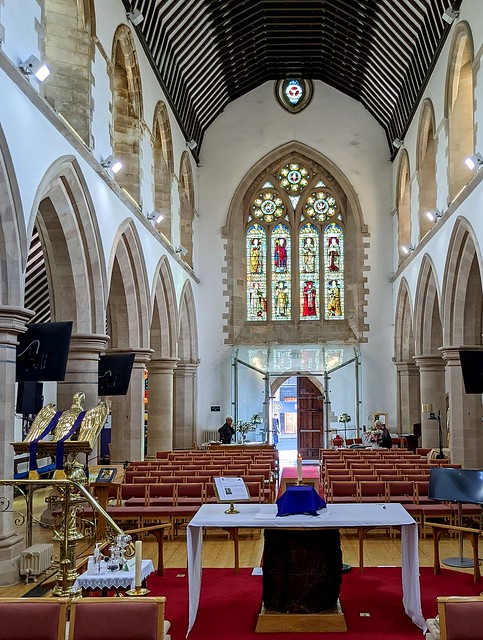
Closer view:-

There is a smaller set of stained glass windows (at the back of the left-hand aisle as you look at the above):-
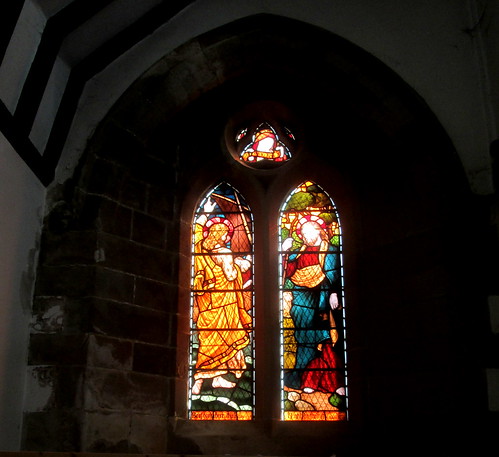
And of course there is another set of stained glass wimdows above the altar. Chancel and altar:-

An addition to the church from when I remembered it there has been a new addition, a cross made by artist John Woodcock to commemorate those who have died of addiction:-

Inscription:-

No Comments »
Posted in Aberdeen, Architecture at 12:00 on 20 March 2023
On our trip up north last August we stayed in a hotel in Dyce.
We knew there were ancient symbol stones near there but had never visited them.
They are in St Fergus’s Church, the old Dyce Parish Church but now a fair bit out of town. The church sits on a hilltop beside a bend in the river Don, a lovely situation:-

The church was built in the 13th century but the symbol stones date from the 800s.
Ruins of church:-
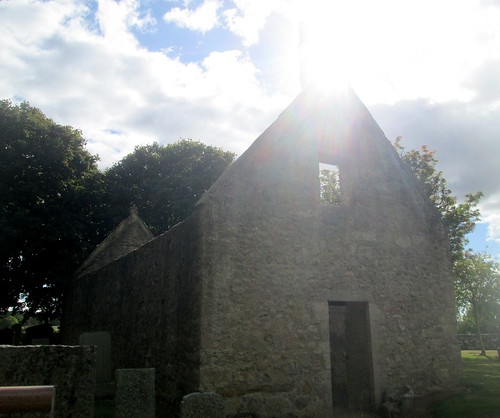
Symbol stones at nearer end of church ruins:-
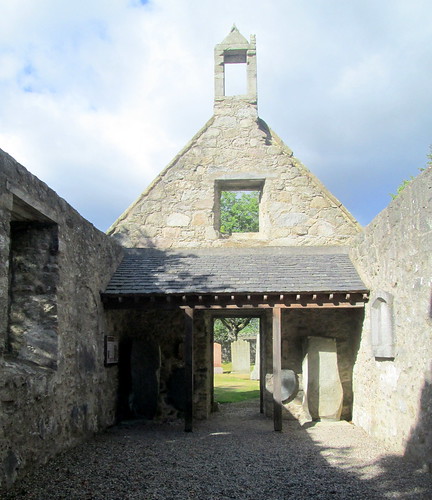
Information Board:-

Symbols:-


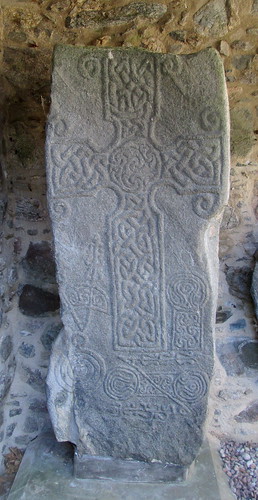
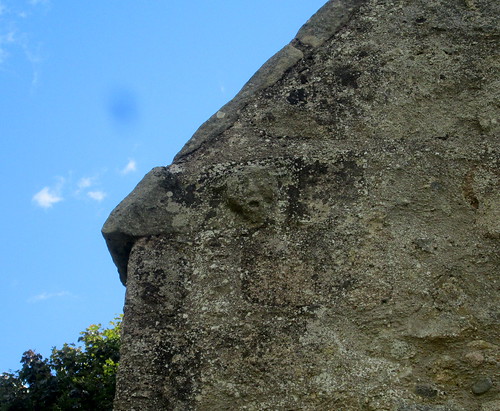
In the church yard we met a man who who was a retired stonemason and had worked on the church years before, so he pointed out things of interest, including the ‘green mannie’ on the corner of the building which you can just see in the photo below, he had actually discovered it when he was repointing the church.
No Comments »
