Arbroath Abbey (ii)
Posted in Trips at 14:00 on 12 July 2025
Information board:-

More of Abbey ruins:-


Part of tower:-

External gateway:-

Reverse view of Gateway:-

Posted in Trips at 14:00 on 12 July 2025
Information board:-
More of Abbey ruins:-
Part of tower:-
External gateway:-
Reverse view of Gateway:-
Posted in Trips at 19:00 on 10 July 2025
It wasn’t just William the Lion’s grave I photographed at Arbroath Abbey.
Model of the Abbey in its heyday (in visitor centre):-

Other view:-

Information board:-

Ruins from visitor centre:-

Looking back to visitor centre:-

Part of Abbey:-


Posted in History, Trips at 12:00 on 18 December 2024
Ramparts at Avebury:-


If you follow the path round you come to the outer circle of stones complete with grazing sheep:-


Standing Stones from road:-

Inner circle of stones with people communing with the spirits of the past:-


Posted in History, Trips at 12:00 on 16 December 2024
Some of the large stones at Avebury.
We were amused to see some of the people at the site hugging the larger stones as if they actually were portals to the past or of some spiritual significance. To the people who erected them they probably were; but in the end nowadays they’re just stones:-


Standing stone and rampart:-

Posted in Architecture, Trips at 12:00 on 9 September 2024
If you turn left after passing through the War Memorial Arch at the entrance to Penrith’s Castle Park you can stroll up to the ruins of Penrith Castle, in the care of English Heritage. There’s not much more to say about it beyond what is on the information board.


Posted in Architecture, Bridges at 12:00 on 24 August 2024
Blackness Castle sticks out into the River Forth a few miles west of the Forth Bridges. (See photograph in the link.) Because of its situation and prominence it is sometimes known as ‘the ship that never sailed’. It has had several uses over the years since it was built in the 1440s including as an ammunition store. As with most Scottish castles it has featured in the TV series Outlander.
Infiormation board:-

From approach road:-

Closer view and modern entrance:-

Side view and old entrance:-

Old entrance: now blocked off. The notice warns you not to climb on it:-

As you can see in the photo in the link a pier pokes from the castlefurther out into the river.
Castle from pier. (Stitch of two photos.):-

Pier, part of Castle and Blackness village beyond:-

View west from pier:-

View east: three bridges across the Forth:-

Close-up:-

Posted in Architecture at 15:30 on 17 August 2024
South range and rooftop, Linlithgow beyond:-

Rooftop looking east:-

Great Hall fireplace:-

Interior:-


Stairwell:-

Window seat:-

Posted in Architecture, Trips at 12:00 on 22 January 2024
Spiney Palace lies a few miles north of Elgin and is a similar distance south of Lossiemouth.
View from entrance pathway. As is quitecommen when wev visit places it was swathed in scaffolding:-

Information board:-

Artist’s impression of the palace in its heyday:-

View of little tower:-

Part of Great Hall looking towards water tower:-

East gate and walls:-

Great Hall and well:-

Tower:-

(and scaffolding):-

Posted in Architecture, History, Trips at 12:00 on 18 January 2024
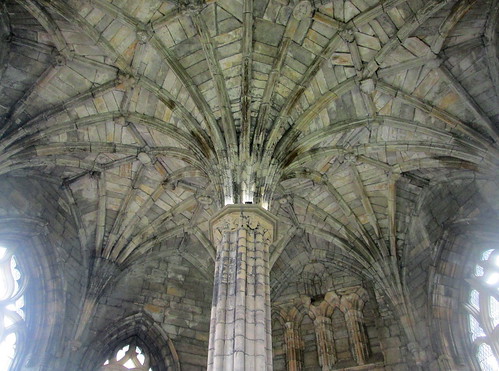
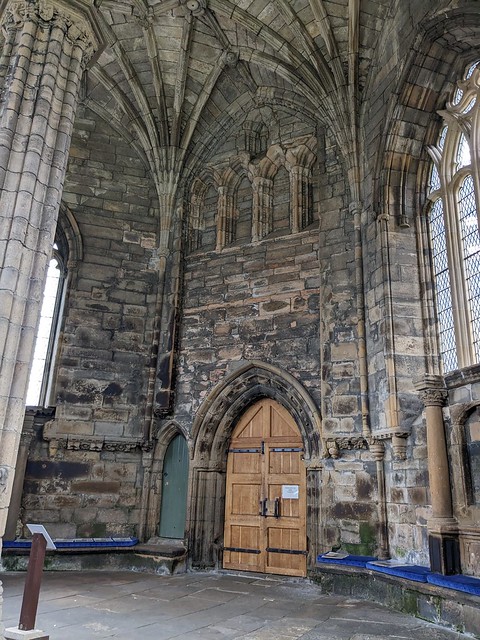
As we were leaving Elgin Cathedral the custodians asked if we had visited the Chapter House. We hadn’t, as it appeared to be fenced off but we were assured there was access to it and so we went back.
On the way we passed this Pictish Stone:-
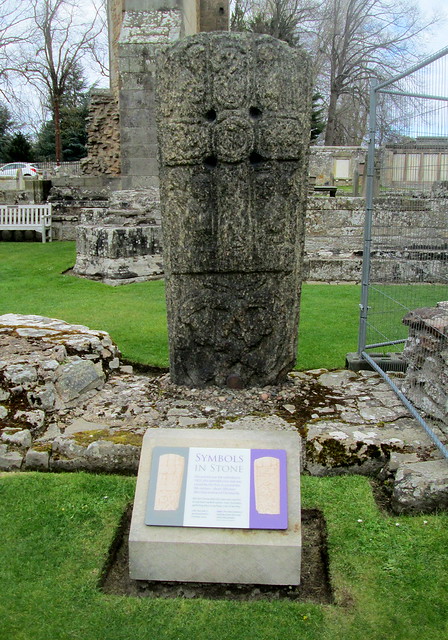
Reverse:-

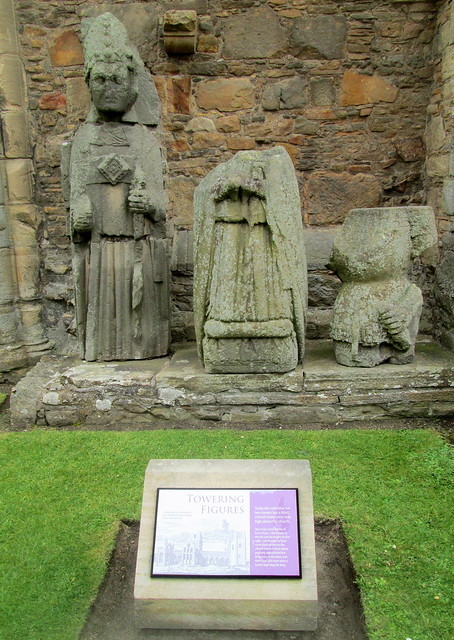
Plus some carved figures:-
The Chapter House is stunning. It’s apparenty the best of its kind in Scotland. I can well believe it:-


Posted in Architecture, Trips at 12:00 on 13 January 2024
Elgin Cathedral is perhaps the best reason for visiting the town. It’s a very impressive ruin.
Ruins with (intact) Chapter House to centre right:-


Closer view from left:-

Ruins:-

Elgin Cathedral towers and ruins:-

Towers end:-

