Archives » Magic Realism

The Hamlet by Joanna Corrance

NewCon Press, 2025, 115 p. Reviewed for ParSec 14.
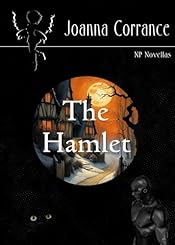
This was published as a novella but reads more like an assemblage of short stories with characters which cross over from one to the next, though outwith their own tale, usually only in brief appearances. Its background premise – something strange (but unspecified) has happened and people have been advised to remain indoors – may be a literary response to Covid. The setting is a small village in Scotland – locals call it a clachan but incomers have used the description hamlet (which I note is actually a particularly English designation) for so long that it has become more common. The village ‘spinsters,’ however, still frown upon it. Apart from the first, very short, chapter which introduces the strange event, each section is given over to the experiences of different characters, Beth, Polly, Helen, Eve, Robyn and Jeanie, with the novella ending with a sort of epilogue from the point of view someone called the Spaceman.

The stories’ time scales are not always immediately apparent as some chapters start before the strange event or more or less ignore it happening. However, there’s enough oddness going on even without it.

Responding to a voice calling to her, Beth, who has inherited her home from her mother and not improved it in any way, instead letting it run to squalor, manages to move through the pipes in her plumbing, whether by her shrinking or the pipes expanding is moot. Eventually she is drawn down to an underground chamber to chat with the spinsters about the end of the world. The chapters which follow may represent different ways in which that end happens.

Thanks to the green-suited spaceman who appears at her window one night, schoolgirl Polly travels the universe and becomes both a witch and a princess.

Helen begins to produce videos which attract internet followers but increasingly show her lack of control of her life.

To escape the locked down city Eve has come to the cottage she rents out to Matthew (known locally as the Pest.) Not a good choice.

At Helen’s request Robyn builds a doll’s house as an exact replica of Helen’s home but realizes it also needs a doll’s house inside it and then another inside that and so on down.

Jeanie begins to act strangely and eventually locks herself away from everyone. She is however revealed to be a figment, a skin the narrator wore to make her life more amenable. The implication is that all the viewpoint characters are such skins. (But this is the essence of fiction. The reader temporarily becomes – or at least empathises with – a book’s characters.)

The Spaceman is from another world.

The Hamlet has aspects of a fairy tale (but there do not seem to be any happy ever afters, except perhaps for Polly,) has some of the heightened sensibility of magic realism (with a faint echo of John Burnside’s Glister,) moments of horror, and makes a foray into Science Fiction. Whether the disparate elements necessarily cohere into a unified whole is a matter for the individual reader. Corrance can write though.

The following did not appear in the published review.

Pedant’s corner:- “The McIvor’s lived in” (the McIvors lived in,) sat (x 2, sitting, or, seated,) “Mums washing machine” (Mum’s,) “paper mâché” (paper mache:  if its ‘mâché’ then it’s papier mâché,) “it sloped passed me” (past me,) airplane (aeroplane,) “the High-lands” (the Highlands,) curb (kerb.) “‘So where did you learn to cook?’ She asked.” (‘So where did you learn to cook?’ she asked,) “when they played drafts” (draughts,) dollhouse (doll’s house,) “most Saturday’s” (most Saturdays,) “and come pick me up” (come to pick me up,) miniscule (minuscule,) “the little girls’ eyes” (it was only one girl; ‘little girl’s eyes’.)
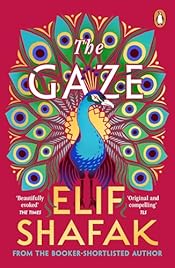
The Gaze by Elif Shafak

Penguin, 2018, 265 p. Translated from the Turkish, Mahrem, by Brendan Freely

Shafak has been called by no less an authority than Orhan Pamuk “the best author to come out of Turkey in the last decade.” Her background is a little more than simply Turkish though, as she has lived in Turkey, the US and now London. Her later books have been written in English, though her afterword here says she has these latter works translated into Turkish by professional translators which she then rewrites with “my rhythm, my energy and my vocabulary.” Then, presumably, they are translated back into English otherwise why would Brendan Freely have been required? This is the first book of hers that I have read. I doubt it could have been written by someone whose only experience of culture is anglophile. There are various flights of fancy more akin to magic realism than straightforward representational fiction or excursions into faery.
Our (unnamed) female narrator lives with her lover – only ever named B-C – in the Hayalifener Apartments in Istanbul. Whenever they appear in public they attract attention because she is obese and he is a dwarf. Their story is interspersed with that of Keramet Mumî Keşke Memiş Efendi whose birth killed his mother. He was born smelling of wax, with a transparent face and his waxy body had to be shaped by his aunt before he hardened into shape but time ran out before she could complete his eyes. In Pera in 1885 he sets up an entertainment complex in a huge cherry coloured tent. Here women can observe all the ugliness of the world including Sable Girl, descendant of the offspring of a sable and a human in Siberia in 1648, and who have bred true hybrids ever since. In a separate show men can contemplate all that is beautiful; such as La Belle Annabelle whose equally incredible origin story originates from Paris in 1868. Keramet Mumî Keşke Memiş Efendi “knew well that women were each other’s enemies above all,” and that “There were rules that all women knew but never mentioned.”

The narrator bites her cuticles raw, an unsavoury incident from her past gives a possible psychological explanation both for this and her compulsion to eat. It continues to haunt her. “When people commit sins, they can’t stand to be in the same place with someone who has witnessed this,” and “If there are no witnesses a person can forget the past.”

One of her observations is that when dieting, “with just one bite of chocolate, the will power that the person has with time and effort wrapped around the spool begins to unravel. And it’s too late to reel it back in. After you’ve eaten chocolate you can eat anything. Just as a sinner who has once committed the gravest sin considers other sins too insignificant to cause suffering, so any kind of food seems harmless after you’ve eaten a box of chocolates.” Another states “The stomach is a mythical land. Guards made of chocolate wait all along the borders. Once you’ve eaten the guards there’s nothing left to prevent you from breaking your diet.”

Lover B-C thinks that “our lives are based on seeing and being seen” and begins to compile a Dictionary of Gazes. This, especially the tenor of the extracts from it, reminded me a bit of Pamuk’s Museum of Innocence. B-C says its entries are secretly linked to each other “‘a shaman’s cloak of forty patches and a single thread.’” Its entry for hallucination reads: “For thousands of years people had been drinking infusions of mushrooms in order to see what they hadn’t seen. Later they became frightened of what they could see.”

The text builds up its effect with various repetitions and references back. When the narrator finally reads the Dictionary of Gazes she realises B-C’s true intentions. “What he wanted was to take bits and pieces of my stories and other people’s stories and mix them all together. When he’d done this there’d only be a single thread holding it all together; himself!” This is of course as true of Shafak as the writer of this book while also describing it pretty well.

In a final twist that resembles Kate Atkinson’s in A God in Ruins but isn’t quite as stark our narrator imagines how all that came before might have been altered. “Everything could have worked out differently. That means every story can be told differently.”

Shafak tells this one very well indeed.

Pedant’s corner:-“off of” (just ‘off’, no ‘of’,) “that wouldn’t fit into their sleds behind them was they went” (as they went,) “nourished not only by his mother’s blood but the also by time itself” (no need for that ‘the’,) canvasses (canvases,) “he greeted me with either with” has one ‘with’ too many,) “make up stories, and kneed coloured clay” (knead,) “had showed me” (shown me,) “and me and my warmly dripping fat had been flung for miles” (and I and my warmly dripping fat,) “Fames’ breath” (Fames’s,) “didn’t take its eyes of the East” (off the East,) “trying to loose weight” (lose; plus three more instances of ‘loose’ for ‘lose’,) “but when something large become smaller” (becomes,) “she emptied bowl of pigeon feed” (the bowl of pigeon feed,) chaise-longe (x 2, chaise-longue,) “a  few grams less” (a few grams fewer,) “it makes it’s own way” (its own way,) “a Cyclops’ cave” (Cyclops’s,) Odysseus’ (Odysseus’s,) “before it has” (rest of sentence is in past tense; so ‘before it had’,) “because there were still something that had stayed inside me” (because there was still,) a missing space between a colon and what followed.) “At that moment the moment the fish began jumping” (no need for ‘the moment’,) “the Two Scillies” (the Two Sicilies that would be,) “and flung in at the cat” (flung it at the cat,) one new paragraph was unindented, “who has a issue with” (an issue,) “it was as he was looking” (as if he was looking,) “and I not only hadn’t I eaten anything” (No need for the second ‘I’,) “to sacrifice itself on the wet mother-of-pearl alter” (altar.) “I was getting light-ter” (I’ve no idea why this was hyphenated in such a way,) “does humanity has any privacy at all?” (have any privacy,) “had stepped on the breaks” (brakes.) “The crowd are holding their breath” (crowd here is singular, the crowd is holding.)

The Old Drift by Namwali Serpell

Vintage, 2019, 574 p.

The Clarke Award (whose 2020 version this novel won) has a history of recognising, and sometimes rewarding, novels which are only marginally SF. At first sight this novel seems to be of that ilk – resolutely realist in tone, albeit with the occasional magic realist flourish, almost family saga in form (there is even a family tree facing the contents page,) while incorporating the history of Zambia and white colonialism in Southern Africa in its purview. Only in its later sections does it stray into SF territory and that in a way which non-SF readers may find jarring. To British eyes the text is a curious mixture of British – bum (as in backside,) maths – and US – fit as a past tense, swim lessons (swimming lessons,) mowed down (mown down) – usages, but there is also a generous sprinkling of Zambian words.

The novel is bookended by two short sections, The Falls – “The Smoke That Thunders” which David Livingstone of course immediately named after Queen Victoria – and The Dam (the Kariba Dam,) but the main body of the book is taken up by incidents in the lives of “The Grandmothers,” “The Mothers” and “The Children,” to each of whom a section, though not always exclusively, is devoted. (In The Falls we are told that Livingstone’s attendants transported his body to the coast – and thence to England – not out of devotion or duty to him, but rather from fear that otherwise his death would have been blamed on them. The explicit racism of European colonisers in Africa is expressed in some of the words used.) Intermissions between the sections, rendered in italics and occasionally commenting on the text, are written as if by anopheles mosquitoes. In one of these interludes we are told that “evolution forged the entirety of life using only one tool: the mistake…”

The Grandmothers are Sibilla, whose hair grows uncontrollably – all over her body, Agnes, a promising English tennis player who had to give up the game when she became blind and who falls in love with Ronald, a black student come to England from Rhodesia (as was,) and therefore has to run away from her racist parents in order to marry him, and Matha, one of the participants in Zambia’s unofficial space programme (an aspirational effort the concept of one individual, Ba Nkoloso, without any of the resources nor capability necessary to succeed.) Pregnant, and told Godfrey has left her, Matha begins to weep unceasingly, her eyelids crusting over with salt, an affliction which lasts the major part of her life thereafter.

Of the Mothers, Sylvia is Matha’s daughter by Godfrey, one of her fellow Afronauts, Isabella the result of Sibilla’s union with Federico, forced to flee Italy after killing his brother but usurping his identity, and Thandiwe marries Agnes’s son Lionel (who also impregnates Sylvia.) The Children are Joseph and Jacob (the ensuing sons of Lionel’s two unions) while Naila is the child of Isabella’s marriage to Balaji, a shopkeeper of Indian sub-continental origin. Sibilla’s children inherit her hair-growing condition – but only at twice the usual rate and only on their heads. This is transformed into a family wig-making enterprise known as Lovely Luxe Locks Ltd.

There is a nice exchange between Agnes and Ronald when he asks, “‘But I thought the English hated the French,’” and she replies, ‘Oh we do, but we steal from them mercilessly. It’s our sort of thing,’” a comment on the perennial position of women when we are told Matha thinks, “She had never imagined that to be a woman was always, somehow, to be a banishable witch,” and a rumination on the myths countries tell themselves, “This sort of thing happens with nations, and tales, and humans, and signs. You go hunting for a source, some ur-word or symbol and suddenly the path splits…. Where you sought an origin, you find a vast babble which is also a silence.” We also have Serpell’s variation on Tolstoy, “Every family is a war but some are more civil than others.”

The main Science-Fictional ingredient in the tale is the Digit-All Bead, a kind of iPhone embedded in a finger which utilises the skin’s conductivity as a power source and shines its information onto the palm – or elsewhere if needed. This invention, since it appears in the book’s 2000s, makes The Old Drift an Altered History. Digit-All had been savvy in calling their product a bead rather than a chip as it sounds less threatening. They then partnered with local governments to distribute their beads free. Its connection to the internet makes it the ultimate surveillance tool. Another SF-ish element is Jacob’s development of lightweight microdrones – to all intents and purposes technological mosquitoes.

Hanging over the characters in the later sections is a pathogen only ever named as The Virus (which the reader will naturally take to be HIV but may not be. It does have HIV-like characteristics, though.) Lionel is researching a way to immunise against it and is particularly inteeested in people who seem to have natural immunity. Two human mutations are likely candidates. The person he calls the Lusaka patient has both. Serpell compares the Virus’s modus operandi – infiltrating the immune system’s white blood cells (usually the body’s defenders) to reproduce itself – to its main means of transmission, sex, “it takes advantage of the two engines of life – the desire to reproduce and the will to persevere.”

Serpell undoubtedly can write and has an eye for the variety of human relationships. I am not entirely convinced, though, that the later sections and the novel’s conversion into a subdued kind of technological thriller really belong together with the earlier character-based narratives but as an attempt to render the (relatively) recent history of Zambia in fictional form by focusing on the lives of individuals The Old Drift is still a formidable achievement. I have no doubt that it will linger in my mind.

Pedant’s corner:- “The hair on her crown and face were the same” (was the same,) sprung (sprang,) “irked Agnes to no end” (irked Agnes no end; ‘to no end’ means without purpose, ‘no end’ means without limit,) Cadbury Whole Nut (in Britain it always used to be “Cadbury’s” but I note that they have recently dropped the apostrophe and its ‘s’,) Walkers shortbread (Walker’s,) “to secret her to Kasama” (that’s the first time I’ve ever seen ‘secret’ as a verb, it appeared as such once more,) wracked (racked,) stunk (stank,) “because was it was” (one ‘was’ too many,) grills (grilles,) “turning those minuses into plusses” (‘pluses’; and in any case why put a double ‘s’ in plusses but not in minusses?)

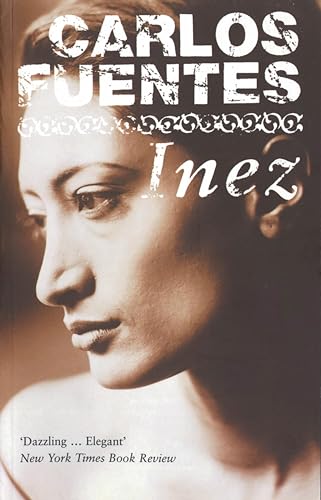
Inez by Carlos Fuentes

Bloomsbury, 2003, 156 p. Translated by Margaret Sayers Peden (into USian) from the Spanish Inez.

 Inez cover

Fuentes is the first Mexican writer I have read and his style has similarities to fellow Latin Americans Gabriel García Márquez and Maria Vargas Llosa but couldn’t be mistaken for either. Throughout Inez his prose has that assuredness – even in translation – of a writer in full control of his material and vision, one whom the reader feels instinctively can be trusted to know what he is about.

Here, Gabriel Atlan-Ferrara is a famous conductor, precious enough to regard himself not merely as a conduit but as a chef d’orchestre. He will make no recordings, only performing live, so that each concert is unique, unrepeatable, believing that this forces audiences to listen. The story of his involvement with the Inez of the title, born Inés Rosenzweig but professionally known as Inez Prada, revolves around three performances of Berlioz’s Damnation of Faust; in bomb-ravaged London in 1940, Mexico City in 1949 and London again in 1967. This tale is intercut with the much more obscure account of the pre-historical first encounter between a man and a woman, known respectively as neh-el and ah-nel, told mostly in the future tense. Due to that use of tense these passages are rendered trickier to read, a blend of myth and destiny lending a distancing to the events, at least until this second narrative crashes into the first during that third concert.

As well as love, sex and death (“Sex teaches us everything. It’s our fault that we never learn, and again and again fall into the same delicious trap,”) Fuentes touches on music as a wellspring of human existence. “Was music … the true fig-leaf of our shames, the final sublimation … of our mortal visibility…?” He also describes “the acrid odour of English melancholy, disguised as cold and indifferent courtesy,” and comments on his background when a Mexican tells Atlan-Ferrara, “The cruelty of war in Latin America is fiercer, maestro, because it’s invisible and has no time frame. Besides, we’ve learned to hide our victims and bury them at night,” adding, “In Mexico even we atheists are Catholic, maestro.” Fuentes notes, too, that, “a man… is slow to give up his childhood. There are few immature women, but many children disguised as men.”

While the book at first seems an odd mixture of the traditional love story (if an intermittent one) and the all-but mythic second strand, this is clearly good stuff, the whiff of magic realism (OK, outright fantasy) bends the final intertwining of the two into a strange orbit of its own. I’ll be keeping my eye out for more Fuentes.

Pedant’s corner:- no opening quote mark when a chapter starts with a piece of speech or quotation. “‘Him and his object. Him and his tactile, precise, visible, physical thing’, (‘He and his object. He and his tactile, precise, ..’,) “more that a perishable flower” (more than.) “‘The Moon makes two orbits around the Earth every twenty four hours and fifty minutes. That’s why there are two high tides and two low tides every day.’” (Atlan-Ferrara is mistaken here. The Moon makes one orbit every twenty seven – and a bit – days. The tides occur because the Earth is spinning once a day ‘beneath’ it and so its gravitational effect varies accordingly,) platform shoes (not in 1967.)

Nights at the Circus by Angela Carter

Windsor/Paragon, 2013, 423 p. First published 1984.

 Nights at the Circus cover

In fin-de-siècle London, Fevvers – so-called because of the downy nubs on her back when she was born – has fledged into a stage act, the leading aerialiste of her time. Among others she fascinates the Prince of Wales. It is through American journalist Jack Walser, also besotted with her, that we make her introduction. The book begins as he interviews her backstage after a performance. To Walser the evening is made more peculiar as midnight seems to strike several times while Fevvers and her companion Lizzie (who may be her mother) relate her life story up to that point – a fabular tale of a foundling and brothels of varying degrees of harshness. The mixture here of mundane detail of discarded, more or less grubby stage clothing and the removal of tawdry theatrical make-up with the fantastical unfolding of the story of Fevvers’s wings and hesitant attempts at flight – her life as a whole – adds verisimilitude to the narrative while not undermining its fantastical elements. It may even emphasise them.

Fevvers is engaged by US circus owner Colonel Kearney – guided in his actions by his pet pig, Sybil, who picks out lettered cards to spell the relevant decision – as one of the acts he will take on his tour to St Petersburg then across Russia to Siberia, with Yokohama the eventual destination. Walser persuades his editor to give him time off to follow his fascination with Fevvers. He joins the project as a member of the Clown circle. Wandering the circus Walser finds apes with their own school (complete with blackboard) which they break up as soon as they realise it is being observed, tigers enchanted by music and a Strongman with a cowardly streak – an interesting echo of The Wizard of Oz.

In the text it isn’t really seriously questioned if Fevvers’s wings are real or a stage fabrication. Only at the end, in an unrelated matter, is her reliability as a witness undermined, by which time there have been enough fantastical happenings to make this seem a misstep. Carter’s intention seems to be to interrogate the boundary between the real and the imagined. Magic realist touches flavour the narrative but the everyday degradations inflicted on some of her female characters (highlighting sexism, a feminism slipped in to the tale but unremarked on save in the case of the unlikeliness of a prostitute to undertake her work for pleasure, or to find any in it) are all too believable. Her prose flows and bounces, occasionally soars. Her characters are well-drawn. In the end, though, I found the flights of fancy a bit overblown. Are the South Americans just better at this sort of thing or is my cultural bias blinding me to its merits in this case?

Those thirty or so years ago when this was first published the descriptions which I read of Carter’s work failed to enthuse me sufficiently. For anyone so minded now I would say she is definitely worth reading and I’ll look for more.

Pedant’s corner:- Fevvers’ (Fevvers’s,) Prince of Wales’ (Prince of Wales’s,) ripost (usually riposte; ripostes was used as a verb later,) ballock/s (Carter consistently uses this as a demotic word for testicle and reserves bollocks for the expletive = balls,) maw (it’s a stomach, not a mouth,) exort (exhort,) cartilege (cartilage,) orizens (orisons?) tealeaves (tea leaves as a single word?) he lirruped and chirruped (lirruped?) “to whit” (to wit,) Lyons (in English now more often spelled Lyon,) pects (more often pecs,) liquifying (liquefying,) wrapt (the sense is rapt but it was describing two lovers so most likely a pun,) “identified the figure of that of Father Time” (it makes sense but “as that of Father Time” is more natural,) lassoo (lasso,) “when the sun temporarily laid low” (lay low,) oblivious of (oblivious to.)

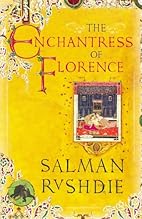
The Enchantress of Florence by Salman Rushdie

Jonathan Cape, 2008, 359 p.

The Enchantress of Florence cover

A foreigner turns up to the court of the Mughal Emperor, Akbar, at Fatehpur Sikri with a claim to be related to him and a tale to tell to justify it. The foreigner has called himself variously Uccello di Firenze, Mogor dell’ Amore (the Mughal of love) and Niccolò Vespucci. So begins this typical piece of Rushdian flamboyance.

Containing elements of fable, fairy tale and Rushdie’s usual dose of magic realism (among other things Akbar has managed to conjure up for himself an imaginary – and therefore perfect – wife) there is nevertheless something about the treatment that does not quite hit the mark. Rushdie has always been fond of digression, word games and allusions (in this case, for example, take the mercenaries Otho, Botho, Clotho and D’Artagnan) but it has to be said; in amongst the showing here, there is a lot of telling. As if to underline this there is a list of works consulted for research given in a bibliography.

Yet, as the author notes, “The untruth of untrue stories could sometimes be of service in the real world.” That is what fiction is for after all. But then again, “Those sceptics who by virtue of their sour temperament resist a supernatural account of events may prefer more conventional explanations.” Indeed.

It might seem, too, that in a novel entitled The Enchantress of Florence that the woman concerned could be expected to appear in the narrative somewhat earlier than two-thirds of the way through but while this is her story it is also the story of Akbar, of the Florence of the Medici (and the monk Giralomo,) and of three friends from that city, Antonino Argalia, last of the condottieri, Niccolò – ‘il Machia’ – Machiavelli (yes, that Machiavelli) and Agostino Vespucci (cousin to Amerigo.) It is also the tale of why the Mughal court had to leave Fatehpur Sikri.

The enchantress is Qara Köz, “Lady Black Eyes,” Akbar’s Great Aunt, sister of Babar the first Mughal, eliminated from the family history when she rejected a return from capture. Her enchantments seem to lie in the ability to entrance men, if only for a while. Her destiny is to pass through the hands of a warlord, to the Safavid Shah Ismail, to Antonino Argalia and finally to the New World with Agostino Vespucci. She has a companion, her mirror in all respects (bar one.) Yet she is an absence in the book, an emptiness around which Rushdie weaves his tale of folly, wisdom, hope and loss. Akbar is at the heart of it, a ruler wise to his surroundings and to the machinations of the power hungry. There is a barbed inversion of insular Western conceptions when Akbar muses that, “The lands of the West were exotic and surreal to a degree incomprehensible to the humdrum people of the East.”

A noteworthy aspect of this edition is that it is endowed with beautiful endpapers picturing at the front a detail from The Building of Fatehpur Sikri Palace from the Akbamama and at the rear from the Carta della Catena showing a panorama of Florence.

Pedant’s corner:- A 16th century Scottish pirate may well have been carrying letters of marque or even diplomatic credentials from Queen Elizabeth (of England) but I doubt he would treasure a locket containing her portrait. Equally he may have boasted of climbing all Scotland’s Munros but not in those terms. They were not named as such for a further three centuries. “I’d keeped her locked up” (keep,) rowboat.

Lucius Shepard and Margo MacDonald

Due to my house move I missed commemorating at the times the demise of both Margo MacDonald, former SNP MP and independent MSP, and writer Lucius Shepard.

It says a lot for the esteem in which MacDonald was held by the wider public that she was able to gain a seat in the Scottish Parliament on the list system as an independent.

In recent years her campaign for the right to assisted dying (she was suffering from Parkinson’s disease) was carried out with a dignity which ensured that her views and comments commanded respect.

Luius Shepard’s fiction is elusive to pigeonhole, morphing from Science Fiction to fantasy and bordering on magic realism. He was always readable, though, and intelligent.

Margo MacDonald, 19/4/1943 – 4/4/2014, Lucius Shepard, 21/8/1943 – 18/3/2014. So it goes.

free hit counter script