Archives » Literary Fiction

Runaway Horses by Yukio Mishima

In The Sea of Fertility, Penguin, 1987, 247 p. Translated from the Japanese 奔馬 (Homba,) Shinchosha Company, 1960, by Michael Gallagher.

It is the early 1930s, a time of political uncertainty and assassination in Japan. Thirty-eight year old judge Shikeguni Honda comes to believe Isao Iinuma, a promising practitioner of kendo and also the son of a former tutor of Honda’s teenage friend Kiyaoki Matsugae whose unfortunate life was portrayed in Snow Country, is in fact Kiyaoki reincarnated. This is a thought Honda keeps to himself, though.

Nevertheless he takes an interest in the young man, who after one conversation gives him a booklet titled The League of the Divine Wind. This chronicles a failed revolt in the eighteenth century of a group of that name who felt the Western influence on Japan was inimical and ought to be overturned. Unfortunately, they believed only swords were suitably condign weapons to enact the divine will and so fell to defeat. In that revolt’s aftermath one of its leaders is said to have given voice to the spirit of the Samurai: “Were we to have acted like frail women?”

This incident is an illustration of the tension that existed in Japan between the traditional and the modern and which was in many ways Mishima’s overriding concern. At one point a minor character says, “‘That’s just how things are here in Japan. All one has to do is plunge one’s hand in, intent only on a bit of amusement, and there’s a poisonous snake in there waiting.’”Iinuma also hatches a plot, this time to kill the men whom he believes are leading Japan to ruin, or at least to a neglect of the old ways. When this, too, fails due to the authorities getting wind of it (not through one of the co-conspirators though) Honda gives up his judge’s job to defend Iinuma.

The political background appears from time to time in conversations but is never foregrounded but still the forces which would propel Japan into conquest – and ultimate disaster – are in evidence. The adventure in Manchuria, about which some of the characters have misgivings, is about to begin.

Mishima’s sympathies seem to lie with the traditionalists and Iinuma’s desire for purity and unease at the Japan in which he lives perhaps matches the author’s own.

Pedant’s corner:- Translated into USian. “In 1933, the third year of the Genko era” (the third year of the Genko era was in 1333,) a missing comma before a piece of direct speech, “‘one should keep them until lay them reverently on the family altar’” (is missing some words between ‘until’ and ‘lay’,) “the cry of cicadas” (cries of cicadas surely?) “England’s going off the gold standard” (Britain that would be, not England,) hiccough (there’s no such thing. It’s a hiccup,) “it’s being not all likely” (it’s being not at all likely,) “a green finch” (a greenfinch,) “scarlet-leafed forest” (scarlet-leaved.) Benzine (petrol,) “somewhat tasteless” (somewhat distasteful,) “having spent the New Year’s in a police cell” (having spent the New Year in a police cell.) “The whistle of a freight passing through Ichigaya Station” (of a freight train – though in British English that’s ‘goods train’,) “the groans … had nothing of kendo about it” (the groans … had nothing of kendo about them,) “but these was limited to” (these were limited to,) “none of those … were” (none … was,) “with his fingertips of his left hand” (with the fingertips of his left hand.)

The Return of the Soldier by Rebecca West

In Virago Omnibus II, Virago, 1987, 90 p plus 9 p Introduction. First published in 1918.

On reading this I remembered watching a dramatised adaptation of the story at some point in the past. Not that it mattered: only the broad outlines were familiar and it’s the detail that counts.

Our first person narrator, Jenny Baldry, lives at Baldry Court at Harrowweald with Kitty, the wife of Jenny’s brother Chris. Life there is saddened by both the absence of Chris, away at the Western Front, and remembrance of his dead son. Thinking of Chris Jenny tells us of “That detached attention, such as an unmusical man pays to good music, which men of anchored affections give to attractive women.”

Jenny’s and Kitty’s relatively tranquil existence is disturbed by the visit of Mrs William Grey, once Margaret Allington, with the news that Chris is in hospital, not physically injured but suffering from shell shock (not actually named as such in the book and in any case now known as PTSD) and has lost his recent memory. He is convinced that he is in love with Margaret, whom he met over fifteen years ago and spent time with (remembered idyllically by him) at her father’s Inn at Monkey Island on the Thames, and only seeing her will satisfy him. His wife and son he remembers not at all.

The narrative is taut and claustrophobic, all three women’s behaviour restricted by the manners of the time, but notable for its focus on women affected by the Great War rather than the traumas of the trenches.

It’s also a little overwritten – and tinged by snobbishness “Wealdstone … the name of the red suburban stain which fouls the fields three miles nearer London than Harrowweald,” “‘I fancy it’ll do for a person with that sort of address,’” “the doctor (a very nice man, Winchester and New,)” with a touch of racism (“little yellow men”.)

As in that dramatisation the resolution seems a bit trite and too easily achieved.

Pedant’s corner:- plus marks for ‘rhododendra’, a missing comma before a piece of direct speech, “with her head one one side” (on one side,) “cottage ornée” (cottage orné,) “She brought the punt across the said very primly” (across then said,) “‘something here that many interest you’” (that may interest you,) “I slid off the tree-truck” (tree-trunk makes more sense,) “to staunch a wound” (it’s ‘stanch a wound’.) “For it we left him in his magic circle there would come a time” (For if we left him in.)


The Longings of Women by Marge Piercy

Penguin, 1995, 541 p.

I bought this because Piercy normally writes SF (or what can be interpreted as SF) but this is a contemporary mainstream novel – for 1998 values of contemporary.

This is the intertwined tale of three women living in Boston, Massachusetts; Leila Landsman, Mary Burke and Becky Burgess. Leila is a professional woman, a college teacher whose theatre director husband has an ongoing philandering streak, serially having affairs with his – always younger – leading ladies.  Mary is Leila’s cleaner but had lived a reasonably comfortable existence until her marriage broke down: she is now homeless but conceals this from her cleaning agency employers and the clients whose houses she cleans. Becky is a working-class woman who has pulled herself up from her origins by getting an education, for which her family made sacrifices, a desk job at a media company and a marriage to Terry, a man of rather better off means but who is lazy as a result and suffers from an unjustified sense of entitlement.

Leila’s and Becky’s lives intersect when Leila is asked to write a book about the court case in which Becky is accused of murdering her husband with the assistance of her teenage lover, Sam Solomon. Becky’s treatment by the press has been unrelentingly critical.

Leila’s and Mary’s stories are unfolded in the present of the novel (with flashbacks memories of their origin stories,) Becky’s is given to us in chronological order as it occurred. This has the effect of presenting us with different pictures of Becky from the two time streams. At first Mary’s story also seems to be divorced from that of Leila but does give us an alternative perspective on her life.

Mary’s is a salutary tale, about how easy it is to fall from security, how necessary it is not to appear homeless – especially when you are. She sleeps where she can – airport lounges, empty buildings – but preferably in her client’s houses when they are away from home and is eternally grateful to the (black) woman who showed her the ropes of homelessness, the ways to avoid danger, when she first arrived on the streets.

There is a degree of character development to Leila as her marriage disintegrates slowly then precipitously. Mary, perhaps hardened by the streets, undergoes less change. Becky’s descent into murderousness is not quite so convincing, though.

This is a decent enough novel which doesn’t reach the heights of Piercy’s earlier books Body of Glass and Woman on the Edge of Time.

Pedant’s corner:- thier (their,) “less alternatives (fewer alternatives,) “Mrs Coreogio” (elsewhere always ‘Coreggio’,) “they dozed of to” (dozed off to,) blond (blonde.) “‘I’m wondering if Sam will remind me of him in person is much as he does when’” (in person as much as he does when,) “cole slaw” (coleslaw,) rendez-vous (this was in the middle of a line, no need for a hyphen; rendezvous,) “Sorts Illustrated” (Sports Illustrated?) “had interviewed murderers and battered woman” (battered women.) “‘I’ll never seen you again’” (never see you again,) “happy to be notied” (noticed.) “They’d hadn’t an ambition among them” (either ‘They’d hadn’t had an ambition’ or ‘They’d hadn’t an ambition’,) “none of the three families were communicating” (none of the three families was communicating,) “in her own behalf” (on her own behalf,) ambiance (ambience.)

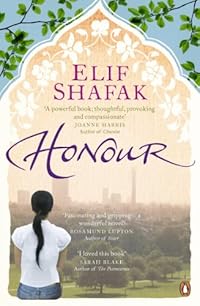
The Bastard of Istanbul by Elif Shafak 

Penguin Essentials, 2019, 365 p. First published 2007.

Addressing as it does the Armenian genocide of 1916 (though only in a historical sense,) this was the book that saw the author put on trial for “denigrating Turkishness,” but the charges were eventually dropped.

The novel’s main focus is on the Kazancı family, one with an unfortunate history of its male members dying at a young age. There is a hint of magical realism here, the more sweeping kind of narrative more or less alien to the Anglophone tradition, in any case a nod to the supernatural elements which often appear in fiction from other literary backgrounds. The Kazancıs have a cat named Sultan. (They’re now on Sultan the Fifth. This naming system though, did remind me of Mad Jack’s burro in The Life and Times of Grizzly Adams.)

The chapter titles all relate to foodstuffs – or at least substances which can be ingested; cinnamon, pine nuts, orange peels, etc, though one is water and the last potassium cyanide. For the Kazancıs are a family for which food occupies a central nurturing role. Many Turkish dishes are named or described during the course of the novel.

In the first chapter the then nineteen-year-old Zeliha Kazancı strides the streets of Istanbul wearing her trademark short skirt – which she will not relinquish even in later years. Under harassment she recites to herself “The Golden Rule of Prudence for an Istanbulite woman: When harassed on the street never respond” as that only fires up the enthusiasm of the harasser. (There are also Silver and Copper Rules of Prudence.)

Zeliha is on her way to a clinic to seek an abortion but, perhaps due to hallucinations brought on by anæsthetic or else a subliminal wish to carry the child – though the latter seems unlikely – becomes over-agitated and makes it impossible for the procedure to continue. The bastard of the title (though there is one other metaphorical candidate) could thus be Zeliha’s daughter, Asya, who is brought up among her aunts Banu, Feride and Cevriye, their mother, Grandmother Gülsüm, and the matriarch Petite-Ma. Acknowledging the unusual circumstances of Asya’s origins (in her late teens of the novel’s main timeline her father’s identity has still not been disclosed,) Zeliha is also known as aunty. The only son of the family, Mustafa, long ago left Istanbul for the US and has never returned. The aunts’ father had of course when still young succumbed to the curse on the family males. Even so, by the age of sixteen Asya had discovered that “other families weren’t like hers and some families could be normal,” a twist to that quote from Tolstoy. [https://www.goodreads.com/quotes/7142-all-happy-families-are-alike-each-unhappy-family-is-unhappy]

Asya is fixated on Johnny Cash and spends time in Café Kundera, associating with characters identified only by their attributes, the Non-Nationalist Scenarist of Ultranational Movies, the Closeted-Gay Communist, the Exceptionally Untalented Poet and the Dipsomaniac Cartoonist, who says the real civilization gap is not between East and West but between Turks and the Turks. “‘We are a bunch of cultured urbanites surrounded by hillbillies and bumpkins on all sides. They have conquered the whole city.’” The Exceptionally Untalented Poet says, “‘We are stuck between East and West …. the past and the future … the secular modernists … and the conventional traditionalists.’” In its own way this is a signal that the book could be read as a ‘condition of Turkey’ novel.* When one of them brings along a new girlfriend we are told of Asya that “When she met a new female she could do one of two things: either wait to see when she would start hating her or take the shortcut and hate her right away.”

Mustafa, in the US, has taken up with Rose, who was divorced from Barsam Tchakhmakhchian, a first generation Armenian American. Barsam and Rose’s daughter Armanoush (Amy,) is the second pivot of the plot, brought up as she was with her father’s family’s constant reinforcement of Armenian memories and attitudes vis-à-vis the Turks. Shafak has some fun depicting Amy’s date with a man she soon finds unsuitable, where they both contemplate plates of food whose arrangements are based on expressionist paintings. To resolve the conflict she feels between her US and Armenian heritages Amy decides to travel to Istanbul to visit her stepfather’s family, where her revelations about the treatment of her ancestors creates at first bewilderment.

“She, as an Armenian, embodied the spirits of her people generations and generations earlier, whereas the average Turk had no such continuity with his or her ancestors. The Armenians and the Turks lived in different time frames.” For Armenians “time was a cycle, the past incarnated in the present and the present birthed the future. For the Turks, time was a multihyphenated line, where the past ended at some definite point and the present started anew from scratch, and there was nothing but rupture in between.” Even Aunt Cerviye, as a history teacher, was unaware of the details or extent of the Armenians’ tribulations. For the aunts, the history of Turkey only began in 1923, with Atatürk’s reforms. (Such historical forgettings, or forgettings of history, are by no means confined to Turkey, though.)

In another expression of literary apartness, that rebuff to Western fiction’s conventional realism, Aunty Banu has – or claims to have – control of two invisible djinn, one on each shoulder; the good one, whom she calls Mrs Sweet, on the right, the bad one, Mr Bitter, on the left. It is from Mr Bitter she learns the truth about the Armenians’ sufferings. And about Asya’s father, news which she keeps to herself, though his identity is revealed later.

Shafak has her characters make more general observations too. Asya tells Amy, “When women survive an awful marriage or love affair … they generally avoid another relationship for quite some time. With men, however … the moment they finish a catastrophe they start looking for another one. Men are incapable of being alone.”

Curiously, Shafak at least twice used the word wee in the Scottish sense of small, as in “a wee bit.”

Some reviews I have seen online of The Bastard of Istanbul have been a bit sniffy, one even going so far as to say that on this evidence Shafak isn’t a good novelist. I suspect this means that reader had not had a wide experience of fiction from outwith the Anglosphere. Shafak’s writing has a brio, an exuberance, too often missing from that more staid inheritance.

Pedant’s corner:- *Turkey is now officially known as Türkiye; “wrack your nerves” (rack your nerves,) “and her cheeks sunk in” (sank in. There were other examples of ‘sunk’ for ‘sank’,) “as she laid still on a table” (as she lay still,) “phyllo pastry” (filo pastry,) “always on demand” (always in demand,) no introductory quotation mark when one chapter began with a piece of dialogue but there was with other chapters.

The Photograph by Penelope Lively 

Penguin, 2004, 237 p.

One day Glyn Peters finds in his papers an envelope with his dead wife Kath’s handwriting on it, reading, “Don’t Open. Destroy.”

But who can follow such an instruction? Not Glyn. Fatefully he opens it. And there is the photograph. Of five people, two with their backs to the camera. Kath and a man, holding hands out of view of the other three. And the man is Kath’s brother-in-law Nick. There is also a note saying, “I can’t resist sending you this. Negative destroyed, I’m told. Blessings my love,” in what Glyn assumes is Nick’s hand

Glyn is immediately sent into a tail-spin, examining his past life for clues about his marriage, and into a quest for the truth about the affair, and who knew about it.

He starts with Kath’s sister, Elaine, a (very) successful garden designer, who already has beefs with the rather shiftless Nick, whom she throws out. Their daughter Polly, who had adored Kath, finds that something of an over-reaction, especially since Nick dumps himself on her and makes little effort to find a place of his own, despite her increasingly urgent promptings.

The story is told via several points of view, Glyn, Elaine, Nick, Polly, Nick’s erstwhile business partner Oliver, from whom we learn that “being a woman enabled her” (Kath) “to sail through life, setting her own course, following mood and fancy. Because she was a startlingly attractive woman.”  She had once been asked what it was like to be pretty but she laughed it off. But she had also asked Oliver if he was happy.

Clues begin to build that the characters’ knowledge of Kath needs revising; memories of her close relationship with Polly, the fact that she got on well with children generally. “She has become some mythical figure, trawled up at will to fit other people’s narratives. Everyone has their way with her, everyone decides what she was, how things were.”

The marriage with Glyn wasn’t close, both spent time on their own business, Glyn with his landscape expeditions, Kath on various projects of her own.

It’s not until Glyn meets with Kath’s friend Mary Packard, perhaps the only one who really knew her for who she was, that the full tragic picture becomes clearer, but this is withheld from us till late in the book. But, of course, this is when Glyn speaks with her properly for the first time.

At the end Oliver thinks about how something always set Kath apart. “Behind and beyond her looks, her manner, there had been some dark malaise. But nobody ever saw it back then. …. All you saw was her face.”

The different characters’ narratives – some rendered as one half of a dialogue – are all distinctive and compelling, revealing of their flaws and misapprehensions.

The Photograph is a demonstration of how difficult it is to truly know someone, even someone close to us, how impossible it is to detect their inner struggles, especially if we do not recognise the clues.

Pedant’s corner:- “squares and triangles and rectangles and oblongs” (A square is a special case of a rectangle so that’s fine; but an oblong is any non-square rectangle, so is not different from a rectangle that isn’t a square,) “Glyn Peters’ appointment” (Peters’s,) “regale lilies” (usually written as ‘regal lilies’, though the botanical name is lilium regale.) “‘Didn’t Kath use to go to…’” (Didn’t Kath used to go to…,)

The Voyage Home by Pat Barker

Hamish Hamilton, 2024, 292 p.

This is the third in Barker’s Troy series. Unlike the first two, which were narrated by Briseis (the former princess of Lyrnessus, a town sacked by the Greeks before they ventured on to its ally Troy, with Briseis being given to Achilles as a prize of war,) this novel’s main narrator is Ritsa, a friend of Briseis, but now a possession of Machaon, physician to Mycenean King Agamemnon, and body-slave (or, as she puts it, catch-fart) to Troy’s Princess, Cassandra, herself Agamemnon’s bed-slave, though they had gone through a form of marriage.

Cassandra is famed for her gift of prophecy; a gift bestowed on her by the God Apollo, whose priestess she was, but also cursed by him never to be believed since she refused his advances.

Ritsa’s tale is narrated in first person past tense but some chapters of the book are in the third person present tense from the viewpoints either of Cassandra or of Agamemnon’s wife Clytemnestra. This is useful authorially as of course Ritsa cannot have access to scenes where she is not present.

The book’s title is, of course, ironic. The home they journey to was never that of the Trojan women; only of the Greeks who took them captive. It is also slightly inappropriate in that the sea voyage to Mycenae is over before the book is even halfway through – though less so in the sense that by the novel’s end Cassandra’s journey home is utterly complete.

Some of the prose and dialogue is in a modern register which might jar with the ambience of myth which Barker is dealing with. But in looking at these events/stories with a modern eye (Barker’s controlled indignation, even rage, at the treatment of women in these tales, while not getting in the way of the story she tells, is never far away) an up-to-date treatment is absolutely appropriate. There is also some inter-sexual politics at play when Ritsa notes that, “She” (Cassandra) “was speaking in a Daddy’s-little-girl voice, the kind that some men find mysteriously attractive and makes every woman within earshot want to slap you.”

Ritsa bitterly contemplates Cassandra’s question about a description of the ship’s figurehead Medusa (another misrepresented woman?) as a monster, “Who decides who the monster is?” and Machaon’s reply, “The winner.”

Medusa did not win, and neither has Ritsa, whose monsters lie in front of her: the Greeks who have the temerity to call Trojans barbarian, while themselves being the purveyors of savagery. Only the Medusa’s captain, Andreas, treats her as worthy of respect. (Or is that only because he has always fancied her?)

Agamemnon is prime monster, even if he is haunted by visions of his daughter Iphigenia, sacrificed to the gods to secure fair winds for the voyage to Troy. (His palace in Mycenae is also haunted: by the hand and foot prints of his cousins, killed by his father, Atreus, and their bodies fed by him to theirs, Thyestes, with their feet and hands shown to Thyestes to prove he had eaten them. Greek myth is a horrifically bloody edifice.)

But the heart of this story doesn’t lie with either Cassandra or Ritsa; nor Agamemnon. This is Clytemnestra’s time of reckoning. Ten years ruling in Agamemnon’s stead – and ruling well – only to be ignored the moment he returns; ten years worshipping her dead daughter, erecting a temple in her honour which no-one arriving by sea could avoid seeing; ten years devising a calculated, elaborate revenge for Iphigenia’s death. A dish served cold, with relish.

But every action has its conseqences. Revenge begets revenge. Clytemnestra’s remaining children, Electra and Orestes, will be sure to avenge their father.

Not that Ritsa will be around to see that. Barker instead contrives a more hopeful fate for her.

Pedant’s corner:- Three sentences of Ritsa’s narration are for some reason given in the present tense. “Achilles’ child” (Achilles’s; most names ending in s were given only s’ rather than s’s when possessives, Aegisthus’, Andreas’, Orestes’, Iras’, Briseis’, etc,) “more like, a bowl of barley porridge” (doesn’t need that comma,) “that some men find mysteriously attractive” (ought to be ‘that some men mysteriously find attractive’,) had never showed” (had never shown.) “The guard come toward us” (The guard came towards us.)

The Takeover by Muriel Spark

Polygon, 2018, 241 p, plus vii p Introduction by Brian Morton and iv p Foreword. First published 1976.

Some people swear by Spark. For myself I struggle to see what the fuss is about. There is just something about her writing that strikes me as off.

I suspect this one was meant to be a comedic novel. Its tone would certainly suggest that. However, its bittiness and lack of characters with whom the reader can be sympathetic – the book is peopled with an assortment of chancers, frauds, swindlers and charlatans – make it something of a chore to read.

Hubert Mallindaine claims to be a descendant of the union between the Roman Emperor Caligula and the goddess Diana. He is renting a villa at Nemi from Maggie Ratcliffe, fairly recently the new Marchesa di Tullio Friole, who also has a house in the vicinity as well as residences elsewhere. Maggie is much exercised by her collections of jewellery and valuables – paintings, Louis XV chairs etc. The local Italians are not too pleased about these foreigners having houses in the town.

Maggie wishes to evict Hubert but he has various ploys to avoid this, among them setting up a religion based on his claim to be descended from Diana. He treats his secretary Pauline contemptuously and is also systematically replacing Maggie’s paintings and chairs with copies/reproductions.

Maggie meanwhile is having sex with her factotum, Lauro, who is, Brian Morton’s Introduction tells us, “a priapic opportunist” (for which read ‘all-but rapist’) “and kleptomaniac.” In addition, Lauro has fathered a child on a local girl (but blames her as a calculating bitch) and without warning jumps on Maggie’s daughter-in-law Mary, giving her little choice but to succumb to his advance. He tells her that next time she should relax. Not one to brook dissent.

That Introduction describes the motley crew of thieves and conmen surrounding Maggie as, “All as respectably dressed and gentlemanly as the Devil must be in a Scottish narrative.”

Things get murkier as the narrative proceeds; it seems there are other claims on the land the houses are built on, while a dodgy financial adviser worms his way into Maggie’s affairs.

There was a review and article – one each – in The Guardian Weekend supplement on both Sat 07/06/25 and 14/06/25 about the latest biography of Spark (Frances Wilson’s Electric Spark – The Enigma of Muriel Spark. Personally I find her the complete opposite of electric.) The review comments on her elision, “Spark knew what to leave out.” Perhaps it is those “odd gaps” which I find so problematic about her œuvre.


Pedant’s corner:- More than a few USian usages, vide infra.

Inter alia pantyhose (tights,) “a vodka-tonic” (vodka and tonic,) boy-friend/girl-friend (several times: both all one word; boyfriend/girlfriend,) station-wagon (estate car.)

Otherwise; “as if treading a mined field” (why not ‘minefield’?) “set at nought” (set at naught. Nought is the number, zero; naught has the meaning of ‘nothing’,) a missing comma before a piece of direct speech (x 2.)

Fall of Man by Rupert Croft-Cooke

Macmillan and Company, 1955, 316 p.

While this is a very well written account of the life of the narrator, Arthur’s, lifelong friend, Antony Scaw, the years have not been kind to its culmination.

Antony was one of those types who are, if not entirely self-absorbed, at least disinterested in the wider world. In Antony’s case even to the extent of not noting the sensitivities of the rest of his family in not speaking of their brother Jack, killed in the Great War.

The early chapters relate life in Antony’s home Ripstead, where his mother finds him difficult to understand. But Arthur is accepted as almost part of the family in part due to his friendship with Antony. The pair endured Wincaster, a minor public school, together before entering adult life after the war

Antony married a woman named Olivia, but they soon grew apart and she began going around with one Reggie Duggan. The group in whose circles he moved could not comprehend his attitude in allowing Olivia to behave as she wished but Antony was of the belief that it was not his business to dictate how other people lived. Later, long after the catastrophic end of his wife’s affair, Antony mentions to Arthur their “‘predecessors who refused to take the omnipotent “They” of life quite seriously’” and had suffered for it.

By this time Antony’s painting had made him moderately successful and after the Second World War he had moved to Long Baddeley, where he lived with a housekeeper Mrs Potter – who gets squiffy now and again – and a ten-year-old girl, Pippa, whose parents had abandoned her.

Local widow Sally Greenway takes a fancy to Antony but he is not interested and Sally’s attachment sours to disillusion and suspicion, suspicion which she fosters with the authorities and bolsters with her questioning of Pippa on taking her out for the day.

It is, of course, the paintings of Pippa which Antony has made, of Pippa unclothed, which become the most damning evidence against him.

Narrator Arthur is convinced of Antony’s innocent intent and the reader has to take that, Pippa’s attitude to him and Antony’s denials of impropriety at face value but at the same time must think a line has not only been crossed but been travelled far beyond. The tragedy unfolds as it must, all the circumstances of Antony’s home life and the prurience of police and court officials pointing only one way.

Despite Fall of Man being at heart a plea for the understanding, even tolerance, of non-conformity (Antony’s actions in the book did not harm anyone, least of all Pippa, it was the initial court proceedings which did that to her) it is more than likely that had Croft-Cooke been around to consider such a plot in the present day he would not have written it nor, if he had, found a publisher for it.

Pedant’s corner:- a missing comma before a piece of direct speech (x 2,) “a character in a wideawake hat with a tawny beard” (a little clumsy. How can a hat have a beard?) hu-ha (nowadays spelled ‘hoo-hah’,) wistaria (wisteria,) “for politeness’ sake” (to avoid that annoying apostrophe use ‘for the sake of politeness’.)

The Flea Palace by Elif Shafak  

Penguin, 2015, 446 p. Translated from the Turkish Bit Palas (Meris Yayinlari, 2002) by Müge Göçek.

This, Shafak’s debut novel, has similarities with Aala Al Aswany’s The Yacoubian Building – both are concerned with the inhabitants of a block of flats – but was originally published in the same year so these will be coincidental.

From the outset it is clear that things will not be entirely straightforward: the narrator – accused of having a fanciful mind; ie talking nonsense – riffs on the differences between truth (conceived of as a horizontal line,) deception (a vertical one,) and nonsense (a circle.) This is as a way to approaching story, a circle can be entered anywhere; but it isn’t a beginning, nor is it an end.

We are then given the history of the building, Bonbon Palace, from ‘Before’ and even ‘Before Before,’ it was built on the site of an old Christian (Armenian) cemetery.

The inhabitants of the various flats within the building are Musa, Meryem and Muhammet; Sidar and Gaba; hairdresser Cemal and Celal, twins who were not actually brought up together; The Firenaturedsons family; Hadji adji Hadji, his Son, Daughter and Grandchildren; Metin Chetinceviz and HisWifeNadia; Me; The Blue Mistress; Hygiene Tijen and Su; Madam Auntie.

Already that running together of words in Firenaturedsons and HisWifeNadia signal the otherness of the narration, that heightened sense which comes from a slightly surreal take on fiction and can be a signature of non-Anglophone literature. The whole thing would seem to be narrated by the ‘Me’ occupying Flat 7 as his are the only sections written in the first person. Chapters of the book focus on and return to the flat-dwellers’ various lives in no particular order. The circumstances under which he wrote this account are not revealed  until the end.

Another surreal touch is that Bonbon Palace has an accumulation of rubbish around it which keeps being added to despite the attentions of bug fumigator Injustice Pureturk. This forms the core of the plot as, in an attempt to prevent people adding to the rubbish piles, ‘Me’ paints on the enclosing wall a sentence declaring a saint is buried inside the premises.

All serious novels are attempts to sum up the world in microcosm. Limiting the story to such a small part of the world highlights this. Not all of human life is here but a good portion of it certainly is.

An initial surprise to me was the use in the translation of the word wee in the Scottish sense (‘a wee bit of clarification,’ ‘one wee bit,’ ‘a wee bit of sadness’) – and the fine British term nutter (‘a good-for-nothing nutter’.)

Peppered throughout are some adages such as, “Men committing adultery find quality significant: they enjoy receiving from another woman love that is in essence different from what they receive from their wives. Yet women committing adultery find quantity significant: they enjoy receiving from another man love that is more than that which they receive from their husbands.”

The narrator’s assertion that “Life is absurd, at its core lies nonsense” is as good a justification for the deployment of magic realism – or exaggerated reality – in a novel as you could get.

Then again he says, “Deception turns truth inside out. As for nonsense, it solders deception and truth to each other so much so as to make them indistinguishable.”

So does fiction.

The Flea Palace is as accomplished a debut novel as anyone could wish to write – or read.

Pedant’s corner:- the print looks  as if was photocopied and on some pages is slanted, quantative (quantitative,) “raise to the ground” (raze to the ground,) sprung (several times, sprang,) “café chantants” (cafés chantants,) “she had suddenly ran screaming” (she had suddenly run screaming,) sunk (sank,) “the gage of their nature” (gauge. ‘Gage’ for ‘gauge’ appeared once more,) a missing full stop, “you might may well start to believe” (has a ‘might’ or a ‘may’ too many?) “where he had laid down” (lain down,) “in spite of our eating in hoards” (in hordes,) “as they silently drunk” (drank,) “of the ‘The Oleander of Passion’” (that first ‘the’ is not needed,) “had all ended up in flop” (ended up as flops,) “a unfussy end” (an unfussy end,) “raised to the ground” (razed to the ground,) shrunk (x 2, shrank,) tealeaf (tea leaf,) dopey (dopy,) “he would lay in the corner” (he would lie in ….,) “as if hadn’t been him” (as if it hadn’t been him,) “they always go through their houses as if they had never gone through it before” (‘houses’ therefore ‘them’ not ‘it’,) “chaise long” (chaise longue,) “and before you it, know” (before you know it,) gamma-amino-butiric-acid (it’s not spelled butiric, it’s gamma-amino-butyric acid,) “no sooner had they given their consent that an objection was voiced” (than an objection,) “the saints existence” (the saint’s existence,) “he fished from the thrash” (from the trash,) “the end of last the century” (end of the last century,) “I laid next to her” (I lay next to her.) “All though this period” (All through.)

Possession: A Romance by A S Byatt 

Chatto & Windus, 1990, 517 p

Insecure academic Roland Michell finds in a pile of unsifted-through papers relating to Victorian poet Randolph Henry Ash unfinished drafts of a letter from Ash to a hitherto unknown possible female lover, a relationship which would overturn the prevailing view of Ash’s life.  For reasons obscure even to himself Michell removes the drafts from the pile and resolves to investigate further. He begins to suspect the intended recipient was the female poet Christabel LaMotte and enlists the help of LaMotte expert Dr Maud Bailey to delve into the mystery. With her help he comes across a complete set of letters between the two poets which reveal the extent of their affair.

There are several other academics interested in Ash – Fergus Wolff, Mortimer Cropper, James Blackadder – one of whom has obsessively obtained items belonging to Ash for his Stant Collection and would pay a large sum for such letters.

All this is set against a background of the present-day circumstances of Michell and Bailey.

This set up allows Byatt to deliver to us examples of the poetry of both Ash and LaMotte as well as a frankly tedious laying out of their letters to each other in their entirety. While these are all accomplished pieces of literary ventriloquy on Byatt’s part (and of which some would arguably be necessary) they do not help to advance the plot by much. I note that in Babel Tower she did something analogous with an internal story written by one of the characters in the main narrative.

Among all this there is an explanation in dialogue of the arcana of copyright law as regards letters between the writer and the recipient – or their descendants.

Byatt is here playing games with the reader and with literary critics. At one point, “Roland thought, partly with precise postmodernist pleasure, and partly with a real element of superstitious dread, that he and Maud were being driven by a plot or fate that seemed, at least possibly, to be not their plot or fate but that of those others.” It strikes me that having a character think that s/he is being manipulated by an external force is laying it on a bit thick and also tends to haul the reader out of the narrative, destroying suspension of disbelief.

Byatt’s intentions with the sentences contained in, “He was in a Romance, a vulgar and a high Romance simultaneously ….. a Romance was one of the systems that controlled him, as the expectations of Romance control almost everyone in the Western world, for better or worse, at some point or another,” are more forgiveable, being more general.

In an example of the pathetic fallacy writ large there is a scene taking place during the so-called Great Storm of 1988 where Blackadder and Cropper attempt to remove illicitly from Ash’s grave a box containing further correspondence between the poets. (This is also an explicit reference to an incident in the lives of the Pre-Raphaelites.)

What the book is really about though is the impossibility of knowing the full intricacies of people’s lives from their letters or artistic works, no matter how comprehensive their scholars’ knowledge of them might be.

Illustrating this, and divorced from the rest of the text, are several passages with straightforward narrative depictions of Ash and LaMotte either together or at significant moments of their connected lives. Crucially, these feel real, felt experiences.

Fiction gets to the nub; biography does not.

Pedant’s corner:- woud (would,) an extraneous end quote mark, focussed (focused,) gas-mantels (gas mantles.) “Roderick Random, an English work,” (Roderick Random may have been written in English but its writer, Tobias Smollett, was a Scot,) “as though she was liquid” (should that not be ‘as though she were liquid’?) wistaria (wisteria,) “snuck off” (USian, the British phrase is ‘sneaked off’,) “the sound of the Mercedes’ angry purr” (Mercedes’s,) scarey (scary.)

free hit counter script