Archives » Interzone

Review of Redshirts: Update

My review of Redshirts by John Scalzi has been sent to Interzone.

Apparently they will use it in some form; if not in the mag then in the MMPB publication.

I’ll let you know when (and where) it appears.

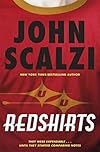
Redshirts

Redshirts cover

The above titled book by John Scalzi will be my latest review for Interzone, issue 245. (Or may be. It’s first reserve. Whatever, 500 words by the end of January.)

Despite his having published innumerable novels I have not yet read anything by Mr Scalzi. (There are only so many days in a year sadly.) Time to remedy that.

The back cover blurb mentions the following strange goings on on board the spaceship which is the book’s setting:-

– Every Away Mission involves some kind of lethal confrontation with alien force.

– The ship’s captain, its chief science officer, and the handsome Lieutenant Kerensky always survive these confrontations.

– At least one low-ranked crew member is, sadly, always killed.

All this sounds familiar somehow; but intriguing.

Fever by Lauren DeStefano.

HarperVoyager, 2012, 339p. Reviewed for Interzone 241, Jul-Aug 2012.

 Fever cover

This is the second in DeStefano’s “Chemical Garden” trilogy set in a world where all children are doomed to die of a virus by the age of 25. The only older inhabitants are the pre-virus First Generation. Accompanied by the young manservant Gabriel, Rhine Ellery has escaped from the mansion where she was brought after her kidnapping, leaving behind her forced marriage to the aristocratic son of the house, Linden, and the Housemaster, Vaughan, who performed sinister experiments in the basement. Her freedom does not last long, however, as she and Gabriel soon fall into the clutches of the deranged Madame Soleski, who runs a brothel in an old fairground complex. Rhine’s characteristic non-matching eyes make her an asset to be prized. After a thwarted attempt to sell her on she and Gabriel are administered a drug known as Angel’s Blood to keep them compliant, and to be the star act in a look, but don’t touch, exhibit.

Despite her difficulties, Rhine finds an ally in Lilac, who helps the pair escape just as Vaughan turns up to try to persuade Rhine to return to her marriage. Rhine and Gabriel stow away on a truck, rely on the kindness of an old woman who tells Rhine’s fortune (“things will get worse before they get better”) and then of a pair of restaurant owners – the man tries to rape her before Gabriel clocks him. Using money stolen from the restaurateur they finally take a bus to Rhine’s former home, Manhattan.

Throughout the book, Rhine spends a lot of time ruminating on her twin brother, Rowan, who must think she’s dead, and on her existence in the mansion. She also does not remove her wedding ring and in spite of her lack of years is showing increasing signs of the virus acting on her. And Vaughan’s is a presence that she can’t seem to shake.

DeStefano handles the story telling problems inherent in the second instalment of a trilogy mainly by making commendably little concession to them. There are, though, some instances of too obvious information dumping. And – without adding too much of a spoiler – you could skip it before reading volume 3.

There was, too, a whole series of wrong notes. Rhine displays knowledge of her new surroundings in the fairground and the activities of the “girls” in the compound before she could have acquired it. The behaviour of the older people she encounters does not seem much altered by the bizarre circumstances of the world. The only attempt to describe the conflict between those who seek a cure for the virus and others who have had enough of meddling with nature fails to convince. Rhine and Gabriel’s refuge in Manhattan ties in too neatly with earlier events. Rhine’s retention of her wedding ring is at odds with the attitudes and emotions she attributes to herself – and later displays. The rationale for, and logistics of, the “Gatherers” who steal girls only to shoot most of them remain unexplained. Despite all her experiences Rhine still goes out for an unaccompanied walk in the Manhattan she had been kidnapped from and then later sits on her doorstep in the middle of the night. This is a case of the exigencies of plot driving a character’s behaviour which damages credibility. Vaughan is an even more pantomimic villain than he was in “Wither” and the narrative carries a strong undercurrent of anti-scientism.

The problems with the trilogy’s background that were apparent in “Wither” are more evident two books in and the nature of the Chemical Garden is still mysterious. It would appear this world is effectively lawless but, beyond the virus, the mention of Gatherers and the dead bodies of kidnapped girls it is utterly familiar. There are still delivery trucks, restaurants, fortune tellers, brothels – even interstate buses, not to mention public meetings. It is as if DeStefano doesn’t quite believe in it herself.

Interzone 243

Jim Steel’s blog has reported that Interzone 243 is out imminently. This is the issue that contains my review of M John Harrison’s Empty Space.

Interzone 242

2312 cover

After a few difficulties with the printing of the issue I believe Interzone 242 has now been published. This is the edition which contains my review of Kim Stanley Robinson’s 2312.

Details of the printing problems have been posted on Interzone’s web page. Who’d be a small publisher?

New Book: The Fractal Prince

Last Thursday I attended the launch of fellow East Coast Writers’ Group and Writers’ Bloc member Hannu Rajaniemi’s second novel The Fractal Prince. I reviewed his first novel The Quantum Thief for Interzone. Hannu made a reading from the new book and was interviewed by another Group and Bloc member Andrew Ferguson before the floor was opened for questions.

The reading was enthusiastically received and Hannu’s thoughts on translation and the way his Finnish origins are reflected in his writing were interesting. It seems he has a Finnish self – with family and friends back home – and an English (speaking) self in his day to day life in Edinburgh. The Finnish translation of The Quantum Thief, not carried out by him, apparently read like his “English” self.

Current Reading

I have temporarily stopped reading Looking For Jake by China Miéville about halfway through to concentrate on my latest Interzone review (of Empty Space by M John Harrison) in order to have plenty of time to get the review done.

I’ll be getting back to Looking For Jake in due course.

Two Books

The Push
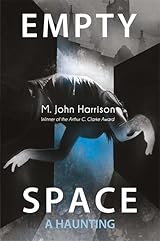
Empty Space cover

Two unsolicited (more or less – I didn’t buy them anyway) books have plopped onto my doormat in the past two days.

One is to be my next review for Interzone, Empty Space by M John Harrison. This is the third in his series (set in and around the Kefahuchi Tract) that began with Light in 2002.

The other is The Push by Dave Hutchison which is this month’s BSFA mailing. It seems there has been some sort of fallout there after the AGM and so the usual magazines have been delayed. Instead a book from the small press run by BSFA President, Ian Whates, has been sent to every member. Pot luck what you received apparently.

Reviews, Reviews

Fever cover
2312 cover

My review of Lauren DeStefano’s Fever can now be read in Interzone 241 (Jul-Aug 2012.)

I will publish it here after a decent interval.

I have also submitted my review of Kim Stanley Robinson’s 2312, due to appear in Interzone 242 (Sep-Oct 2012.)

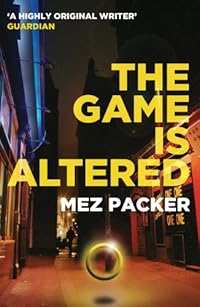
The Game Is Altered by Mez Packer.

Tindal Street Press, 2012, 348p. Reviewed for Interzone 240, May-Jun 2012.

The Game Is Altered cover

Lionel Byrd’s mother died three days after his birth. He was adopted by her best friend, Judy, and brought back to Britain from Kenya. However he is mixed race and his adoptive family are all white. Only his father, David, and sister, Lilith, regard him with any affection while his mother and her two sons treat him coldly. In childhood the two boys subjected him to “games” in which he was the butt of their cruelty, describing him (apparently after Blade Runner) as a replicant and, at one point, nearly hanging him. His recall of these events is hazy as an accident when he was ten has deprived him of many of his childhood memories.

As an adult he is estranged from his adoptive family, apart from his sister, and lives a lonely existence in a grotty flat in a rundown district near a “Health Centre” which is a cover for people-trafficking and prostitution. He is aloof at work despite attempts to befriend him, his closest companion is his cat Buddha, and he fantasises about a girl he has seen in the street with whom he is convinced he has made a connection. While friendly with his barber, a West Indian whose speech is rendered demotically and doesn’t like Lionel’s taking up of dreadlocks, he has a close relationship only with Lilith and escapes from mundane reality into an immersive computer game called CoreQuest where his avatar is Ludi, a much more active persona. His father’s final illness leads to Lionel’s re-entanglement with his adoptive family and revelations about the circumstances of his adoption.

The novel is on the whole well written but its structure is problematic. It is divided into chapters dealing with Lionel’s life, each usually followed by an epigraph relating to gaming, then a segment from the game. These latter – escalating through the game’s levels – are related from Ludi’s viewpoint in a partly debased form of English. Irritatingly, Packer does not always sustain this street language throughout the game segments’ lengths.

We are intended to draw parallels between the characters in Lionel’s world and avatars in the game but these sections do not add to the story. References to the possibly elusive nature of reality – the phrase, “It’s only a game,” appears in Lionel’s narrative several times; a character says, “People are so programmed,” – are not enough to justify the conceit embodied within them nor the presence of the gaming chapters. There is also the problem that in games there is no jeopardy. Why should the reader care about the characters within them when they are not real and can be resurrected at will?

As a result the novel as presented is unsatisfying, particularly to readers of speculative fiction, who are used to the mixing of the real with the fantastic – or paranoia – and even the melding of reality with games. Packer seems either to be unaware of or unconcerned with the literary antecedents.

This is a pity as the main narrative is well handled and, until it begins to unravel somewhat in the latter stages, convincing. It could stand alone, without the game aspect, and be entirely coherent – though of course not SF. The attempts to suggest a degree of futurity, such as the coinage “Google device” for a hand-held computer-like phone, are ill thought-through (even when shortened to “Google”) and there is insufficient foreshadowing of Lionel’s ultimately shaky grasp on the real world.

The website of the book’s publisher (Tindal Street Press) states it does not consider submissions, among other genres, of Sci-Fi (sic) nor Fantasy. In those circumstances it does seem strange to be reviewing one of their books for Interzone. Yet its back cover blurb says “for readers of …, Cory Doctorow, China Miéville and Neal Stephenson.” Very odd. But then again despite its trappings “The Game Is Altered” overall does not read as SF, nor Fantasy.

free hit counter script