Archives » Battle of the Somme

It Was One Hundred Years Ago Today

100 years ago today the Battle of Amiens (also known as the Third Battle of Picardy) began and so inaugurated the longest series of consecutive victories the British Army has ever had.

That last fact is something that has been all but lost to the collective memory – totally submerged by the prominence the Battle of the Somme and the Battle of Passchendaele (aka Third Ypres) have taken in the colletive consciousness.

German general Erich Ludendorff (more or less dictator of Germany by that time) called the battle’s first day “the black day of the German Army.” He knew the game was up. Far from being stabbed in the back the German Army had been defeated in the field. There was nothing but retreat from then on till the Armistice in November.

Remembrance at Gardening Scotland 2016

Just to continue the gardening theme….

The good lady is a keen gardener and had always hankered to visit Gardening Scotland at Ingliston. This year we finally got it together to see the show.

There weren’t many show gardens but one of them was in commemoration of the 100th anniversary of the Battle of the Somme:-

Great War Show Garden, Gardening Scotland 2016

Side view:-

Show Garden at Gardening Scotland 2016

Another was on behalf of Erskine Hospital which cares for injured veterans of British wars. I only got round to this photo as the garden was being dismantled:-

Erskine Veterans' Show Garden, Gardening Scotland 2016

In Memoriam

The Battle of the Somme began 100 years ago today. That first day saw the British Army suffer 57,470 casualties, its greatest ever one day loss in battle.* 19,240 of these were killed. Overall the battle (really a series of battles) lasted for four and a half months and resulted in 1.120-1.215 million casualties over both sides. Only the Russian Front battles of the Second World War were bloodier.

Like the Ypres Salient, the countryside where the battle(s) took place is dotted with Commonwealth War Cemeteries.

There is a particularly striking memorial at Newfoundland Memorial Park, Beaumont Hamel, in the form of a caribou.

Newfoundland Memorial Park, Beaumont Hamel

Newfoundland Memorial Park, Beaumont Hamel

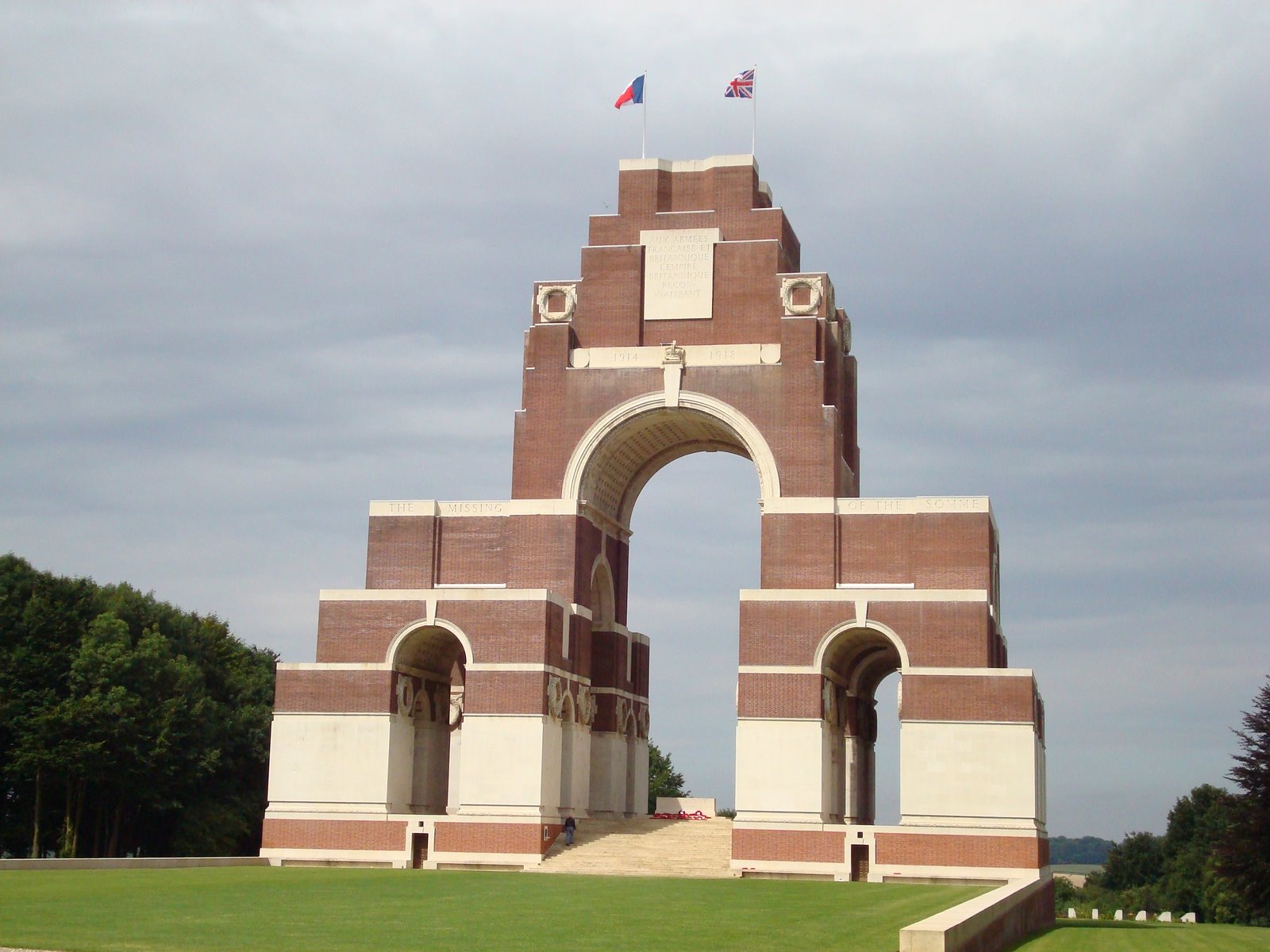
The names of the British army dead who remained missing are engraved on the walls of the towering Memorial at Thiepval.

Thiepval Memorial

Visiting Thiepval is as sobering an experience as the Menin Gate.

The bagpipe tune below was composed by William Laurie who fought at the Somme. He was Pipe Major of the 8th Argyllshire Battalion of the Argyll and Sutherland Higlanders. He became ill as a result of trench conditions and died on Nov 28th 1916.

To all who fought:-

The Battle of the Somme

*More personnel (80,000) were lost by surrender at the Fall of Singapore in 1942.

Foreign Parts by Janice Galloway

Vintage, 1995, 262 p.

Foreign Parts cover

The thing that struck me most about this book was its typography. Passages a paragraph long – sometimes smaller, rarely longer, though the paragraphs obviously vary in size – are separated by a double line break. The names of the two main characters

Rona and Cassie
Cassie and Rona

are frequently represented as above in succeeding lines between two double line breaks before the sentence continues. The main narrative, which has paragraph indentation, follows them on a trip through Northern France, has no markers for speech beyond context or an embedded said and can be interrupted by sections blocked off in a rectangle containing extracts from guidebooks to the local areas.

This is supplemented by sections (each with a uniform margin the size of the paragraph indentation above) describing the contents of photographs of Cassie’s life up to this point.

Nothing much happens in the story as the relationship between Cassie and Rona does not evolve significantly over the novel’s span. The main incidents of Cassie’s life were at the times represented by the photographs so we get, em, snapshots of her previous life. There is a passage about how men are more or less uniformly useless – apart from being able to provide sex – which Rona says she doesn’t miss anyway. Do we not take this as read? In any case not enough is made of this notion to allow us to ascribe the book’s title to being descriptive of the male even if Cassie says, “Heterosexuality is a complete farce…… Because what men really are in love with is men.”

Certain details niggled. Cassie and Rona visit a War Cemetery to find and photograph the name of Rona’s grandfather on a wall and much note is made of the crosses. While it is true that French and US War Cemeteries contain crosses (or stars of David, and I vaguely remember crescents on some French Army graves) British and Commonwealth war grave markers are rectangular slabs with rounded tops. There are some crosses at Thiepval, where the names of the otherwise unmarked dead of the Battle of the Somme are inscribed on a huge memorial, but those are the resting places of French soldiers. The cemetery in the book is unnamed.

Pedants’ accounting:- There was a “shrunk” count of 1 and several misspellings. At one point we had sandle but sandal appeared subsequently several times plus a “meritricious” in one of the guide book sections and a “colandar.”

The Western Front by John Terraine

Hutchinson, 1964. 231p.

This is a book I got at a library sale years ago and have only just got round to reading. Rather than an overview of the Western Front as a whole it turns out to be a series of essays Terraine wrote between 1957 and 1962 which were finally collected in book form in 1964.

In the introduction Terraine is at pains to emphasise that the casualty rate in World War 1 was by no means unprecedented. Starting with Waterloo and taking in the Crimea, The American Civil War and the Boer War he illustrates that, for those with eyes to see, in a time of increasingly industrialised warfare high casualties were inevitable once the fighting started. This was a theme he developed fully in his later book The Smoke And The Fire.

World War 1 was unique, though, in the prolonged timescale of the battles and the static nature of the Western Front. (Other fronts had movement but sustained equally high, or even higher, percentage casualties.) The carnage of the Second World War eclipsed even that of the First, but Britain escaped most of it.

The focus of the book is, however, more on the personalities on the British side than the battles themselves; in particular in the antipathy between Lloyd George and his top commanders. Now, Terraine is a military historian and it is not surprising that his sympathies should lie with the generals but the evidence he presents for Lloyd George’s unhelpfulness is convincing.

His assessment of Douglas Haig as being far from the stolid and hidebound figure of the popular imagination is well argued. His highest praise, though, is reserved for the all but forgotten British general Herbert Plumer.

There is also a discursion into the baneful effect the cult of Napoleon had on the French military mind – and on others. In Terraine’s view Napoleon was anything but the tactical and strategic genius he is usually taken for and, moreover, was exceedingly careless with the lives of his men. The yearning for “something else,” the strategic or tactical genius who might have been able to circumvent the Western Front’s defences was always a chimera. None of the generals, on either side, had a quick and easy solution. In the end, by applying the lessons learned throughout and the integration of new tactics and weapons like the tank, it should not be forgotten that the war was won, and it was won on the Western Front. And that within the three months of late summer and early autumn of 1918.

While Terraine mentions it briefly, the most important assessment of the implications of the war is outwith the scope of this book. Britain was unable to wield sea power effectively (with the launch of the first modern battleship, Dreadnought, and the subsequent naval arms race its dominance had in essence been lost.) The development of the mine and torpedo and the advent of the submarine made a surface fleet almost useless in any case. As a result Britain was sucked in by force of events to becoming a land power; from 1917 onwards – arguably from the Battle of the Somme a year earlier – the major contributor to the Allies; fighting strength and the instrument of final victory.

Had the navy been able to ensure safe passage across the North Sea (rather than keep secure the shorter distance to France) an amphibious landing might have been attempted in Northern Belgium and the Western Front’s flank turned. Whether that would actually have led to an earlier German defeat is another matter.

free hit counter script