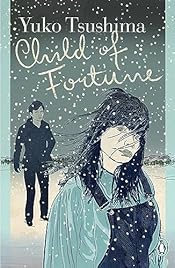
Child of Fortune by Yūko Tsushima
Posted in Other fiction, Reading Reviewed at 12:00 on 3 January 2026
Penguin, 2023, 182 p. Translated from the Japanese, 寵児, (Choji,) Kawada Shobo Shinsha, 1978, by Geraldine Harcourt
Kōko is a divorced mother of eleven-year-old daughter Kayako. She is struggling with her life and her job giving piano lessons is not really enough to sustain them both. For this and other reasons Kayako has moved in with her Aunt Shōko, Kōko’s sister, who thinks of herself as the responsible sibling. Kōko’s memories of her handicapped brother who died when he was twelve colour her feelings towards both Kayako and Shōko. Since her relationship with Kayako’s father, Hatanaka, ended, she has had a long-standing (but now finished) affair with Doi, with whom she also became pregnant but aborted the child. She now feels she would have liked a child to Doi but has embarked on an on-off liaison with Hatanaka’s friend Osada, who acted as intermediary between him and her.
Child of Fortune is a portrait of a woman pulled and pushed between her past and present, and the future she devoutly wishes but is somehow unable to grasp, acutely conscious of the way in which society views women like her. The signs of pregnancy she notices precipitate her crisis.
The novel, though unmistakably Japanese, is not specific to Japan. Kōko’s troubles could be those of a woman anywhere in a judgemental world.
Pedant’s corner:- Dialogue which Kōko remembers is indicated by dashes, in the novel’s “present” (written in the past tense) it is rendered in the usual way. There was also a missing comma before one piece of direct speech.
Tags: Child of Fortune, Japanese Fiction, Translated fiction, Yūko Tsushima
