Archives » Interzone

Interzone 261

Nov-Dec 2015

Interzone 261 cover

Five Conversations with my Daughter (Who Travels in Time)1 by Malcolm Devlin. The title pretty much sums this up. The narrator’s daughter travels back in time – on only five occasions – to talk to him when her body in his time is asleep.
We Might be Sims2 by Rich Larson. One of a group of three convicts forced to make a trial run to Europa thinks they may be in a simulation.
Heartsick3 by Greg Kurzawa. Martin has his heart, dying for seventeen years since the drowning of his daughter, removed.
Florida Miracles by Julie C Day. Inside, Esta hears the voice of Mrs Henry. The day comes when Mrs Henry wants out.
Scienceville4 by Gary Gibson. In his basement Joel Kincaird has constructed a map of Scienceville, the town he’d invented as a teenage boy but after an exhibition in which he’d displayed some of his drawings he gets emails from people who claim to have lived there.
Laika by Ken Altabe. The (USian) narrator’s great uncle Dimitri – a real Russian – is dying and asks him to look after his dog Laika whom he claims to be that Laika, the first living creature in space.

1 summersaults (somersaults)
2 snuck (sneaked; I know it was written in USian but still.)
3 miniscule (minuscule), plus written in USian so we had he felt obligated rather than he felt obliged.
4 Despite Gibson being Glaswegian this is written (at least in part) in USian so we have recess for interval, couple hours for couple of hours, ‘getting on what, four years?’ for ‘getting on for what, four years?’ (He lives in Taipei now though (and his protagonist lives in New York.) Ikea (surely it’s IKEA?)

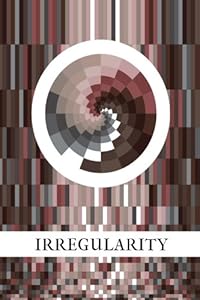
Irregularity. Edited by Jared Shurin.

Jurassic London, 2014, 303 p. Reviewed for Interzone 256, Jan-Feb 2015.

 Irregularity cover

Irregularity is an anthology of short stories inspired by the history of Science from the seventeenth to the mid-nineteenth centuries (the back cover invokes the Age of Reason) and intended to coincide with an exhibition, Ships, Clocks and Stars, The Quest for Longitude, at the National Maritime Museum, Greenwich.

To emphasise the “olde” feel the book is printed in a reconstruction of a seventeenth century typeface – though we are spared that italic-f-shape once used for the letter “s”. It has an unusual dedication, “To failure,” plus five internal illustrations adapted from paintings in the Museum’s collection.

The Prologue, Irregularity by Nick Harkaway, which sets the tone, has a woman bequeathed a library in which she finds a book which bears a cover described as similar (to all intents and purposes identical) to the one we are reading, not only relating her life story up to that point but also seeming to tell her future.
In the Afterword, Richard Dunn and Sophie Waring broadly define Science as the search for nature’s laws in order to codify them and ask what happens when things don’t fit. (Answering that last question is actually the most important scientific endeavour.) Irregularity’s contents are about just such attempts to understand the world.

As a coda, positioned after the afterword and which could easily be missed by a less than careful reader, an “email” to the editor comments on the impossibility of a book that loops back on itself.
The authors have interpreted their remit widely, the stories ranging from Science Fiction through Fantasy to Horror. Some could fall under the rubric of steampunk or alternative history. The literary antecedents being what they are it is perhaps not surprising that the majority lean towards the form of journal or diary extracts and epistolary accounts.

And so we have the inevitable pastiche of Samuel Pepys, M Suddain’s The Darkness, set in a steampunk 17th century with radio, telemessages and air defence antenna arrays, where the French are experimenting with Darke Materials, Restoration London has Tunnelcars and Skycars and a Black Fire of nothingness has begun to eat the city.

Of course, encountering well-known names is one of the pleasures of an anthology like this and there are plenty more to conjure with. Two for the price of one in Adam Roberts’s The Assassination of Isaac Newton by the Coward Robert Boyle, a piece of Robertsian playfulness in which Boyle has had access to modern physics (even discoursing with Brian May, whom Boyle says Newton resembles) and wishes to preserve the more human cosmogony which Newton’s work will displace. Chock full of allusion – including an extended riff on the “operatic” section of Bohemian Rhapsody – this story might just possibly be too knowing for its own good. Charles Darwin appears in Claire North’s The Voyage of the Basset where we follow him on his second sea voyage, utilising his knowledge of the lycaenidae to ensure nothing can mar the glory of Queen Victoria’s coronation. Ada Lovelace helps produce steam-driven animatronic dinosaurs in Simon Guerrier’s An Experiment in the Formulae of Thought, while Fairchild’s Folly by Tiffani Angus muses on the possible classification of love within a taxonomy via the epistolary relationship between Carl Linnaeus and Thomas Fairchild, who crossed a sweet william with a carnation to produce a sterile plant dubbed Fairchild’s mule. In Kim Curran’s A Woman out of Time unnamed creatures relate how they prevented Émilie du Chatelet from disseminating modern Physics too early. A Game Proposition by Rose Biggin has four women get together once every month to play a game which decides the fate of ships, incidentally giving William Dampier the knowledge to compile his atlas of the trade winds.

The most chilling tale is perhaps Roger Luckhurst’s Circulation, wherein a book-keeper is sent out from London to the island of San Domingue to investigate irregularities in the returns from the plantations there and comes upon the secrets of circulation as discovered by “the wizard Sangatte”.

Elsewhere; in Linnaean era Stockholm a young girl has dreams of the future, inspired by spiders; a maker of maritime clocks, in competition with Harrison for the Longitude prize, uses a variety of gruesome fluids to fine tune his escapement; a taxonomist travels to Southern Africa to seek out unusual beasts and finds the egg of a creature variously called gumma, gauma, gomerah, ghimmra, sjeemera; a found manuscript story with not one, but two introductions, suggests a reason for the rebuilding of St Paul’s Cathedral after London’s Great Fire on a realigned axis; an artist and his apprentice, commissioned to depict an anatomy lesson, witness the subject’s heart beating after death.

The stories work well in their own terms, but in totality are rather relentlessly “olde worlde”.

The following comments did not appear in the review:-
In my edition one of the stories was not in the order given on the Contents page.
Span count 1, sunk 1, as you no doubt you anticipated (one “you” is enough,) off of (x 2,) rolled a dice (a die,) court-marshalled (court-martialled,), the committee force me to seethe (forced,) at prices that seems almost scandalous (seemed,) her voice is a echo (an echo,) baster gang (?) a missing “it” (x 2,) two references to “three years” since the Great Fire of London (in diary entries dated 1667,) now used now (one “now” is enough,) can secret a substance (secrete,) they toppled the lids of those wooden prisons and relased their cargo (released,) I might find pick my way back through the canes back to the house (no find?) in sight of one of another (one “of” is enough,) walleyed with lust (wall-eyed,) inside of (inside,) to humour and old man (an old man.)

Interzone 260

Sep-Oct 2015, TTA Press.

Interzone 260  cover

Weedkiller1 by John Shirley. In a world overburdened by population, climate change and lack of food the unproductive are hunted down by “weedkillers.” Both our protagonists, a weedkiller and an immersive game user, have moral dilemmas.
Blonde2 by Priya Sharma. In a world where light hair colours have all but disappeared Rapunzel, yes, has been kept locked up in a tower, her constantly growing blonde hair cropped every day. No prince rescues her but she does escape.
No Rez3 by Jeff Noon is laid out transversely, across the page, and uses a variety of fonts and typographical quirks to tell its story of a world of “streamers, surfers, users, blip seekers. Pixel chasers, image junkies” where people are their POV, nothing more.
Murder on the Laplacian Express4 by C A Hawksmoor. Said express is an interplanetary train (though powered, I note, by interstellar engines) on which a politically inspired murder takes place. Incidentally, the author of this, given in the accompanying biographical information as Caerwyn Allegra Hawksmoor, is thereafter referred to as “they”.
The Spin of Stars by Christien Gholson. A hitch-hiker encounters an old man and a talking manatee in deepest darkest Florida.

Pedant’s corner:-
1 Written in USian “Both … would be paralysed from the neck up, when he set it up with them to read” (if you’re paralysed from the neck up you wouldn’t be able to read aloud. Down was meant. Later one of them does say he can’t move from the neck down.)
2 stokes (strokes,) hung (hanged,) Rapunzel’s sat at her desk (seated; or sitting,) he holds the gold filament up the light (up to the light,) neither of them hear the door open (neither hears the door open,) his topknot and beard makes him look older (make.) Four months of silence follows (four months follow,) ‘I’ve bought some things to look at’ (context suggests “brought”.)
3 “too many people, to many viewpoints” (context suggests “too many viewpoints”)
4 outside of (outside; just outside) off of (off is sufficient) and the construction, “‘What aren’t I scared of?’” is awful; so much less natural – to me at any rate – than “‘What amn’t I scared of?’”

Interzone 259 Jul-Aug 2015

Interzone 259 cover

Silencer – Head Like a Hole Remix1 by E Catherine Tobbler is about a group who are doomed to commit high-school massacres over and over.
The Deep of Winter2 by Chris Butler. Aluna has invented a system of communication involving “spores” which her government will not allow. She lets it loose into a parallel world.
Rush Down, Roar Gently3 by Sara Saab. A woman travels through a Beirut deluged by 102 days of rain to seek out her former friend with whom she lost contact many years before.
After His Kind4 by Richard W Strachan. The only survivor of a crash onto another planet finds his severed arm generating a new version of himself and his own regrowing.
Edited by Rich Larson is told in a slang idiom5 and relates the tale of what happens to the relationship between our (unnamed) male narrator’s rich boy-friend after the latter’s Editing, “Chemo plug for anti-anxiety. Some body language modulation. Bigger memory retention, better special reasoning.” Plus the shitty things. “I don’t feel bad remembering.”
James White Award Winner:- Midnight Funk Association6 by Mack Leonard. A signal has been ruining the beats of Detroit techno – a sound the colour of a black light.

1 “Glasser slides opposite of me” (opposite me) to not go (not to go.)
2 “It was a noble thing we did, us Guardians.” (the “we” is the verb’s subject, so it should be followed by “we Guardians.”)
3 the League of Nations (in 2007?) snuck (sneaked,) cul-de-sacs (culs-de-sac,) scramble onto low wall (a low wall,) off premises (off the premises.)
4 and not a name or a face (two negatives so: and not a name nor a face.)
5 me and him are used in the nominative case rather than the accusative
6 Written in USian; “queuing up a piece of music” (“cueing up” makes more sense,) “hocked it into the pool” (hawked.)

Interzone 258 May-Jun 2015

Interzone 258 cover

a shout is a prayer / for the waiting centuries1 by T R Napper is a tale of a moneyed, privileged overclass and downtrodden servants with no choices, intermixed with memories of war.
The Re’em Song2 by Julie C Day. The bones or blood of dead Re’em – unicorn-like creatures long hunted from the Kerill valley – protect farmland and buildings. Orri and Sunifa nevertheless encounter one.
Doors3 by Bonni Jo Stufflebeam. Nikki, effectively orphaned, has the responsibility of looking after her Down’s Syndrome brother Zack. On a visit to a fairground she enters a ride which offers her a choice of universes to live in.
Angel Fire by Christien Gholson. An ex-stock trader and serial divorcé roams a US where desperate people light fires to entice angels to save them.
Her First Harvest4 by Malcolm Devlin. On a colony world where there is no soil people are “seeded” with fungi which grow on their backs. The crop is harvested during a grand Ball.

Pedant’s corner:-
1 a line of … were being created (a line was)
2 fetid (fœtid)
3 Written in USian. Where her brother could take of himself (could take care of himself.)
4 Fungi have spores; not seeds. “the orchestra were establishing themselves (the orchestra members were….; or, the orchestra was establishing itself.)

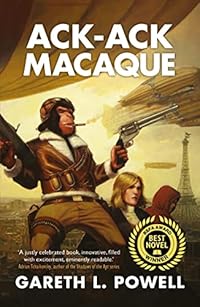
Ack-Ack Macaque by Gareth L Powell

Solaris, 2013, 341 p, including 16 p of the short story from which the novel originated.

 Ack-Ack Macaque cover

Ack-Ack Macaque is the lead character in a highly successful MMORPG (Massive Multi-player Online Role-Playing Game) where he is a Spitfire pilot in an unending Second World War. He also turns out to be “real”, hooked up to the game, embodied in a brain-enhanced monkey which an AI liberation front group manages to free from its confinement in the labs of the game’s constructor, Céleste Industries, with the help of Prince Merovech, heir to the throne of the United Kingdoms of Britain and France (which countries merged after the invasion of Suez in 1957, later also incorporating Norway – with other Scandinavian countries in a wider association) and incidentally also the son of Her Grace Alyssa Célestine, Duchess of Brittany, head of said Céleste Group. Quite a lot to be going on with then, but the execution is initially marred by some intrusive information dumping (which, to be fair, did settle down.)

I had quite a few reservations about the scenario. This is an altered history, of course, but is it one so far removed from our own that the British monarchy could have regained executive power? A further problem though is that Ack-Ack Macaque is almost a peripheral presence, the main bulk of the narrative focusing on Prince Merovech and journalist Victoria Valois, both of whom have also been subjected to treatment in Céleste’s labs, the former’s being the motor of the plot.

Nevertheless, the whole thing rattles along at a good pace and is filled with incident and intrigue.

But I couldn’t believe a single word of it.

Addendum:- Not so for the short story where Ack-Ack Macaque first appeared (in Interzone’s 212th issue, September 2007) and appended here, which relates what goes wrong when the original anime version of the monkey is made over and exploited for commercial reasons. There is an irony in there somewhere.

Pedant’s corner:- A “time interval later” count of 7. “it was up to her accept and mourn” (to her to accept and mourn,) “‘Could you give me a minute please detective?’” (unless “please detective” is a title – and it isn’t – there should be a comma after please,) akevitt (Norwegian spelling of aquavit/akvavit,) Julie and Frank’s (I know this is common usage but it ought to be Julie’s and Frank’s,) it’s (its,) “and winced and the pain” (at the pain,) “‘For saying you’ll go the funeral’” (go to the funeral,) “he saw Julie’s silhouette stood” (can a silhouette stand? – that “stood” ought to be “standing” anyway – we also had “sat” where seated or sitting is better usage,) could use (the British term is could do with,) irresistable (irresistible,) zipper (zip,) gotten (got,) legally obligated (obliged,) commandoes (commandos?) “I’m the back-up, same as Paul” (the person saying this wouldn’t have known Paul’s back-up had been activated,) skull and crossed-bones (it’s usually skull and crossbones.)

For Interzone 262

 Occupy Me cover

The latest book from Interzone for me to review arrived a few days ago.

It is Occupy Me by Tricia Sullivan.

My thoughts on previous examples of Sullivan’s work can be seen here, here and here.

The review of this one ought to appear in Interzone 262.

Irregularity. Edited by Jared Shurin.

Jurassic London, 2014, 303 p. Reviewed for Interzone 256, Jan-Feb 2015.

 Irregularity cover

Irregularity is an anthology of short stories inspired by the history of Science from the seventeenth to the mid-nineteenth centuries (the back cover invokes the Age of Reason) and intended to coincide with an exhibition, Ships, Clocks and Stars, The Quest for Longitude, at the National Maritime Museum, Greenwich.
To emphasise the “olde” feel the book is printed in a reconstruction of a seventeenth century typeface – though we are spared that italic-f-shape once used for the letter “s”. It has an unusual dedication, “To failure,” plus five internal illustrations adapted from paintings in the Museum’s collection.

The Prologue, Irregularity by Nick Harkaway, which sets the tone, has a woman bequeathed a library in which she finds a book which bears a cover described as similar (to all intents and purposes identical) to the one we are reading, not only relating her life story up to that point but also seeming to tell her future.
In the Afterword, Richard Dunn and Sophie Waring broadly define Science as the search for nature’s laws in order to codify them and ask what happens when things don’t fit. (Answering that last question is actually the most important scientific endeavour.) Irregularity’s contents are about just such attempts to understand the world.

As a coda, positioned after the afterword and which could easily be missed by a less than careful reader, an “email” to the editor comments on the impossibility of a book that loops back on itself.
The authors have interpreted their remit widely, the stories ranging from Science Fiction through Fantasy to Horror. Some could fall under the rubric of steampunk or alternative history. The literary antecedents being what they are it is perhaps not surprising that the majority lean towards the form of journal or diary extracts and epistolary accounts.

And so we have the inevitable pastiche of Samuel Pepys, M Suddain’s The Darkness, set in a steampunk 17th century with radio, telemessages and air defence antenna arrays, where the French are experimenting with Darke Materials, Restoration London has Tunnelcars and Skycars and a Black Fire of nothingness has begun to eat the city.

Of course, encountering well-known names is one of the pleasures of an anthology like this and there are plenty more to conjure with. Two for the price of one in Adam Roberts’s The Assassination of Isaac Newton by the Coward Robert Boyle, a piece of Robertsian playfulness in which Boyle has had access to modern physics (even discoursing with Brian May, whom Boyle says Newton resembles) and wishes to preserve the more human cosmogony which Newton’s work will displace. Chock full of allusion – including an extended riff on the “operatic” section of Bohemian Rhapsody – this story might just possibly be too knowing for its own good. Charles Darwin appears in Claire North’s The Voyage of the Basset where we follow him on his second sea voyage, utilising his knowledge of the lycaenidae to ensure nothing can mar the glory of Queen Victoria’s coronation. Ada Lovelace helps produce steam-driven animatronic dinosaurs in Simon Guerrier’s An Experiment in the Formulae of Thought, while Fairchild’s Folly by Tiffani Angus muses on the possible classification of love within a taxonomy via the epistolary relationship between Carl Linnaeus and Thomas Fairchild, who crossed a sweet william with a carnation to produce a sterile plant dubbed Fairchild’s mule. In Kim Curran’s A Woman out of Time unnamed creatures relate how they prevented Émilie du Chatelet from disseminating modern Physics too early. A Game Proposition by Rose Biggin has four women get together once every month to play a game which decides the fate of ships, incidentally giving William Dampier the knowledge to compile his atlas of the trade winds.

The most chilling tale is perhaps Roger Luckhurst’s Circulation, wherein a book-keeper is sent out from London to the island of San Domingue to investigate irregularities in the returns from the plantations there and comes upon the secrets of circulation as discovered by “the wizard Sangatte”.

Elsewhere; in Linnaean era Stockholm a young girl has dreams of the future, inspired by spiders; a maker of maritime clocks, in competition with Harrison for the Longitude prize, uses a variety of gruesome fluids to fine tune his escapement; a taxonomist travels to Southern Africa to seek out unusual beasts and finds the egg of a creature variously called gumma, gauma, gomerah, ghimmra, sjeemera; a found manuscript story with not one, but two introductions, suggests a reason for the rebuilding of St Paul’s Cathedral after London’s Great Fire on a realigned axis; an artist and his apprentice, commissioned to depict an anatomy lesson, witness the subject’s heart beating after death.

The stories work well in their own terms, but in totality are rather relentlessly “olde worlde”.

The following comments did not appear in the review:-
In my edition one of the stories was not in the order given on the Contents page.
Span count 1, sunk 1, as you no doubt you anticipated, off of (x 2,) rolled a dice, court-marshalled, the committee force me to seethe (forced,) at prices that seems almost scandalous, her voice is a echo, baster gang (?) missing “it”(x 2,) two references to “three years” since the Great Fire of London (in diary entries dated 1667,) now used now, can secret a substance, they toppled the lids of those wooden prisons and relased their cargo, I might find pick my way back through the canes back to the house, in sight of one of another, walleyed with lust, inside of, to humour and old man.

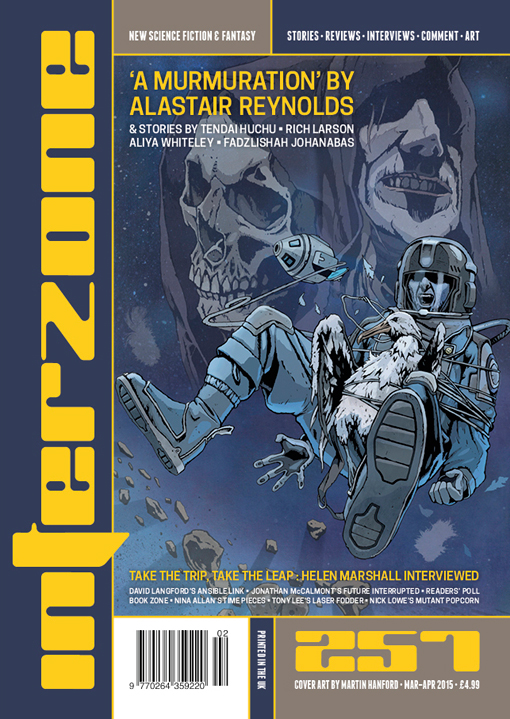
Interzone 257 Mar-Apr 2015

Interzone 257 cover

We kick off with Alastair Reynolds and A Murmuration1 wherein a researcher into the flocking behaviour of starlings begins to be able to control their movements. This leads to conflict with the referee of the scientific paper on the research. Moreover, the birds start to behave contrarily.
In Songbird2 by Fadzlishah Johanabas, due to addiction to electronic devices people can no longer process emotions apart from a few women who can synthesise the emotions when they sing.
Brainwhales Are Stoners, Too3 by Rich Larson sees a teenage girl and the boy she fancies break into the ThinkTank where a brainwhale is confined, wired up, drugged to do computations.
The Worshipful Company of Milliners4 by Tendai Huchu. In a dilapidated factory in Harare a group of half-human, half-cat milliners – invisible to true humans – make equally invisible hats for authors to wear. Full membership of the sisterhood is only granted when the author becomes successful.
Aliya Whiteley’s Blossoms Falling Down is set on a generation starship where different cultures are housed on different decks with occasional tourism between them. The navigator is struck by his visit to a Japanese “Haiku Room”.

1 “The cameras should be aimed into the middle of the perimeter, and elevated sufficiently to catch the murmuration’s epicentre.” (Epicentre used, apparently correctly, as meaning “off-centre”. Remarkable.)
2 written in USian, lay (lie,) the liquid in the cylinders in front of me glow green (glows,) staunch (stanch.) Clear seems to be used as a synonym for colourless.
3 less (fewer,) snuck (sneaked,) a “I’m fine” look (an “I’m fine” look.)
4 sprung (sprang,) epaulets (epaulettes,) “‘almost as though you’re recycled no reincarnated,’” is surely missing punctuation of some sort.

For Interzone 261

 Sherlock Holmes The Thinking Engine cover

You may have noticed from my sidebar that I am currently reading James Lovegrove’s “Sherlock Holmes The Thinking Engine“. This is for a review to appear in Interzone 261.

free hit counter script