Archives » Astronomy

The Crab Nebula in Motion

From YouTube via Astronomy Picture of the Day for 20/3/23.

A time-lapse video of the Crab Nebula’s expansion over 14 years from 2008 – 2022 as captured by Detlef Hartmann. It also shows dynamic interactions at the nebula’s centre.


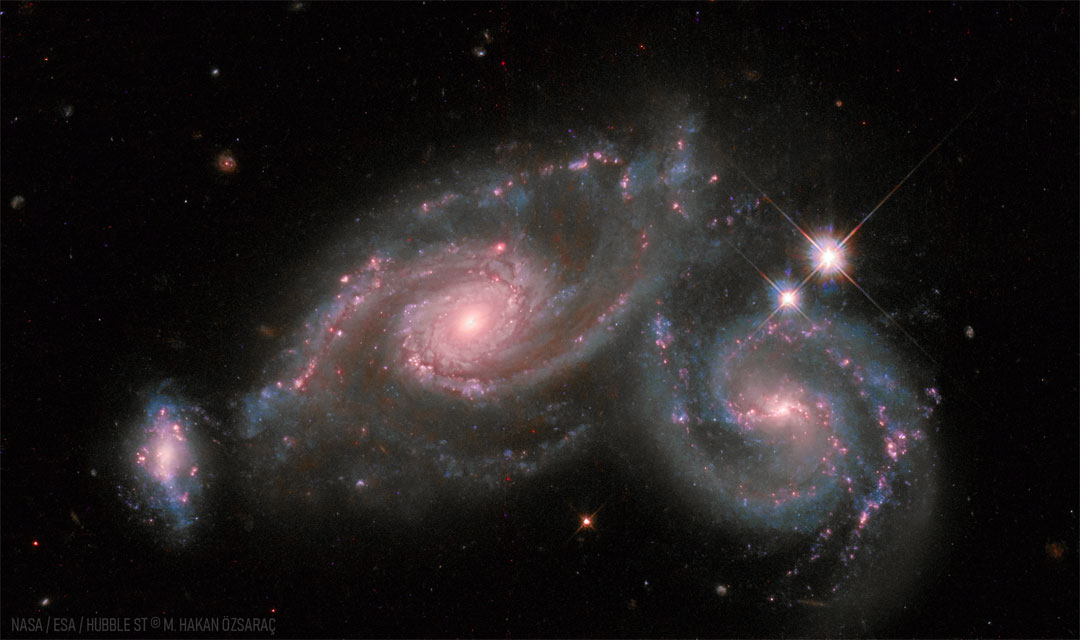
Spiral Galaxies Colliding

From Astronomy Picture of the Day for 23/1/23 a picture of two spiral galaxies in the process of collision.

The whole system is known as ARP 274 and contains three galaxies as there is a smaller one to the left in the image.

ARP 274

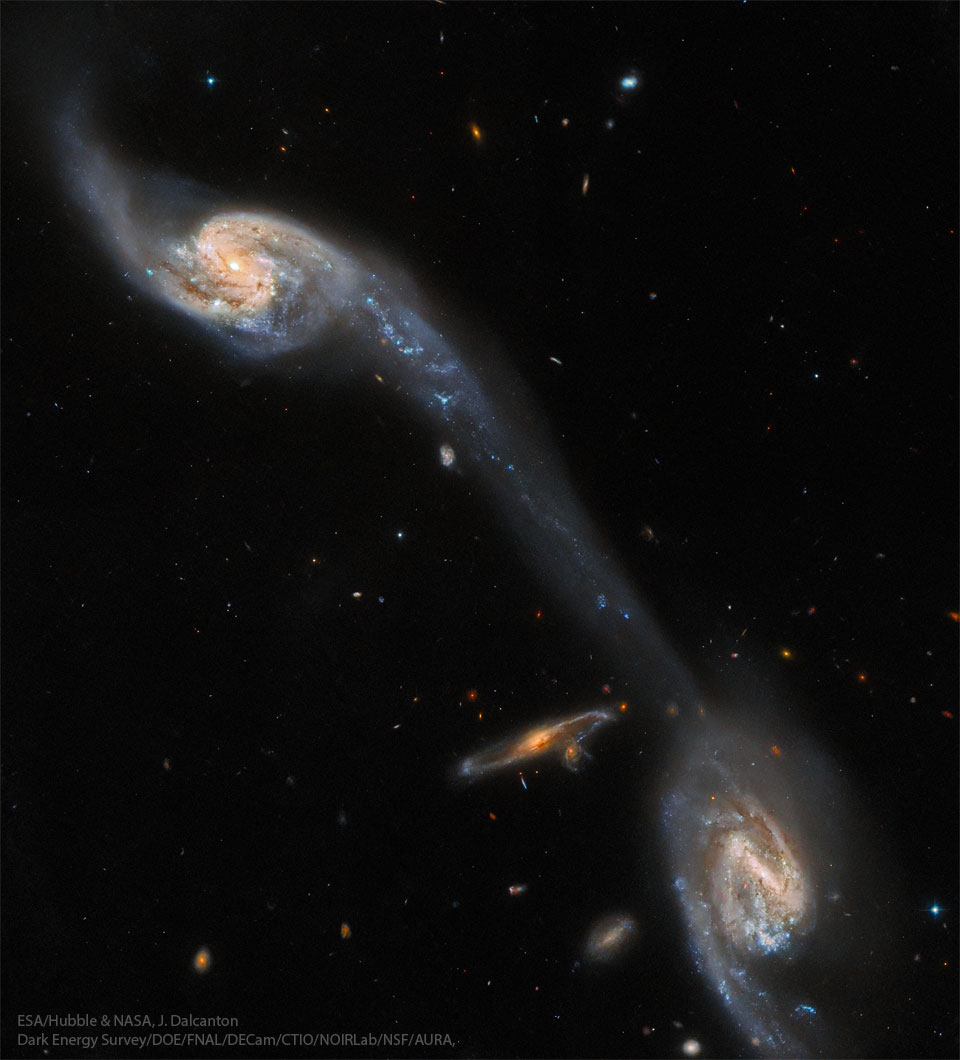
A Triplet of Galaxies (and more)

From Astronomy Picture of the Day for 8/11/22, another amazing image.

This is a triplet of galaxies collectively known as ARP 248. Two of them are interacting gravitationally with each other as evidenced by the bridge of stars connecting them – a bridge almost 200,000 light years long. The other largish galaxy (towards the centre) is only in line of sight and is actually much further away; as are the other galaxies in the frame.

Galaxy Triplet  ARP 248

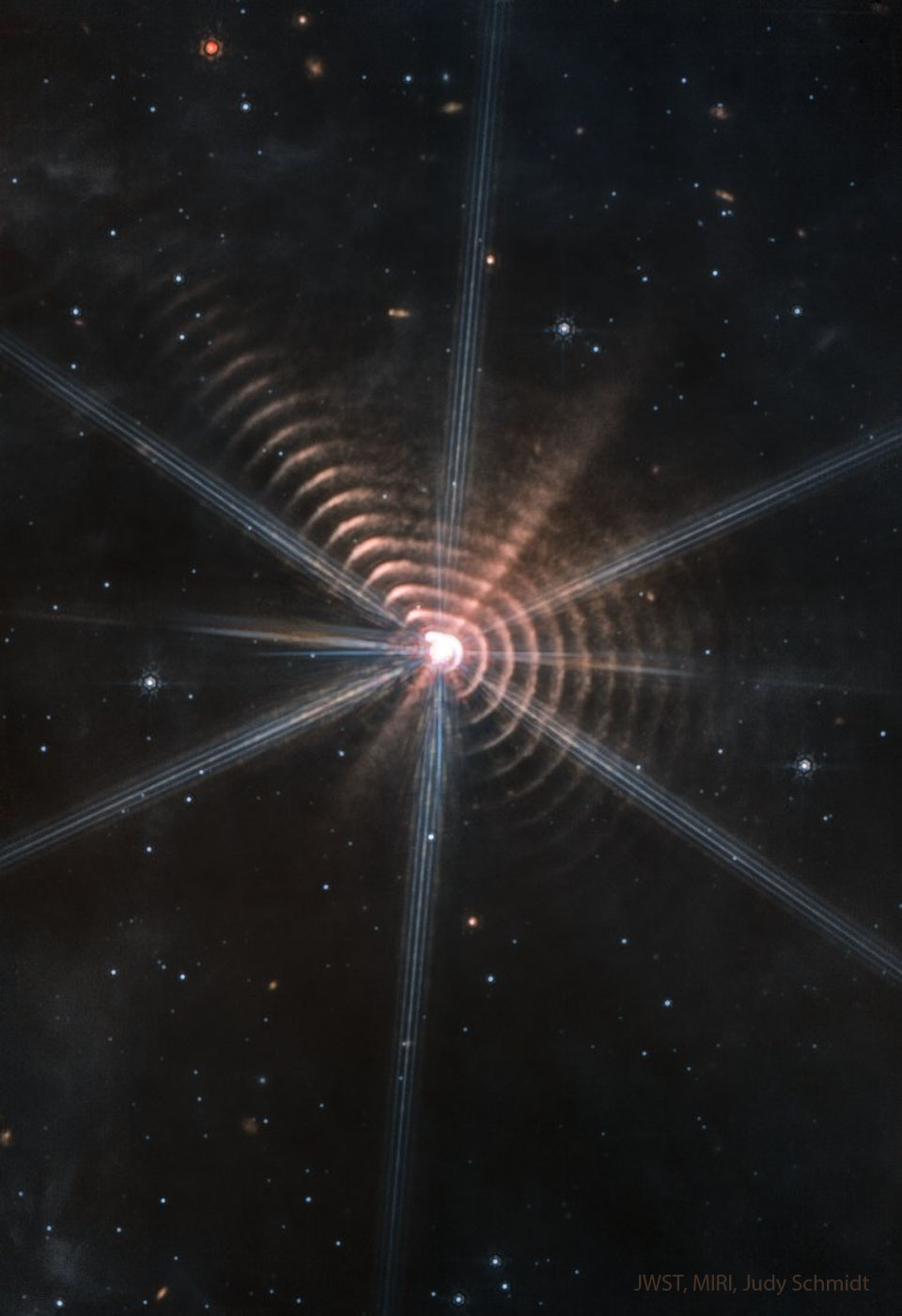
Odd Shells Around a Wolf-Rayet Star

What a strange apparition from the Webb Telescope via Astronomy Picture of the Day for 13/10/22.

The apparent rings are thought to be dust shells but their formation process is unknown.

Wolf-Rayet Star WR 140

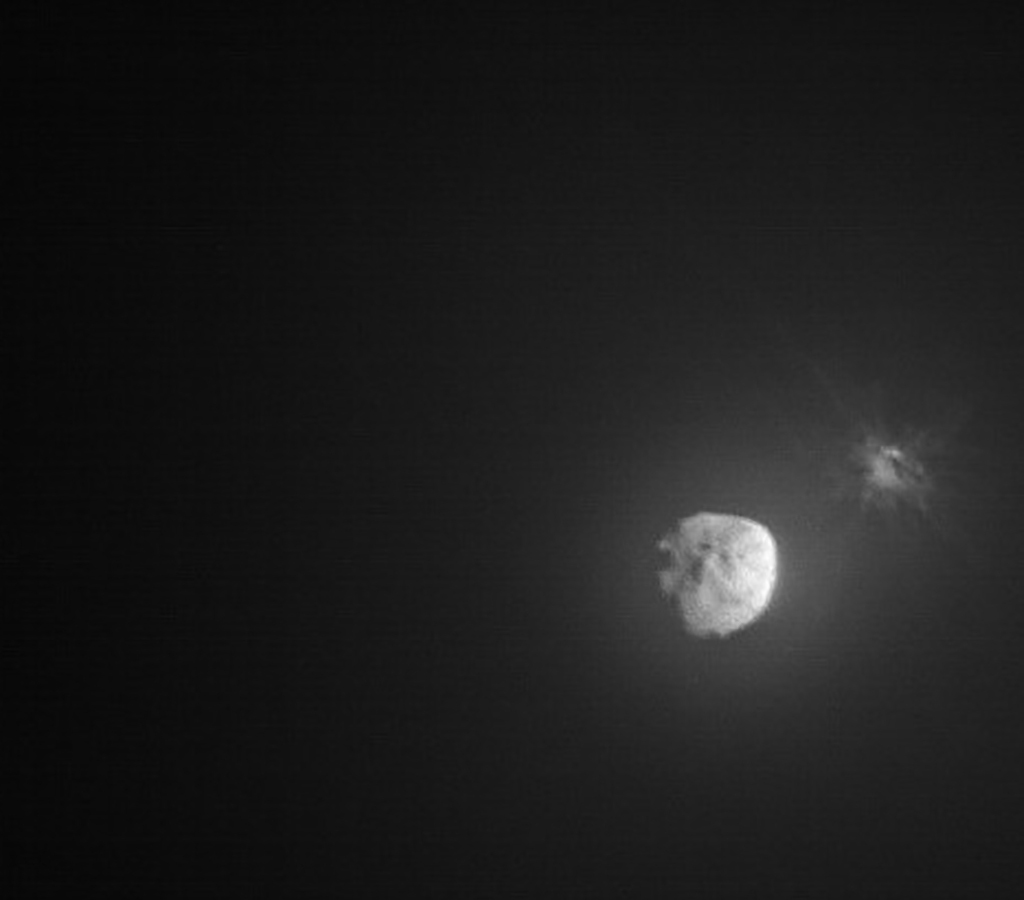
DART Crashes into Dimorphos

From Astronomy Picture of the Day for 27/9/22:-

This video shows the lead up to the DART spacecraft’s impact on the asteroid Dimorphos.

This still picture of the impact’s aftermath is from From Astronomy Picture of the Day for 29/9/22.

Dart hitting Dimorphos

Frank Drake

I saw from the Daily Galaxy that Frank Drake has died.

He was one of the pioneers of the search for extraterrestrial intelligence (SETI) and derived an equation (now named after him) to estimate the number of intelligent civilisations in the galaxy, an equation quite often referred to in Science Fiction stories.

It’s a pretty comprehensive assessment of the factors which need to be taken into account in making any such calculation but of limited use as it requires estimating values for several of its components for which reliable nummbers are unavailable.

It has given us humans some idea of what to look for, though.

So far in vain.

Frank Donald Drake: 28/5/1930 – 2/9/2022. So it goes.

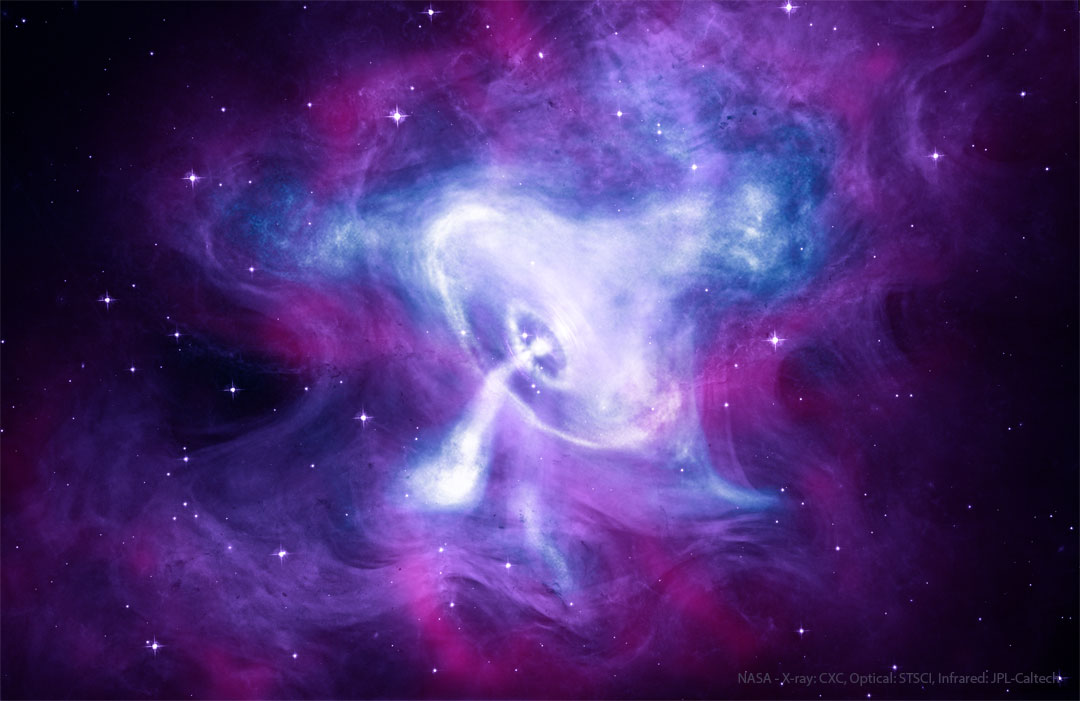
The Pulsar in the Crab Nebula

This is an arresting image from Astronomy Picture of the Day for 21/8/22. It’s of the area surrounding the Crab Pulsar, a spinning neutron star at the centre of the picture and is the remanants of a supernova witnessed on Earth in 1054.

The image combines visible light from the Hubble Space Telescope, X-ray light from the Chandra X-Ray Observatory and infra-red light from the Spitzer Space Telescope.

The neutron star spins 30 times a second.

Pulsar in Crab Nebula

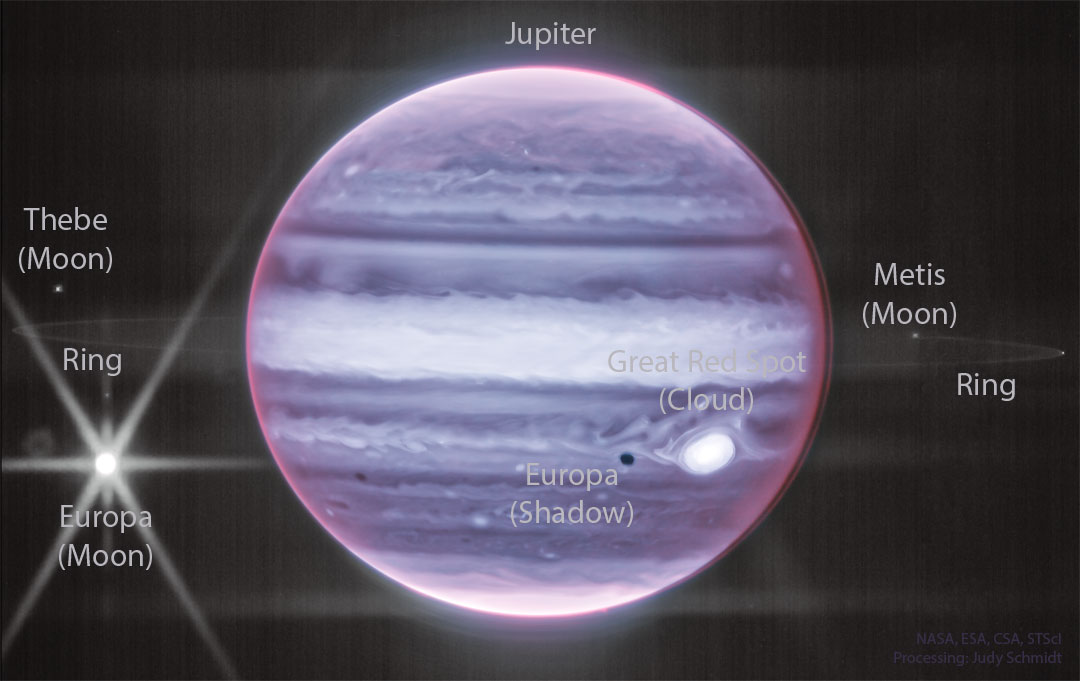
The Ring Around Jupiter

It’s not often you see an image of Jupiter’s ring.

This picture (from Astronomy Picture of the Day for 20/7/22) though shows both planet and ring in infra-red light as captured by the James Webb Telescope.

Also prominent is the Great Red Spot as a bright white feature in infra-red and the moon Europa at the centre of a large diffraction spike.

Jupiter and ring in infra-red</center<

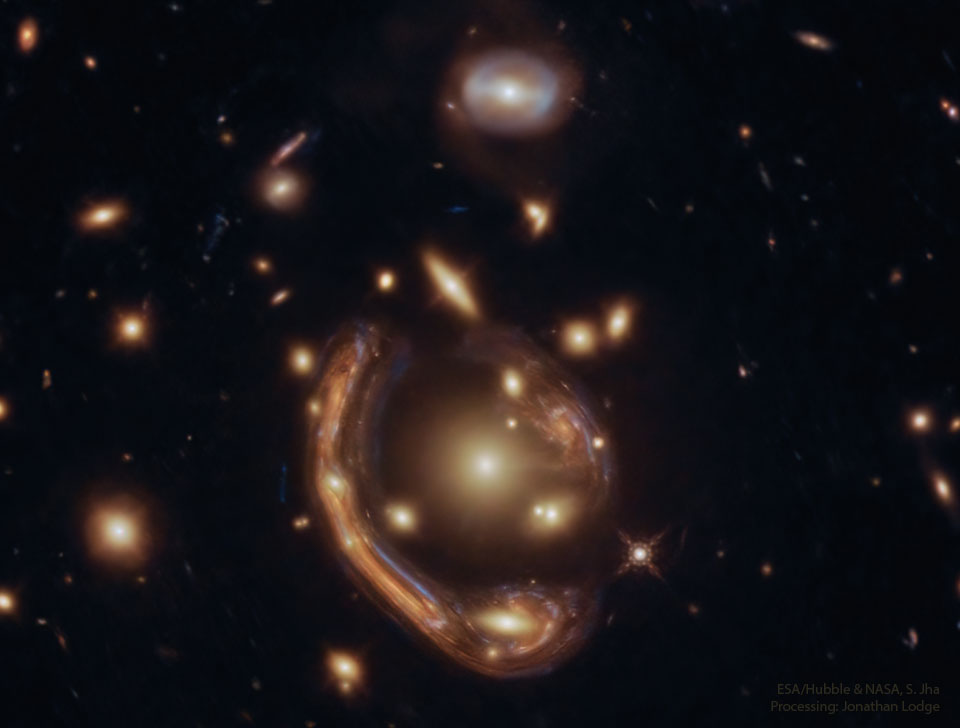
An Einstein Ring

How many galaxies can you see surrounding the galaxy cluster in the lower centre of this picture (taken from Astronomy Picture of the Day for 5/7/22?

An Einstein Ring

Well, I agree the whole thing looks like a blob of liquid smeared across a surface through which light is shining but though it seems as if there are four very unusually shaped galaxies in the ring there is of course only one. Its light has been gravitationally lensed by the intervening galaxy cluster to form an Einstein ring.
An Astronomical Jewel

Taken for Astronomy Picture of the Day for 26/6/22, this is V838 Mon, the result of a sudden outburst from the surface of star V838 Monocerotis, a phenomenon never seen before.

Doesn’t it, though, look like the setting of a ring?

V838 Monocerotis

free hit counter script