Posted in Astronomy, Events dear boy. Events, Science Fiction at 20:30 on 10 September 2022
I saw from the Daily Galaxy that Frank Drake has died.
He was one of the pioneers of the search for extraterrestrial intelligence (SETI) and derived an equation (now named after him) to estimate the number of intelligent civilisations in the galaxy, an equation quite often referred to in Science Fiction stories.
It’s a pretty comprehensive assessment of the factors which need to be taken into account in making any such calculation but of limited use as it requires estimating values for several of its components for which reliable nummbers are unavailable.
It has given us humans some idea of what to look for, though.
So far in vain.
Frank Donald Drake: 28/5/1930 – 2/9/2022. So it goes.
No Comments »
Posted in Astronomy at 12:00 on 4 September 2022
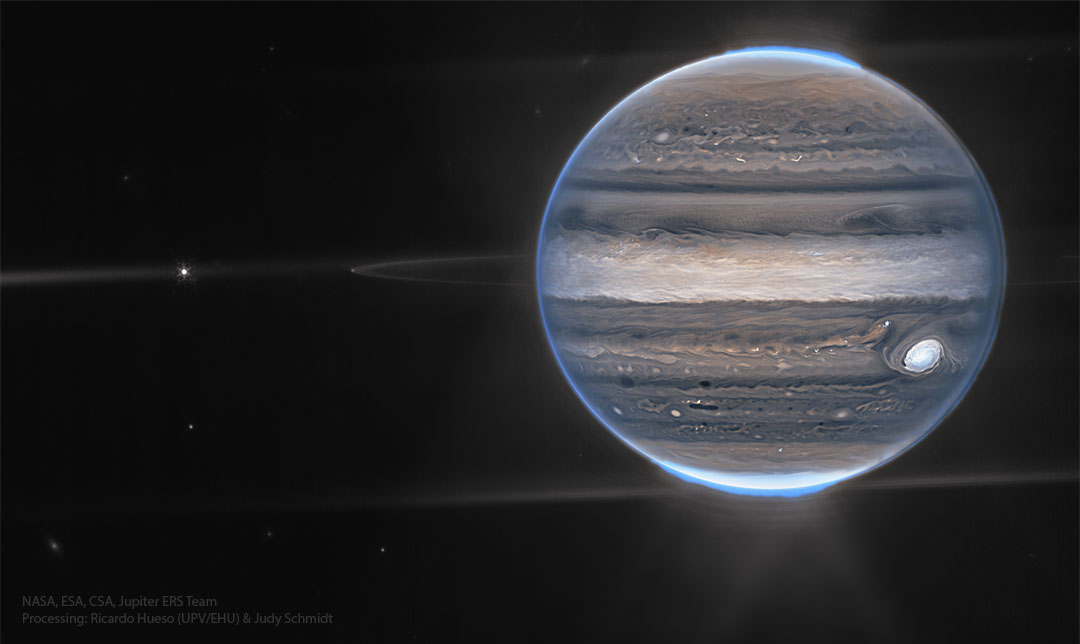
An amazing picture (via Astronomy Picture of the Day for 30/8/22) from the James Webb Telescope.
It is an unusual image of the Solar System’s largest planet but is unmistakable due to the large swirling storm at the bottom right (which in visible light is known as the Great Red Spot.)
Also notable are Jupiter’s rings, not normally easily discernible, and its southern and northern aurorae – not to mention two of its smaller satellites.
No Comments »
Posted in Astronomy at 12:00 on 31 August 2022
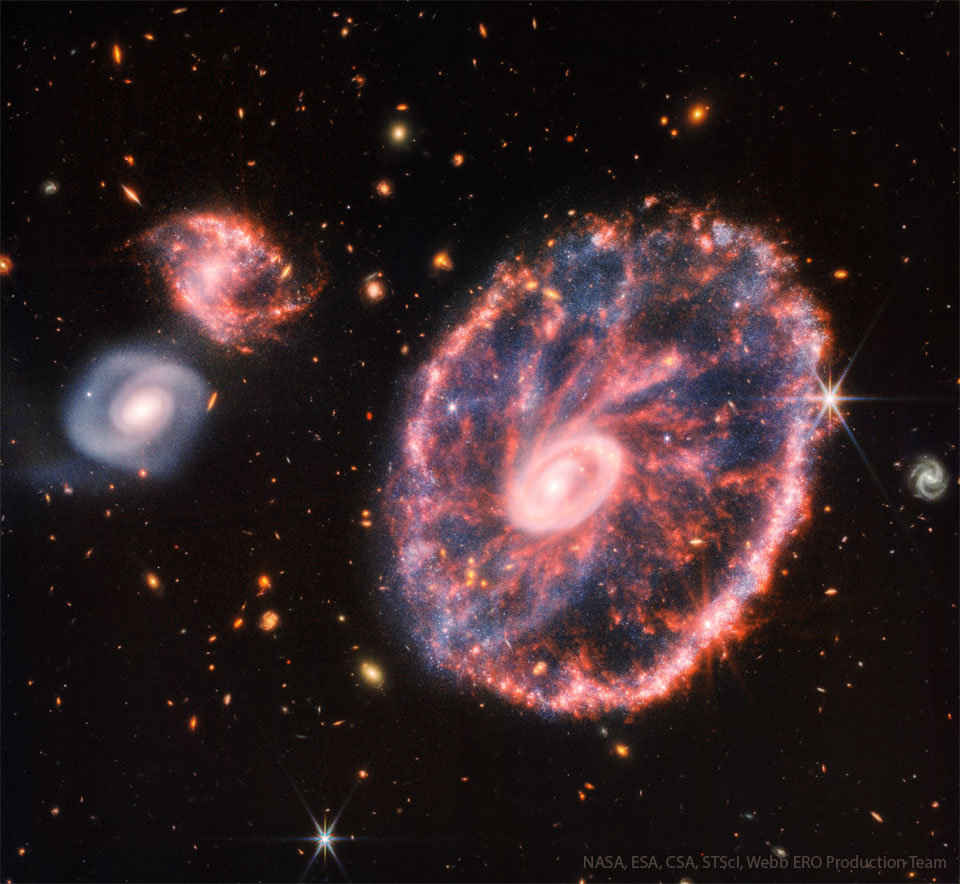
From Astronomy Picture of the Day for 24/8/22 comes this excellent image taken by the James Webb Space Telescope.
A lovely image but to me this makes the galaxy resemble a jellyfish.
No Comments »
Posted in Astronomy at 12:00 on 25 August 2022
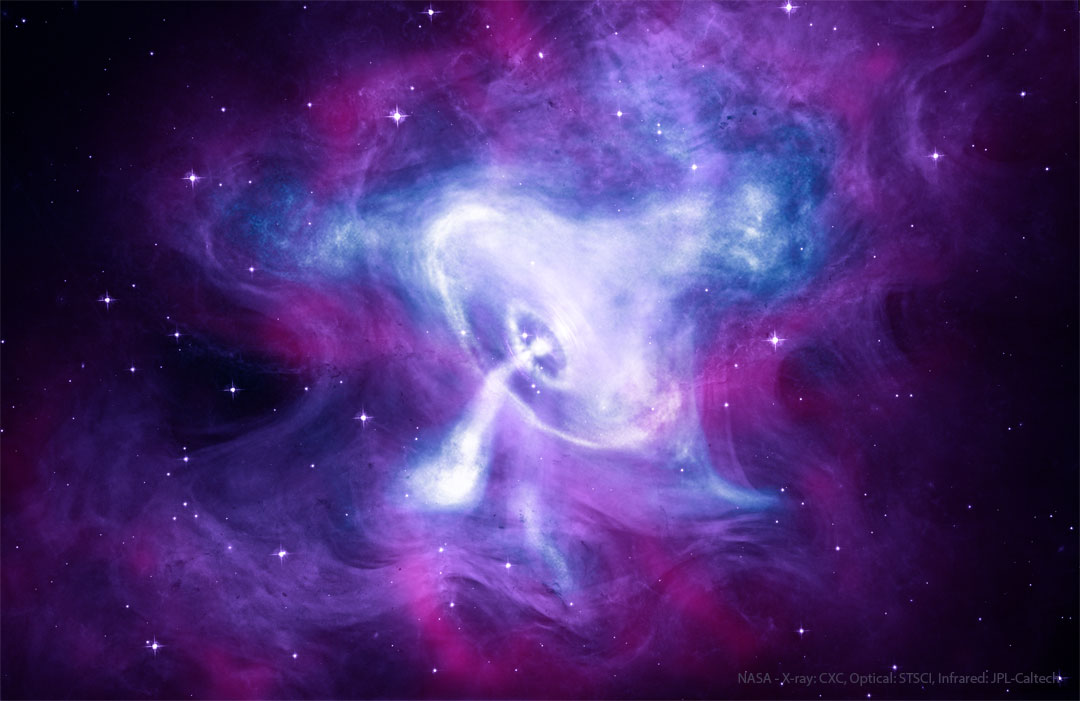
This is an arresting image from Astronomy Picture of the Day for 21/8/22. It’s of the area surrounding the Crab Pulsar, a spinning neutron star at the centre of the picture and is the remanants of a supernova witnessed on Earth in 1054.
The image combines visible light from the Hubble Space Telescope, X-ray light from the Chandra X-Ray Observatory and infra-red light from the Spitzer Space Telescope.
The neutron star spins 30 times a second.
No Comments »
Posted in Astronomy at 20:00 on 24 July 2022
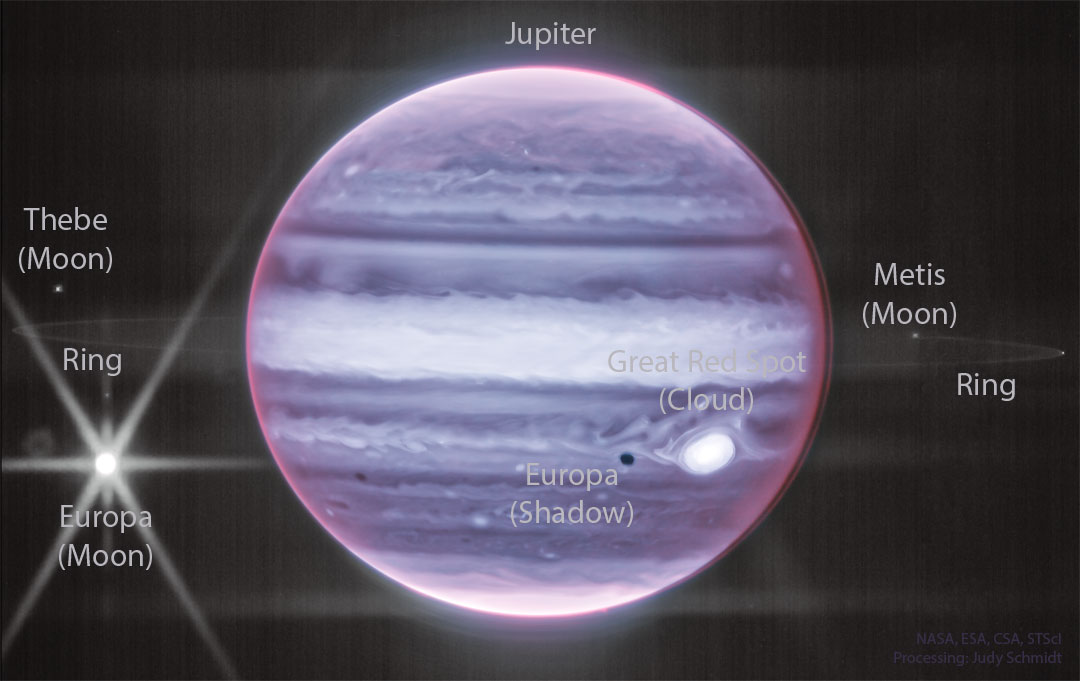
It’s not often you see an image of Jupiter’s ring.
This picture (from Astronomy Picture of the Day for 20/7/22) though shows both planet and ring in infra-red light as captured by the James Webb Telescope.
Also prominent is the Great Red Spot as a bright white feature in infra-red and the moon Europa at the centre of a large diffraction spike.
 </center<
No Comments »
Posted in Astronomy at 12:00 on 10 July 2022
How many galaxies can you see surrounding the galaxy cluster in the lower centre of this picture (taken from Astronomy Picture of the Day for 5/7/22?
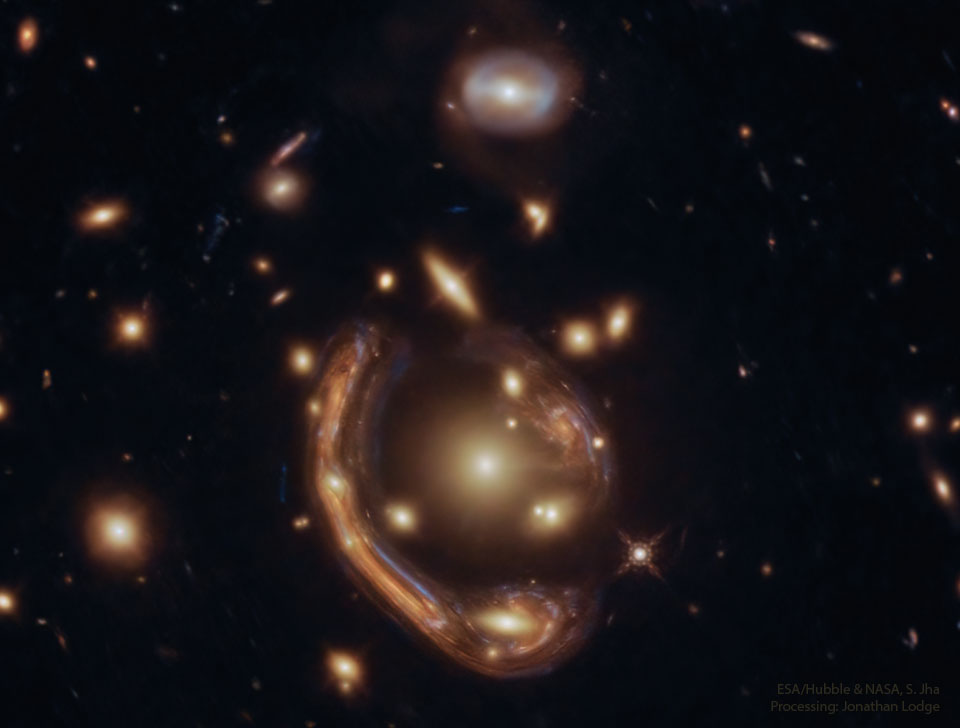
Well, I agree the whole thing looks like a blob of liquid smeared across a surface through which light is shining but though it seems as if there are four very unusually shaped galaxies in the ring there is of course only one. Its light has been gravitationally lensed by the intervening galaxy cluster to form an Einstein ring.
No Comments »
Posted in Astronomy at 12:00 on 2 July 2022
Taken for Astronomy Picture of the Day for 26/6/22, this is V838 Mon, the result of a sudden outburst from the surface of star V838 Monocerotis, a phenomenon never seen before.
Doesn’t it, though, look like the setting of a ring?

No Comments »
Posted in Astronomy at 12:00 on 2 June 2022
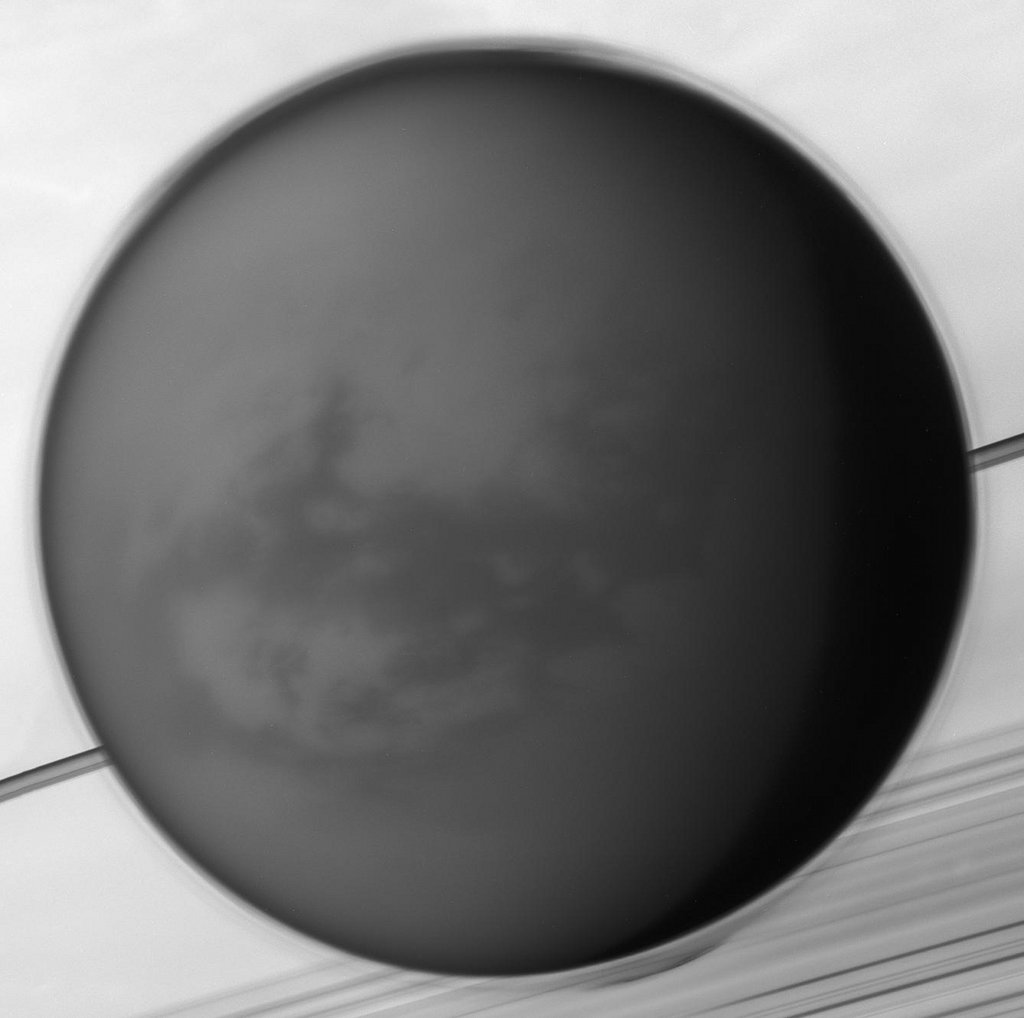
This is of course not our own moon.
Titan, however has an atmosphere, itself murky at visible wavelengths of light but which would make its edges shimmery in any case, as pictured by the Cassini spacecraft above Saturn’s rings and clouds, showing off the hemisphere which Saturn never sees.
From Astronomy Picture of the Day for 27/5/22.
No Comments »
Posted in Astronomy, Science Fiction at 12:00 on 17 May 2022
That sounds like a title from a 1960s or 70s SF story.
It isn’t though.
What was more or less theoretical then is real now.
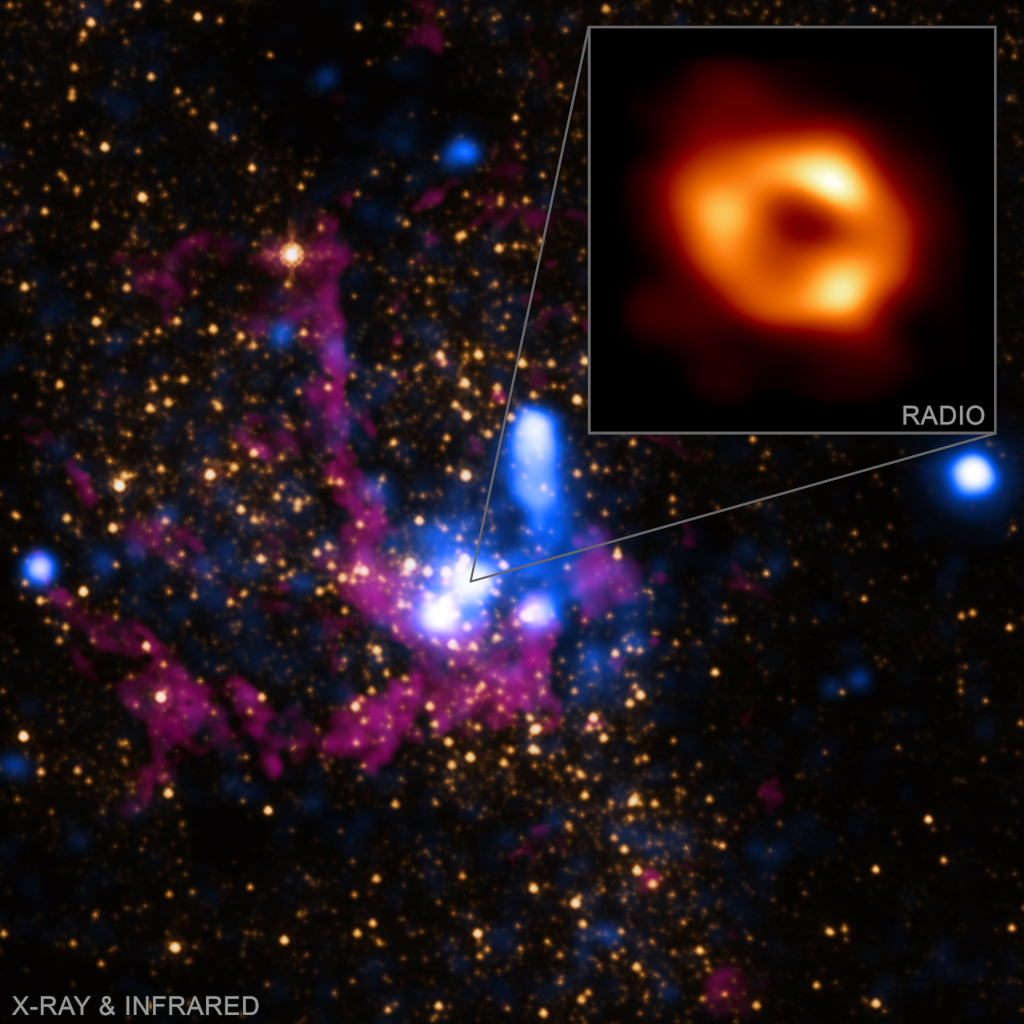
And Sgr A* at the centre of the Milky Way has finally been photographed (well at radio wavelengths. The main image is composed of X-ray and infra-red data and spans 7 light years. By contrast the inset of the black hole’s surroundings is only ten light minutes across.)
No doubt you’ve already seen this but it’s worth posting anyway.
The picture is from Astronomy Picture of the Day for 13/5/22.
No Comments »
Posted in Astronomy at 12:00 on 14 May 2022
From You Tube via Astronomy Picture of the Day for 9/5/22.
Phobos crossing the Sun’s disc.
I wouldn’t call this an eclipse – the Sun isn’t fully obscured. I don’t suppose you can call it a transit either (if you define those as involving planets passing in front of the Sun.)
No Comments »
