A Ringed Galaxy
Posted in Astronomy at 12:00 on 11 May 2022
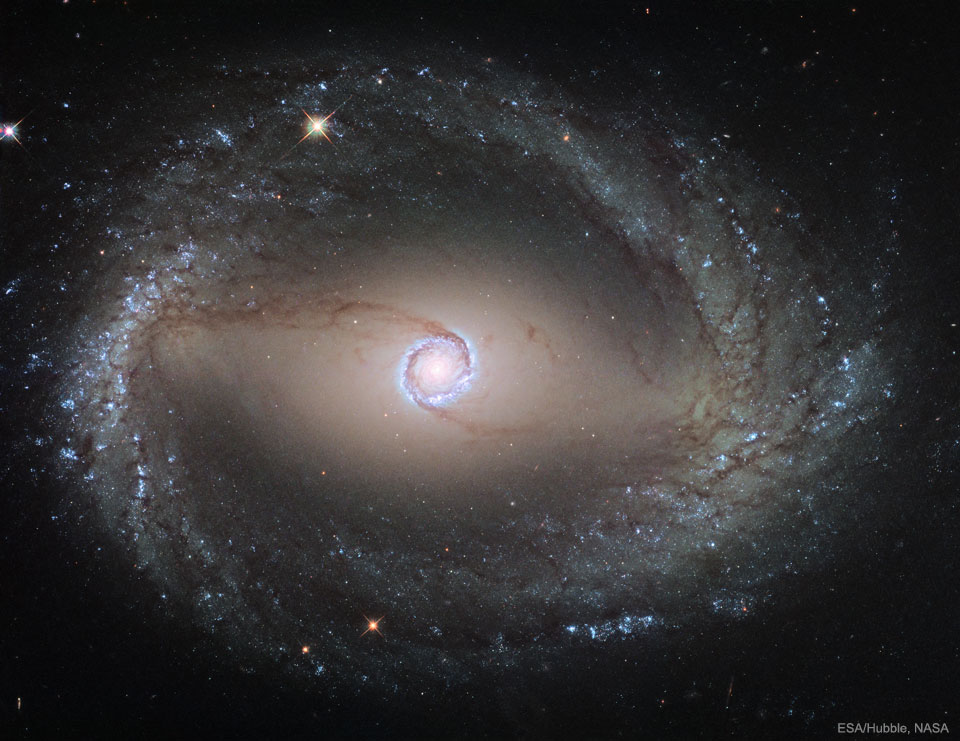
From Astronomy Picture of the Day for 8/5/22. A galaxy with rings.
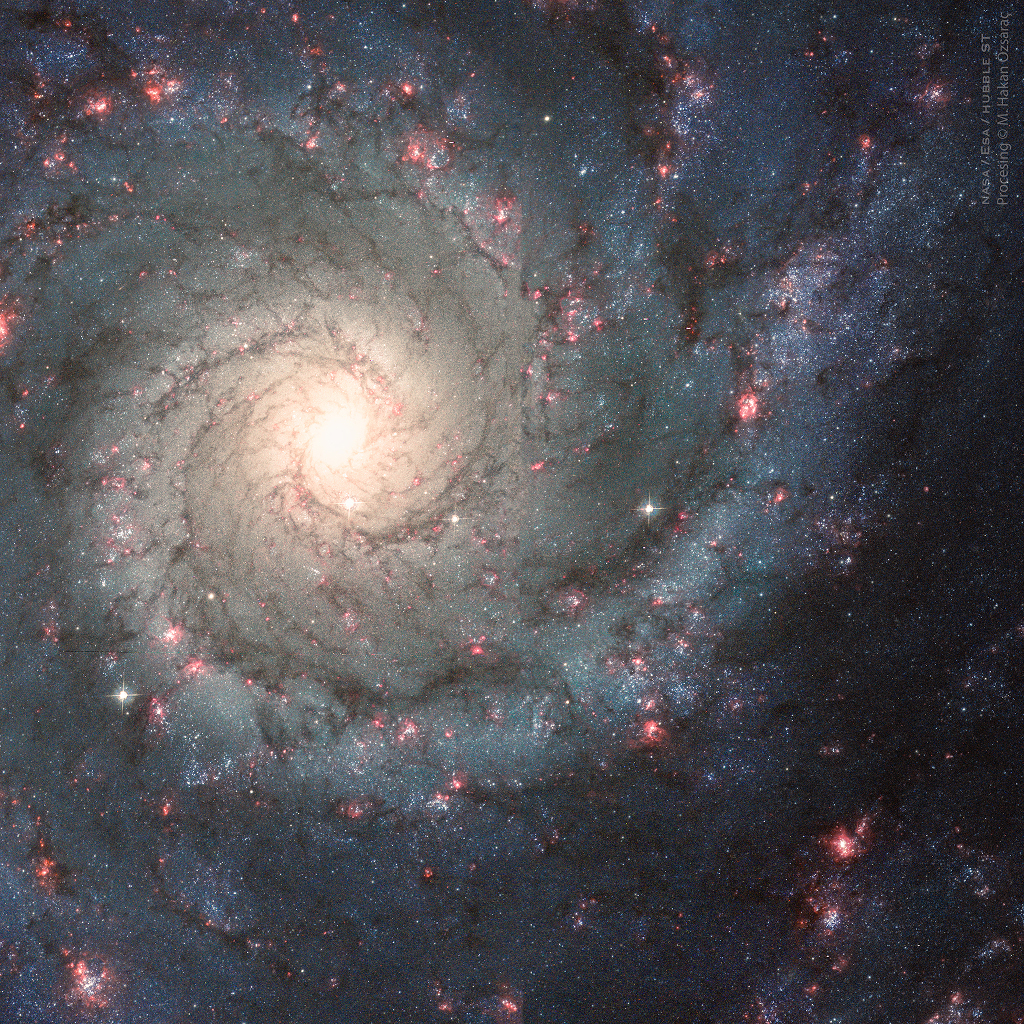
This is spiral galaxy NGC 1512.
A striking resemblance to an eye.
Posted in Astronomy at 12:00 on 11 May 2022
From Astronomy Picture of the Day for 8/5/22. A galaxy with rings.
This is spiral galaxy NGC 1512.
A striking resemblance to an eye.
Posted in Astronomy at 17:00 on 10 February 2022
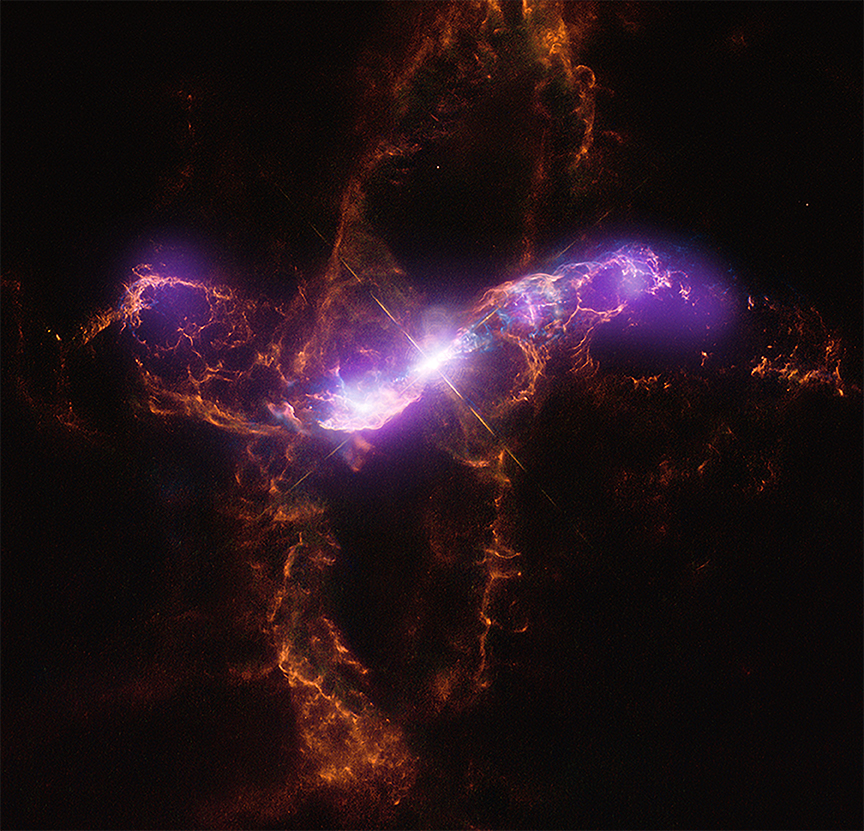
From Astronomy Picture of the Day for 5/2/22 comes this dazzling apparition, variable star R Aquarii, actually a binary star, a cool red giant and hot white dwarf orbiting their overall centre of mass. Apparently with binoculars you can see the star vary in brightness obver about a year.
The image is a combination of visible (blue and red) and X-ray data (rendered in purple.)
Posted in Astronomy at 12:00 on 15 January 2022
From Astronomy Picture of the Day for 10/1/22.
A time-lapse video of Comet C/2021 A1 (named Leonard) as it progressed on its trip through the inner solar system.
The video was taken by NASA’s Solar Terrestrial Relations Observatory-Ahead (STEREO-A) over ten days in December and processed in such a way as to highlight differences from one frame to another.
This clearly shows the comet’s tail being wagged as it is buffeted by the solar wind.
But it does remind me of films I have seen of spermatozoa swimming on their way to fertilising eggs.
Posted in Astronomy at 12:00 on 8 December 2021
These pictures from the widespread reaches of the Solar system continue to astonish me.
From Astronomy Picture of the Day for 28/11/21.
This is a photo of a kilometre high cliff – on Comet Churyumov-Gerasimenko. Taken by the Rosetta spacecraft.
It has a certain stark beauty.
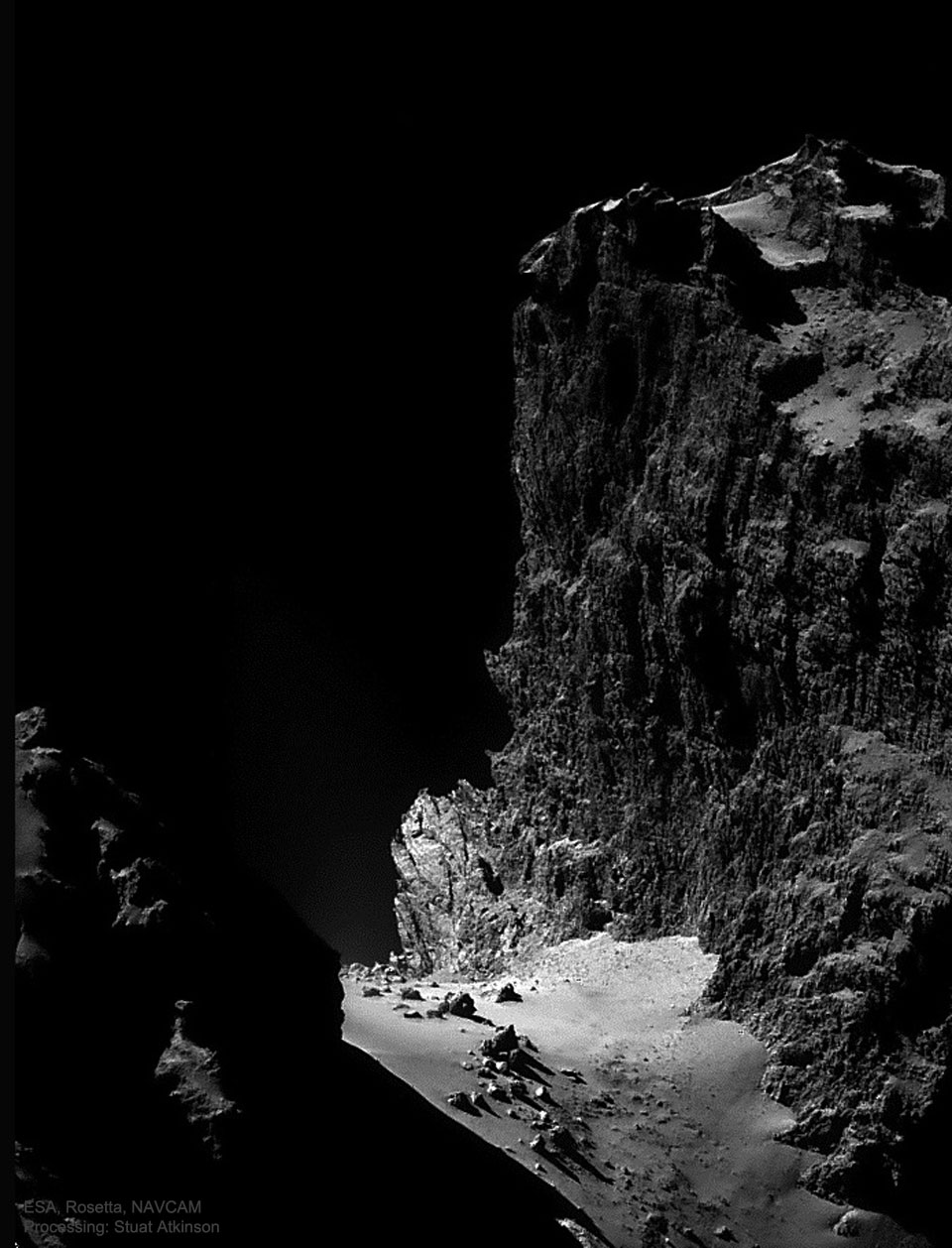
Due to the comet’s low gravity you could jump off the cliff and likely survive.
Posted in Astronomy at 12:00 on 6 December 2021
Well, four of them.
From YouTube via Astronomy Picture of the Day for 30/11/21.
A time-lapse video of Uranus and its four largest moons Titania, Oberon, Umbriel and Ariel, captured by the Bayfordsbury Observatorybased in Hertfordshire, England. The whole sequence takes up four hours in real time.
The cross of the diffraction spike is an artefact of the telescope used.
The apparent movement of Uranus is actually due to the orbit of Earth round the sun, changing the angle of view. The diffraction spike’s rotation appears because of the rotation of the Earth.
Posted in Astronomy at 12:00 on 2 December 2021
Under certain conditions when the sun sets the very last colour that can be seen is green.
Such a sunset over the Ligurian Sea was captured by Paolo Lazzarotti in October, shown here first speeded up, then in real time and finally in slow motion.
(From You Tube via Astronomy Picture of the Day for 10/11/21.
Posted in Astronomy at 12:00 on 21 November 2021
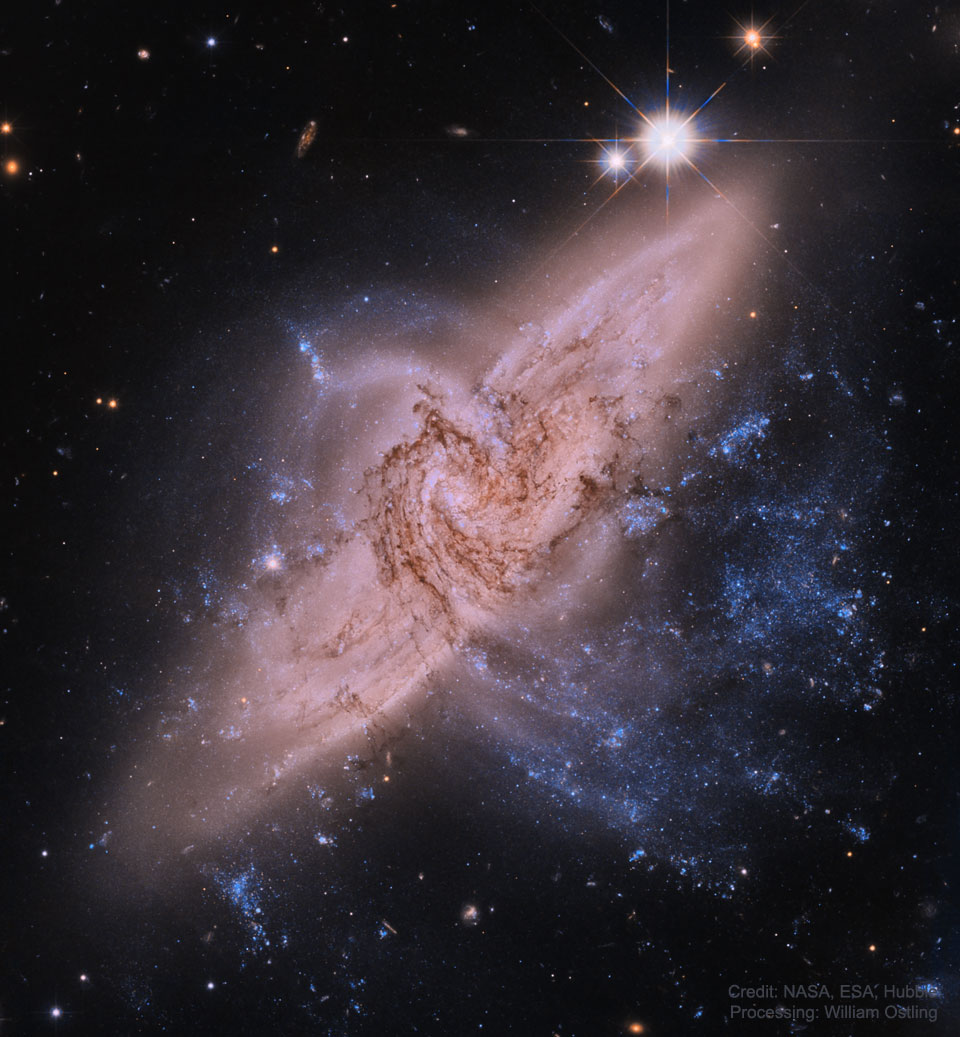
This is an image (from Astronomy Picture of the Dayfor 17/11/21) of two galaxies overlapping.
The front one’s spiral arms show up almost as shadows against the further one but overall tThe two together look like a sketch of a bird in flight.
Posted in Astronomy at 12:00 on 13 November 2021
The Sun is an unbelievably violent object. Not surprising given its temperature and the countless nuclear reactions taking place in its interior.
Sometimes this violence manifests itself in eruptions like the filament pictured below, which rose from the Sun last month.
(From You Tube via Astronomy Picture of the Day for 8/11/21.)
Posted in Astronomy at 12:00 on 16 October 2021
From You Tube via Astronomy Picture of the Day for 11/10/21.
An animation of photos taken recently by the Juno spacecraft:-
Posted in Astronomy at 12:00 on 19 August 2021
From NASA via Astronomy Picture of the Day for 13/8/21.
A beautiful spiral galaxy. The image shows emissions from hydrogen atoms, emphasising the reddish glow of the parts of the galaxy where stars are forming.
The galaxy looks slightly different in visible light.

