Posted in Trips, War Memorials at 12:00 on 8 December 2022
Lybster is a village on the A 99 in Caithness about 13 miles south of Wick.
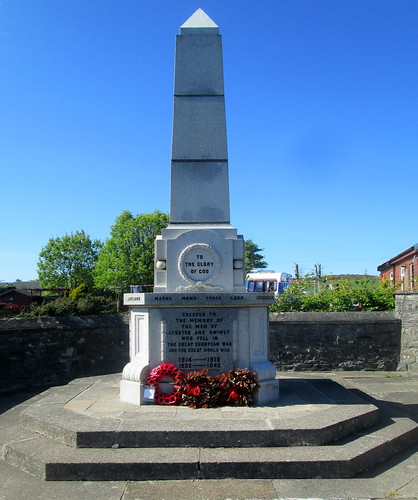
Its War Memorial is a granite obelisk situated on the east side of the road. Dedicated to “the men of Lybster and Swiney who fell in the Great European War and the Great World War”:-
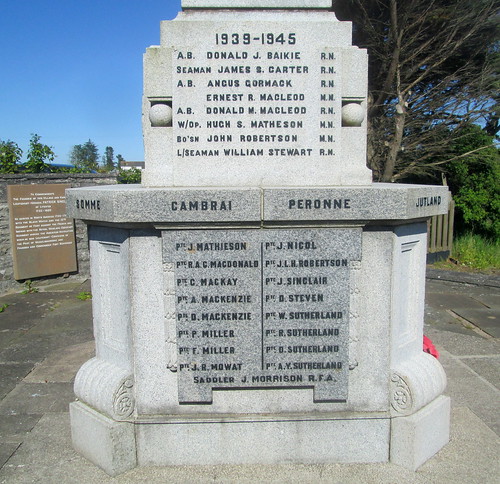
Reverse of Lybster War Memorial. World War 2 dedication. Upper list is of World War 2 names, the lower is for the Great War:-

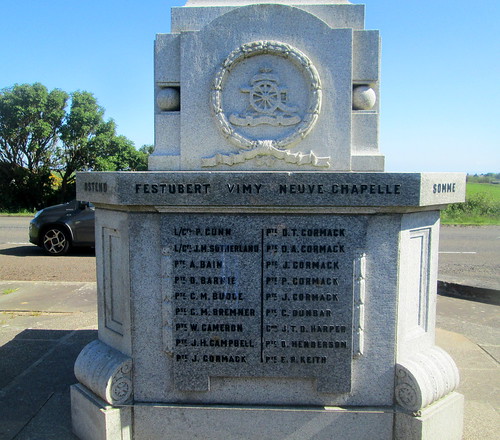
Close-up on names. The obelisk is aslo inscribed with the names of Great War battle scenes, Paschendaele, Beaumont Hamel, Ostend, Festubert, Vimy, Neuve Chapelle, Somme, Zeebrugge, Cambrai, Peronne, Jutland, Marne, Mons, Ypres, Loos.
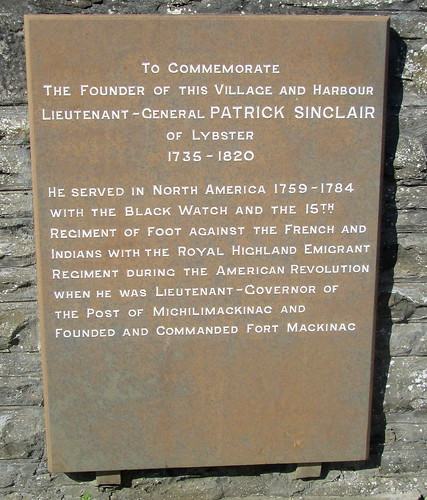
On the wall behind the memorial is a plaque commemorating the village’s founder:-
No Comments »
Posted in Trips, War Memorials at 12:00 on 16 February 2021
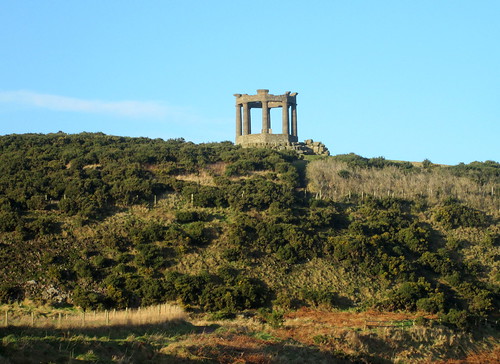
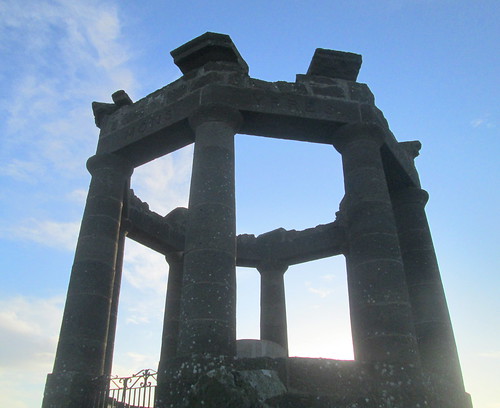
Stonehaven War Memorial sits prominently on Black Hill to the south of the town and is also visible from Dunnottar Castle. The winding path from the castle takes you towards Stonehaven and partly up Black Hill from where you can access the Memorial grounds.
View of Memorial from path leading from Dunnittar Castle:-
Stonehaven from Stonehaven War Memorial:-

Memorial from west as seen from the road back to Dunnottar Castle:-
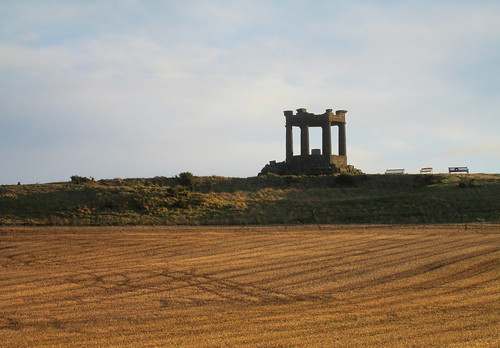
An information board says the memorial was deliberately designed to look like a ruin to symbolise the lives cut short by the Great War:-

Stonehaven War Memorial from north:-

The external lintels are inscribed with the names of Great War battles, here Jutland, Mons, Ypres:-

From south, Zeebrugge, Gallipoli, Jutland:-

From southwest, Marne, Zeebrugge:-
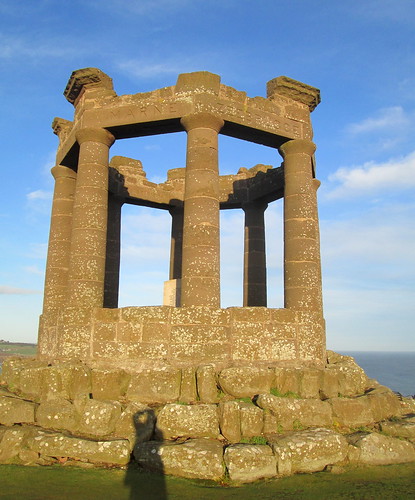
From west, Vimy, Somme, Marne:-
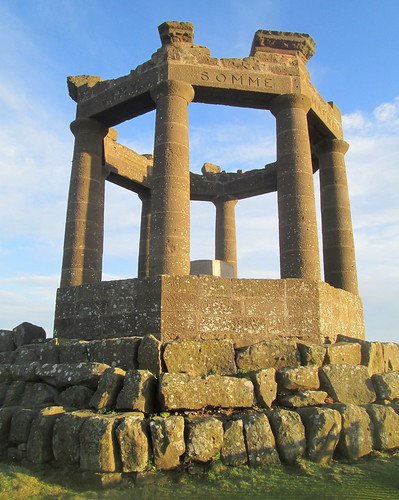
From northwest, Mons, Ypres:-
No Comments »
Posted in Trips, War Memorials at 12:00 on 13 November 2019
A tapering stone obelisk on a square plinth, this War Memorial stands on an expanse of grass by the side of the Firth of Clyde on the south approach to the town. This east facing side of the obelisk is inscribed Maubeuge, 1918, Cambrai, Flanders 1917, Arras.

North face. Column inscribed Somme, Loos, Ypres, Marne, Mons:-
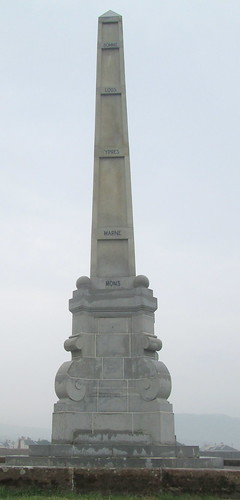
West (sea facing) aspect. Pedestal inscribed with the names of the naval actions at Zeebrugge, Jutland, Falkland, Coronel, Heligoland:-

South face. Inscribed for campaigns outside Europe: Palestine, Salonica, Mesopotamia, Gallipoli, Africa:-

Great War plaque, “The tribute of the poeple of Girvan to those of her sons who gave their lives in defence of their country’s righteous cause in the Great War, 1914 – 1919”
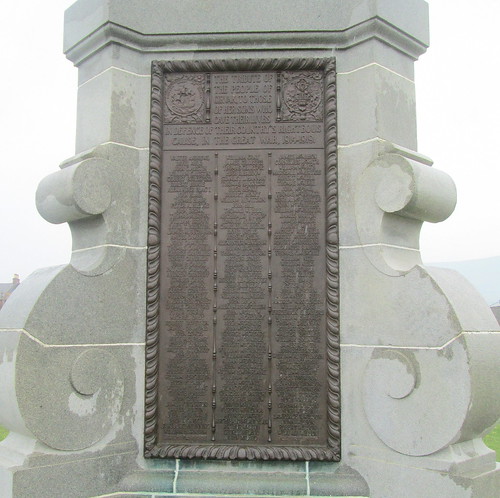
World War 2 plaque, “The tribute of the people of Girvan to those of her sons who gave their lives in defence of their country’s righteous cause in the World-War 1939 – 1945.” Three additional names below:-

No Comments »
Posted in BBC, History, Radio 2 at 23:00 on 4 August 2014
One hundred years ago today, at midnight Central European Time, the event that shaped the twentieth century came into being. Or at least the British Empire’s participation in it began.
Germany had invaded Belgium that morning so we were a bit late. (A squad of Germans had invaded Belgium the previous evening but had jumped the gun – so to speak – not getting the delaying telegram in time and were recalled. They were soon back though.)
Yet those were not the first shots. Hostilities had started seven days earlier on 28th July when Austro-Hungarian troops opened fire on Serbia in response to the true first shots – the ones fired by Gavrilo Princip and which killed Archduke Franz Ferdinand of Austria and his wife Sophie but even those had their roots in the welter of national entanglements which plague the Balkans even yet.
Those entanglements were mirrored in the system of alliances that dictated that Germany had to attempt to defeat France first before swinging round to take on Russia and so necessitated a march through neutral Luxembourg and Belgium.
Ironies abounded. Without attacking Belgium, Germany might have avoided war with Britain and so the holding up of the German armies by the BEF at Mons and later the Allies at the battle of the Marne might not have succeeded and so gained Germany the victory in the west it desired. Russia managed to invade eastern Germany earlier than the Germans had anticipated and troops were hurriedly withdrawn fron the Western Front to face the threat which I believe was actually defeated at the Battles of Tannenberg and the Masurian Lakes before these reinforcements could get there.
The Great War is remembered for the bloody stalemate of the trenches yet in these first encounters when it was still a war of movement daily casualties were enormous – especially for the French – much higher than in most later battles; though the Somme has a grim reputation in Britain.
I heard a woman on BBC Radio 2’s Pause for Thought this morning say she refused to call it the Great War “as there was nothing great about it.” Wrong meaning of great I’m afraid.
No Comments »
