The Dogs and the Wolves by Irène Némirowsky
Posted in Irène Némirovsky, Other fiction, Reading Reviewed at 23:10 on 25 March 2014
Chatto & Windus, 2013, 216 p. Translated from the French Les Chiens et les Loups by Sandra Smith. First published by Éditions Albin Michel, 1940.
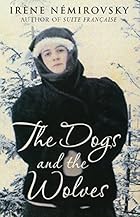
Of the four Némirowsky novels I have now read this is the one that most engages with the Jewish experience. As in The Wine of Solitude the narrative starts in Ukraine (once again the text has “the” Ukraine) and later shifts to France but the parallels of the main character here, Ada Sinner, with Némirowsky’s own life are less close.
Ada is born into that stratum of Ukrainian society not quite in the ghetto but not elevated from it. Her father is a trader and moves between the milieux. As a girl she catches sight one day of her rich relative Harry and is instantly fascinated. When the inevitable pogrom comes she flees with her cousin Ben and ends up in the richer part of town where the pair temporarily throw themselves on the mercy of their richer cousins, who are horrified by this sudden arrival disrupting their cosy existence.
Years later, in Paris, Ada, now an artist, sketching a party at Harry’s house from afar, mislays the payment for seamstressing work she is taking back to her Aunt Raissa, who throws her out. Ben, besotted with her since childhood, proposes that they marry. Despite her lack of love for him, Ada agrees. On the eve of Harry’s wedding Ada contrives to give him a book in which she knows he’s interested. He in turn is intrigued by her paintings in the book shop window. Eventually they meet as adults and the consequences unfold.
While life in Paris is less on the edge than in Ukraine the sense all the Jewish characters have of never being more than one step away from disaster is brought across firmly. In Ukraine a refrain when any adverse event – drought, famine, disease, political rumblings – occurred the adults would say, “We’re in for it this summer…. or this month, this year, tomorrow,” which I must say is also a very Calvinist, and therefore Scottish, sentiment.
The writing contains the usual bon mots. In one of her father’s trading conversations Ada overhears a nice variation on “fell off the back of a lorry,” in, “What would you say to a batch of ladies’ hats from Paris, just a tiny bit damaged from a railway accident?” Musings during a child’s invented game included, “The grown-ups would be only too happy to be free of all the children! Well didn’t they hear their parents moaning endlessly?” The text also contained aperçus such as, “With that knowing feminine instinct that can aim straight at the vulnerable place in a man’s heart she had sought, and found, the worst insult,” and, of Aunt Raissa’s style in argument, we learn, “Unfortunately she had one fault that was common in women: she loved winning.”
Némirowsky, it seems, never disappoints.
In addition it was again pleasing to see Sandra Smith’s translation, which never felt awkward, utilising the grammatically correct use of whom. “Whom could she turn to? Whom could she beg for help?”

