Lybster is a village on the A 99 in Caithness about 13 miles south of Wick.
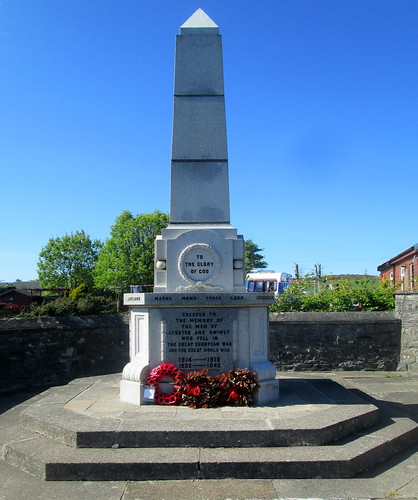
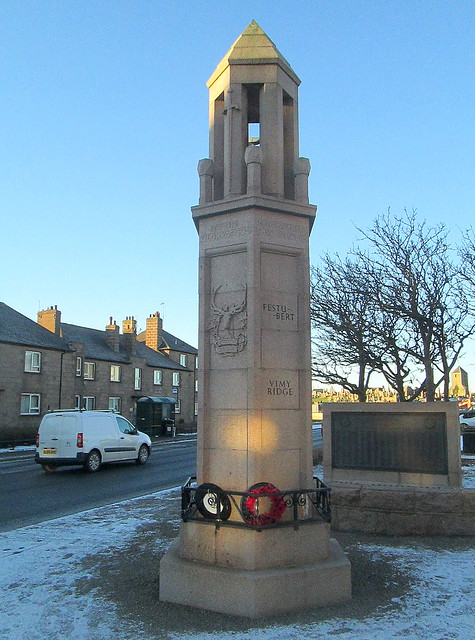
Its War Memorial is a granite obelisk situated on the east side of the road. Dedicated to “the men of Lybster and Swiney who fell in the Great European War and the Great World War”:-
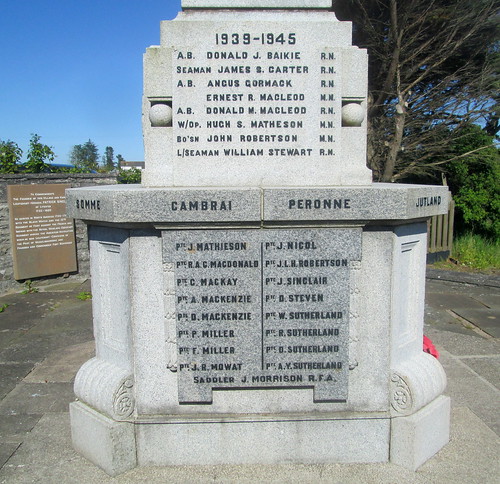
Reverse of Lybster War Memorial. World War 2 dedication. Upper list is of World War 2 names, the lower is for the Great War:-
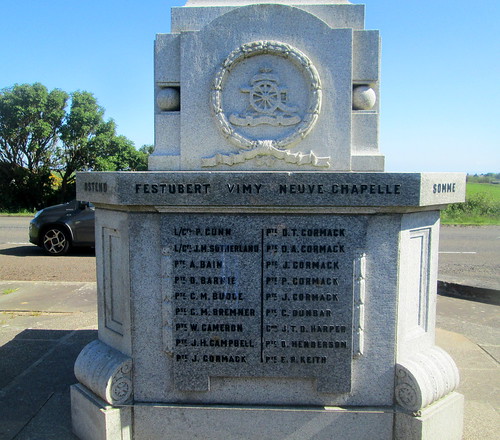
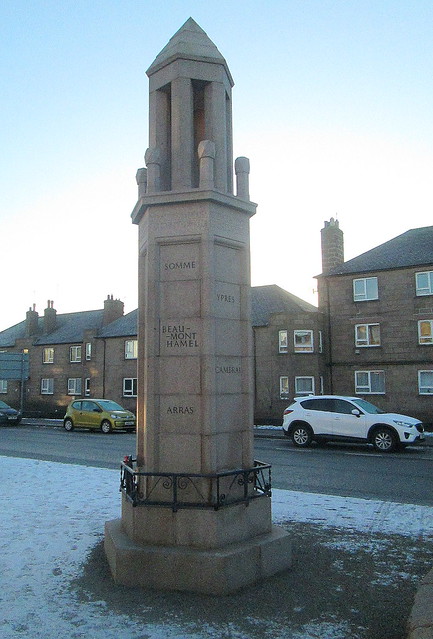
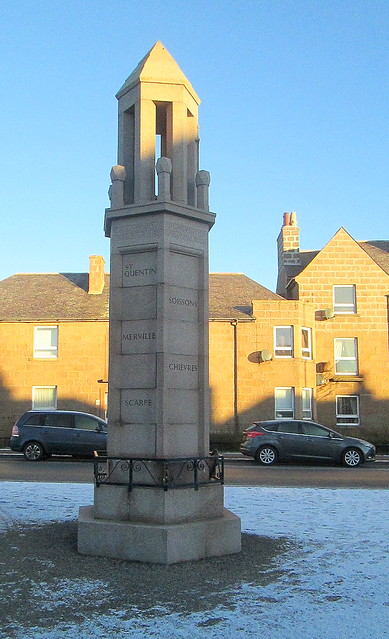
Close-up on names. The obelisk is aslo inscribed with the names of Great War battle scenes, Paschendaele, Beaumont Hamel, Ostend, Festubert, Vimy, Neuve Chapelle, Somme, Zeebrugge, Cambrai, Peronne, Jutland, Marne, Mons, Ypres, Loos.
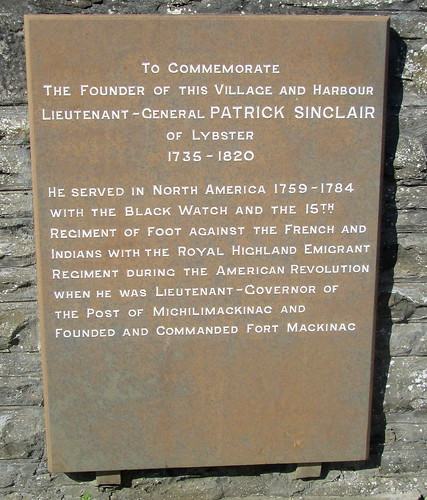
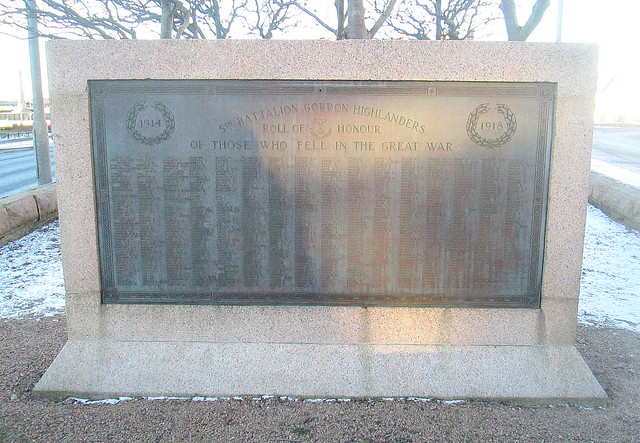
On the wall behind the memorial is a plaque commemorating the village’s founder:-
The Battle of the Somme began 100 years ago today. That first day saw the British Army suffer 57,470 casualties, its greatest ever one day loss in battle.* 19,240 of these were killed. Overall the battle (really a series of battles) lasted for four and a half months and resulted in 1.120-1.215 million casualties over both sides. Only the Russian Front battles of the Second World War were bloodier.
Like the Ypres Salient, the countryside where the battle(s) took place is dotted with Commonwealth War Cemeteries.
There is a particularly striking memorial at Newfoundland Memorial Park, Beaumont Hamel, in the form of a caribou.
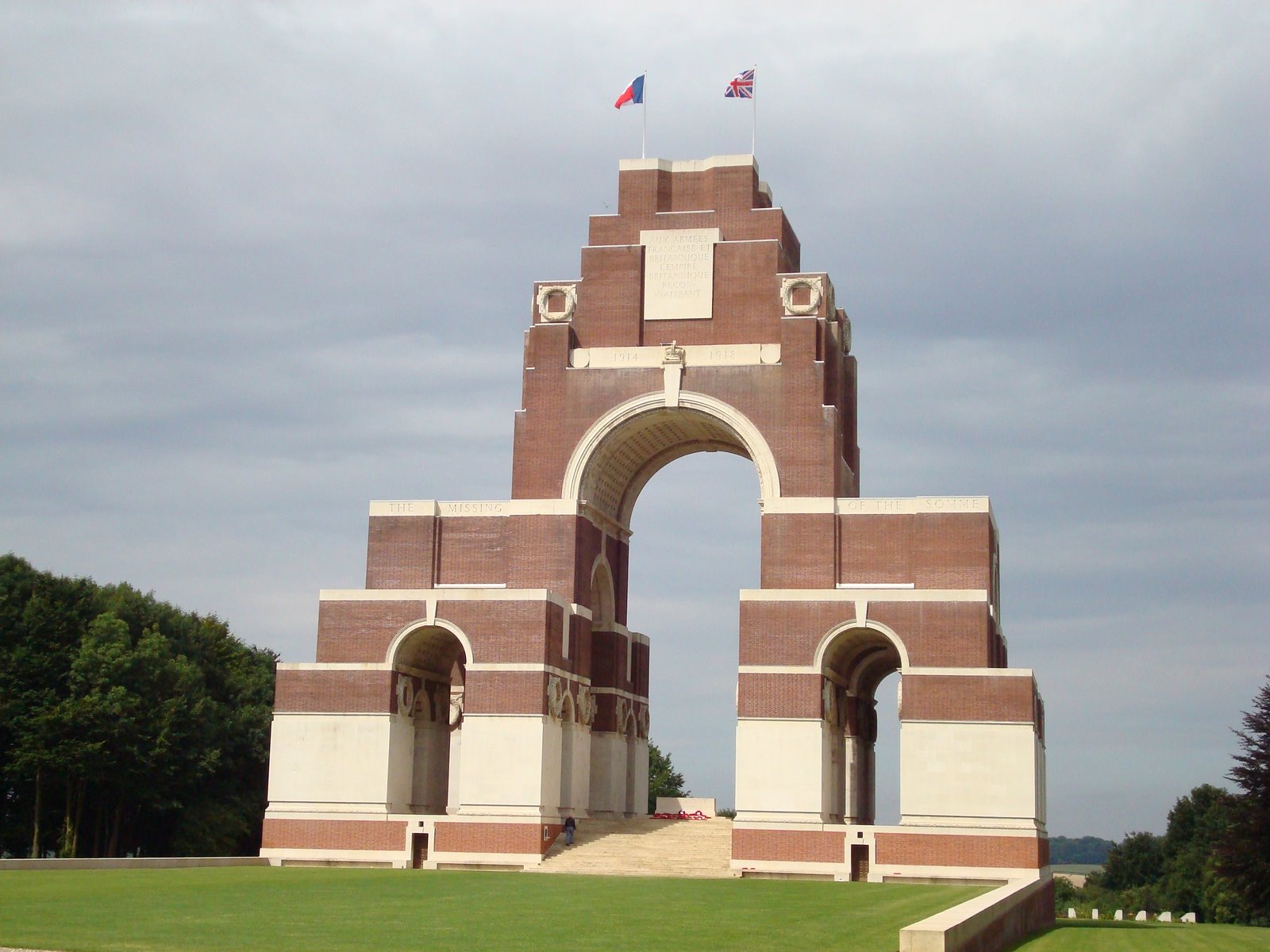
The names of the British army dead who remained missing are engraved on the walls of the towering Memorial at Thiepval.
Visiting Thiepval is as sobering an experience as the Menin Gate.
The bagpipe tune below was composed by William Laurie who fought at the Somme. He was Pipe Major of the 8th Argyllshire Battalion of the Argyll and Sutherland Higlanders. He became ill as a result of trench conditions and died on Nov 28th 1916.
To all who fought:-
The Battle of the Somme
*More personnel (80,000) were lost by surrender at the Fall of Singapore in 1942.