Archives » To Kill a Mockingbird

Go Set A Watchman by Harper Lee

William Heinemann, 2015, 290 p. Borrowed from a threatened library.
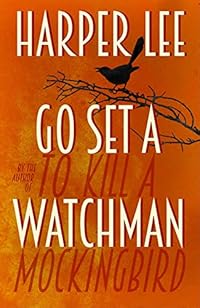
 Go Set A Watchman cover

A now twenty-six year-old Jean Louise Finch, familiar to us as Scout from To Kill a Mockingbird, returns from New York on an annual visit to her childhood home in Maycomb County. At first things seem as normal but she soon finds that in her absence things have changed. The local Negroes, encouraged by the NAACP*, have begun to resist the strictures that have held them in their place (“besides being shiftless now they look at you with open insolence”) and the white inhabitants – even her would-be husband Henry and, crucially, her father Atticus – are involved in an effort to keep them in it.

Within all this there are flashback scenes relating incidents in Jean Louise’s life in growing from childhood through adolescence. In these it is noteworthy that the famous trial from To Kill a Mockingbird (here mentioned all but peripherally) had a different outcome – and slightly different genesis – to the one Jean Louise remembers here. [Either way round, Lee was clearly not just writing her own life story but manipulating any source material to novelistic ends.]

Where Atticus was at the core of the earlier book here it is Scout’s Uncle Jack – who reveals himself to be mistrustful of government attempts to ameliorate people’s condition. He tells her the soldiers of the Confederacy “fought to preserve their identity. Their political identity, their personal identity,” not for slavery and, “Every man’s island, Jean Louise, every man’s watchman is his conscience.” He recognises her fatal flaw. She is colour blind. She believes, has always believed, in treating everybody with the same respect. She thought her father was exactly the same, regarded him as God for too long. In a striking sentence Jack says, “Prejudice and faith have something in common: they both begin where reason ends.”

I’m at a loss to understand the controversy and disappointment this book caused. Yes Atticus is revealed as flawed but the signs of that were there in the earlier book. He had the attitude then – repeated here – that “the Negroes down here are still in their childhood as a people.” (Well. All that can be said to that is who was responsible for the circumstance?)

Those of a nervous disposition may be upset by the use of the “n” word (Atticus is guilty here, among others) but that would be historically accurate.

The stratification of small town US Society – class-obsessed, a Negro is always a Negro, white trash always white trash, Scout’s Aunt does not think Henry a suitable husband for her even though he is Atticus’s protégé – is once again laid bare but in a contemporary (when written) setting. Perhaps it was this that led to the book’s rejection when first submitted.

Forget any quibbles. Go Set a Watchman is an entirely acceptable and very well written coming of age, time of changes, novel.

*I assumed this stood for the National Association for the Advancement of Coloured People.

Pedant’s corner:- “the small group were” (was,) waked up (this must be an Alabama thing, it was in Mockingbird too,) and again there was the “smell of clean Negro”, for goodness’ sake (goodness’s sake,)
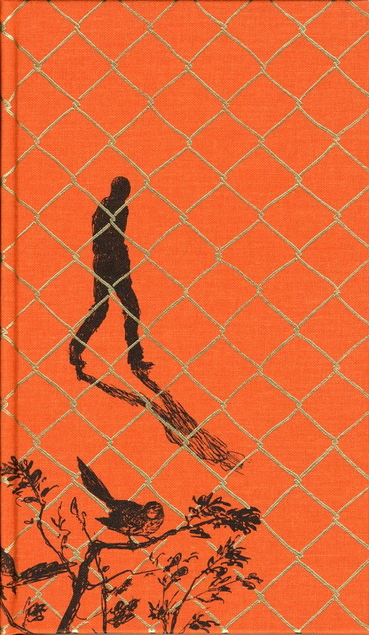
To Kill a Mockingbird by Harper Lee

Folio Society, 2003, 270 p, including 7 p introduction by Albert French. Illustrated by Aafke Brouwer.

To Kill a Mockingbird cover

Like most other book readers I had noted with interest the discovery and imminent publication of the pre/se/quel of To Kill a Mockingbird yet while I had seen the film I hadn’t actually read the book. In the week of Go Set a Watchman’s publication I thought it was about time to remedy that deficiency so picked up the good lady’s sumptuous Folio Society edition of the novel.

And it is as good as its reputation has it. Memorable characters; not only Atticus, Jem and Scout herself but also Mrs Dubose, Dolphus Raymond, the maid Calpurnia and the perfect absence – until his eventual intervention in the plot – of Boo Radley. Of the three most common preoccupations of literature the narrator’s supposed age of course means that there is no sex here – and there is not much love either, except of the familial kind – but there is death. The dynamics of life in the Finch household are determined by the lack of Scout’s and Jem’s mother; Calpurnia acts in loco parentis but cannot have similar authority.

It is only in retrospect that the novel can be seen as dominated by the subject of racial attitudes and prejudice; up to the intrusion of the court case it is a portrayal of a reasonably idyllic childhood (schooling traumas and running the gauntlet of the Radley place excepted) and while in the context of Tom Robinson’s trial the subject of rape is mentioned, there is actually none described in the book. In many ways this is a perfectly straightforward coming of age/gaining of wisdom story, it is the instrument by which the knowledge is gained that makes it unusual and memorable; backed up by the quality of the writing. I did feel, though, that there was a slight longueur between the trial and the dénouement, an expository tone.

Atticus is the perfect father for a girl with tomboy tendencies, arguably too perfect in his, “Simply because we were licked a hundred years before we started is no reason for us not to try to win,” though his definition, apropos Mrs Dubose, of real courage as, “when you know you’re licked before you begin but you begin anyway and see it through no matter what,” bears repetition – even if he is prepared to ignore her racism. An eight year-old may still be young enough to idealise her father but it must be remembered that the narrator isn’t actually (the almost-nine-year-old) Scout, but an older version remembering her younger self.

The language is of its time, the words negroes and nigger occurring frequently but the phrase “the smell of clean negro” made me wonder how that differed from the smell of clean anybody else. (I suppose the smell of not-clean negro is much the same as of not-clean anybody else too.)

Lee hits on a truth when she has Scout observe that in the negroes’ church, “I was confronted with the Impurity of Women doctrine that seemed to preoccupy all clergymen,” – make that all religions – and her eight year-old has the true wisdom of a child when she tells us that, “one must lie under certain circumstances and at all times when one can’t do anything about them.”

To Kill a Mockingbird is a fine first novel by anyone’s standards and addresses important issues yet when I put it down I reflected on how little books such as this matter. The text implied progress in that Tom Robinson’s conviction took hours rather than minutes yet the subject matter was still relevant when the novel was published twenty four years after the time in which the events it portrays were set. In the introduction to this edition’s first printing Albert French recalls travelling into the South in 1963 to train as a marine and feeling threatened as a result, but as an old man, nearly forty years after that, in 1996, says, “The crosses still burn and racism still haunts America.” Nigh on twenty years still further on, the problem remains.

Pedant’s corner:- As a Folio Society edition the printing is mostly in British English (eg coloured rather than colored) but furore was given without its final “e” and there was “waked up in the morning”.

free hit counter script