FIFA World Cup, Final, Lusail Stadium, Doha, 18/12/22.
This certainly provided drama – but not until late in the second half.
In the first and most of the second France were pedestrian wheteher due to suffering from a virus or not, but more likely because Argentina were at them from the start. France barely had a kick in the first half. Then again Argentina were playing not only for themselves and their country but also for Lionel Messi.
Argentina’s penalty looked like one to me, Dembele clipped Di Maria not once but twice. Messi despatched it with ease.
The second goal was a thing of beauty. Messi’s pass to Alvarez delightful and Mac Allister sweeping on to supply Di Maria who scored with what football commentators sometimes call aplomb. The withdrawal of Di Maria changed the game a bit and Argentina began to look like they thought they’d won it.
Then came the real turning point, Otamendi’s failure to hit the ball into row Z leading to a clear penalty. Kylian Mbappe was not going to miss.
France now had their tails up and when Mbappe knocked down the cross a minute later, his marker failed to track him and Mbappe’s finish was brilliant.
Then Messi seemed to have won it for Argentina all over again after another sweeping move cut France open before we had the third penalty of the game and a hat-trick for Mbappe.
Loads of incident but all the tension packed into the last forty minutes of the contest, up to then Argentina were strolling it.
But that shows how a goal can change a game. This would most likely have fizzled out but for Otamendi’s mistake.
The result means no-one can now deny Messi’s footballing stature. He has won everything he could in the game and emulated Diego Maradona as a World Cup winner.
Like most superstars he is immediately identifiable.
Sadly one of the best two footballers ever to play the game today left the global pitch. Shockingly young it has to be said.
I suppose in that, his personal demons may have had something to do with it. But mercifully in the light of other recent deaths of former footballers it wasn’t dementia that took him.
His feats on the international stage are enough to put him on a pedestal, dragging Argentina to a World Cup win in 1986 almost (but not quite) on his own and to another final four years later, but it was his elevation of Napoli to the status of winners of Lo Scudetto in 1987 that is perhaps his greatest achievement. And then he did it with them again three years later. They haven’t touched those heights since.
In that 1986 World Cup there was the (in)famous Hand of God goal in the quarter-final against England – soon to be followed by the even more famous slalom through the whole England defence, one by one putting them on their backsides before planting the ball in the net. Even the English TV commentator Barry Davies was moved to remark, “You have to say that’s magnificent.”
But his performance in the semi-final against Belgium was better, a level of sustained excellence rarely seen before or since, perhaps even unequalled. I found this distillation of it (with a lot of repeat angles) on You Tube.
Diego Armando Maradona Franco: 30/10/1960 – 25/11/2020. So it goes.
More pictures taken at the National Museum of Flight, East Fortune Airfield, East Lothian, Scotland.
A Czech S-103:-
Lockheed Lightning. I forget which country’s livery this displays:-
The obligatory Spitfire:-
Messerschmidt Komet. This was a rocket propelled aeroplane as I recall:-
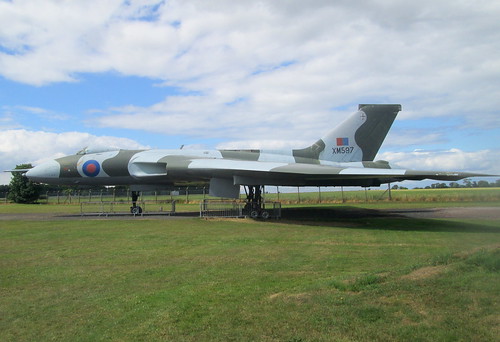
Vulcan Bomber:-
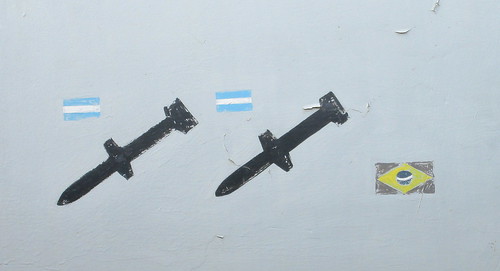
The images of two bombs/missiles under Argentine flags on the fuselage of the Vulcan signal the two raids made by this bomber on the Argentinian forces at Port Stanley in the Falkland Islands during the conflict in 1982. The flag of Brazil is because the Vulcan was forced to detour by engine trouble and land in Brazil after one of the raids.
Posted in Dumbarton FC at 21:10 on 29 December 2018
SPFL Tier 3, Ochilview, 29/12/18.
Well this was a mustn’t lose – and we almost lost. Thankfully we didn’t.
On our first half performance it would have been deserved – we created nothing and had only one shot on target, Ross Forbes’s free-kick right on half-time despatched with aplomb and hit so hard the keeper couldn’t keep it out. Their goal was a defensive travesty, a litany of mistakes strating with a poor Stuart Carswell ball out (I’m not blaming him, he’s making a fair fist of centre back duties despite being a midfielder, injury needs must) an atrocious Andy Dowie (lack of) challenge and Chris Smith in goal didn’t cover himself in glory with his effort at saving it.
The start was bizarre. We walked out in Stenny’s away kit – or a Stenny away kit an Argentina clone, blue and white stripes and back shorts. Seems the ref didn’t read our email asking if our red strip would be okay. It’s the second time I’ve seen us in the home team’s away kit. The first was at Bayview (the old Bayview) many, many moons ago.
Second half was a different game – after we let them waltz through our defence to retake the lead. We then totally dominated (apart from the odd break) and had a great chance from a Dom Thomas cross which Kyle Hutton put over. Ryan Thomson had an effort from a rebound blocked.
But the amazing thing was the series of corners from Ross Forbes, one hitting the bar and another the near post with a third flapped at by the keeper. If only we had somebody to attack the ball Forbes’s delivery could be decisive but we lack height just now.
Forbes stepped up again right at the death to fire an even better placed free-kick than his first in off the post. Cue celebrations.
The comments from some Sons fans when we were 2-1 down were less than helpful. I don’t seriously believe the players aren’t trying. The time that brought it to a head was a gamble on where the ball would break that didn’t come off. It might have looked like it but it wasn’t laziness on the player’s part – just a misjudgement. If we’d been going well it would never have raised its head as an issue. But we aren’t going well.
I doubt the January transfer/signing window will change much either.
You may have noticed there’s a rather large and important football competition taking place at the moment. (A swift glance at TV schedules would be enough to tell you that.)
Four years ago I expressed my fear that a period of Germanic hegemony was upon us. Notwithstanding Portugal’s efforts at the last European Championships the young German side which triumphed at last year’s Confederations Cup boded well (or ill, according to view) for that prospect.
It seems that hegemony is not to be. In three performances of stunning inadequacy Germany have been so poor as to finish bottom of their group, only a moment of individual brilliance on the part of Toni Kroos yielding them a solitary win over Sweden.
It’s been a topsy-turvy sort of tournament what with England playing well (so far) and Argentina, like the Germans, struggling badly – but still managing to reach the second round.
I’ve not been overly impressed by anyone – though I thought Colombia looked good against Poland. But that may have been because the Poles were totally ineffective.
Brazil seem unbalanced to me; too much in thrall to their star player, Neymar, who doesn’t look fully fit. Belgium may be dark horses but haven’t played anybody of standing yet.
Judgement must be reserved till the knockout games. Too often before, a good showing in the group has unravelled at the next step.
But… Could this be Uruguay’s year again? They’re the only side yet to concede a goal.
This post’s title is adapted from an Argentinian newspaper headline (¿Qué pasa en Suecia?) I saw on a TV programme about the history of Argentine football when the national team was widely perceived to have underperformed in the 1958 World Cup in Sweden and received a hostile reception on their return to Argentina. (See their Group 1 results if you look on here.)
AS to the meat of the post; after bumbling along just above the relegation zone for much of this season (unlike last where they were firmly rooted there before what seemed an almost miraculous escape) Hartlepool United have gone on a similar late run, not losing in their last seven games and winning five of those. (See League Two table and current form here.)
Of course, by mentioning this I’ll have jinxed it. The ‘Pool will most likely lose at Carlisle tonight, now.
Over the past eight years Spain dominated the international football tournaments in which they took part – though they had a premonitory blip in last year’s Confederations Cup (and what a misleading pointer that final turned out to be.)
After the win by Germany in Rio on Sunday we could be in for a longer period of domination than the Spanish enjoyed as the German players are quite young and will only have gained in confidence from their achievement. I don’t know if I can stand that thought, though.
Still, at least it gives Scotland an early opportunity to claim their scalp as the two countries meet on Sep 7th in the first qualifying game for the 2016 European Championships.
For historical reasons Scotland is actually at the top of the unofficial football championship rankings. The September game will give Scotland a chance to reclaim the actual title – if Argentina don’t beat the Germans in their friendly a few days before.
The football legend who has died today had a name that needed no further explanation. He was part of that legendary Real Madrid side that captivated the football followers of Glasgow and Scotland at the European Cup Final of 1960 – played at Hampden Park. di Stéfano scored a hat-trick.
I was too young to be aware of it at the time but the folk memory was promulgated and persists. Such was the effect of that display of what football could be that the names of the forward line still trip off the tongue with no need for googling. Canario, Del Sol, di Stéfano, Puskas and Gento. Mind you, I see film of that game now and think, “Where was the marking?”
One curiosity is that I believe the Eintracht Frankfurt team that formed the opposition that day were all amateurs – as was German football as a whole.
di Stéfano may be unique in having played international football for three different countries, his native Argentina, Colombia, where he played league football for a while, and Spain for whom he was naturalised in 1956. That was the type of scenario that I thought had been resolved by FIFA with its rules on eligibility but in the recent World Cup one of the commentators remarked that Kevin-Prince Boateng who played for Ghana in the tournament had previously played for Germany (but not, it seems, for the senior side.)
The World Cup was one stage that di Stéfano did not grace, for various reasons, but his thirteen national titles (two in Argentina, three in Colombia and no less than eight in Spain) and five European Cups – not to mention his scoring record – speak for themselves.
Alfredo Stéfano di Stéfano Laulhé: 4/7/1926 – 7/7/2014. So it goes.
I was watching the Argentina – Iran game today (strangely compelling for a 1-0) and was amused to hear the commentator Clive Tyldesley say that most of Iran’s squad had their Christian names on their shirts.
Christian names? For Iranians?
I see from this that it wasn’t just me who noticed…
I’ve never understood the credit Margaret Thatcher was given for sending British troops to retake the Falkland Islands from Argentina in 1982.
The decision to send the Task Force was certainly a gamble but it was by no means brave. Had it failed she would have been gone as Prime Minister: no doubt.
But it was a gamble she simply had to take. Had the troops not been sent her position would have been equally precarious. She could not have sat back and allowed Argentina to keep the Falklands (the Malvinas as we would now know them) by force majeure. She would have been gone within months if not weeks. A British Prime Minister not able to defend British sovereign territory? The Tory party never would take kindly to that.
This was what I like to call the War of Thatcher’s Face. She had to send the troops, had to win, to save face, to preserve her position. Such a decision is the opposite of brave. It isn’t a decision at all. It was almost – but not quite – what in chess is called zugzwang (forced to move) except in Thatcher’s case there was the faint possibility of success.
That the Argentines would turn out to be pretty duff at fusing their bombs correctly and also at enthusing and supporting their soldiers in the field was by no means apparent when the decision had to be made.
It was gamble or die (politically die.) Without that choice she would have been nothing but an ignominious footnote in British History; as opposed to one of the most contentious PMs of recent times.
Nor did I understand the ecstatic reception she was afforded by the islanders themselves when she visited later that year.
If I had been a Falkland Islander I’d have been berating her for allowing the Argentine invasion to occur in the first place – even for encouraging it.
In the end she had no other decision to make – if only because the situation had arisen because she allowed it to.