Archives » APOD

Rotation of Uranus

From Astronomy Picture of the Day for 12/3/26, via YouTube.

Uranus, of course, spins on its side. The image on the left displays the planet against the background of its rings.

Blue to red colours show different altitudes in Uranus’s atmosphere and white clouds can be seen whipping round as it spins.

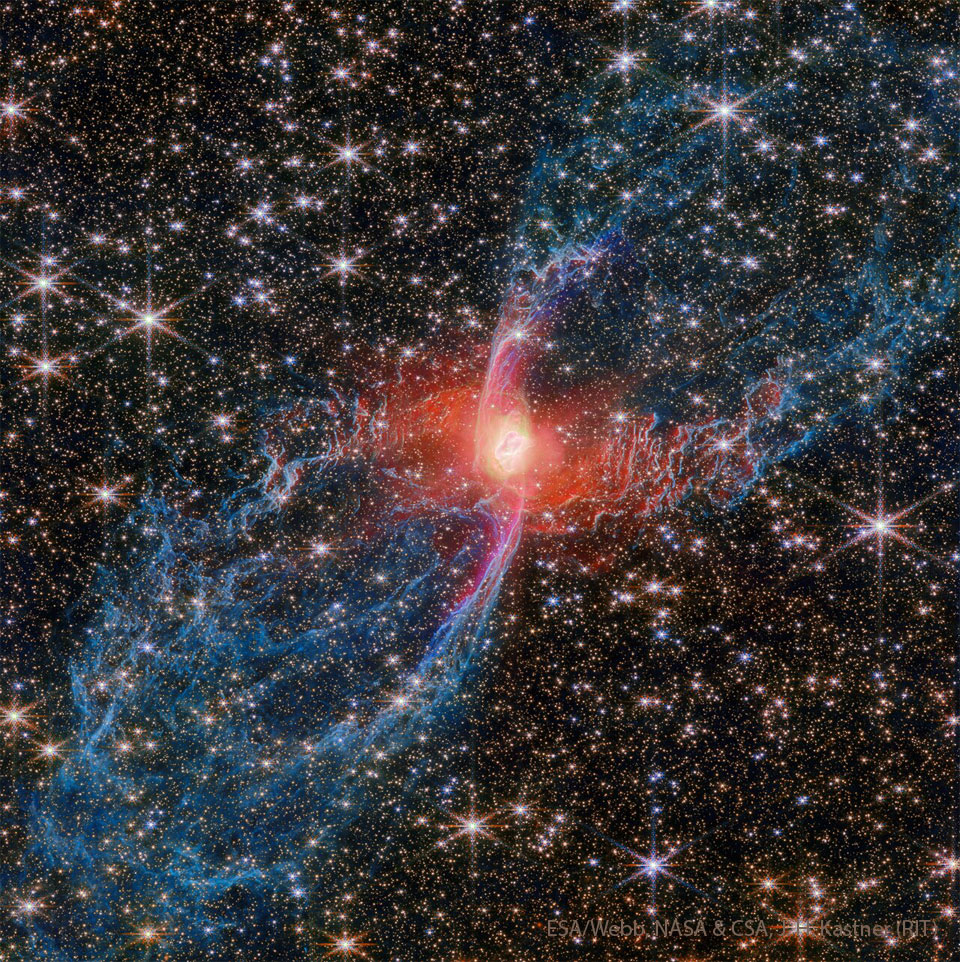
A Red Spider in Space

Another beautiful picture from space, taken by the James Webb Space Telescope.

This appeared on Astronomy Picture of the Day for 3/2/2026.

It’s called the Red Spider Planetary Nebula, and is the result of a star ejecting its outer gases to become a white dwarf.

A dense starfield surrounds a blue and red nebula
that stretches from the lower left to the upper right.
The outer parts of the nebula are blue and filamentary,
while the innermost part is red and bright. 
Please see the explanation for more detailed information.


Shadowy Planet

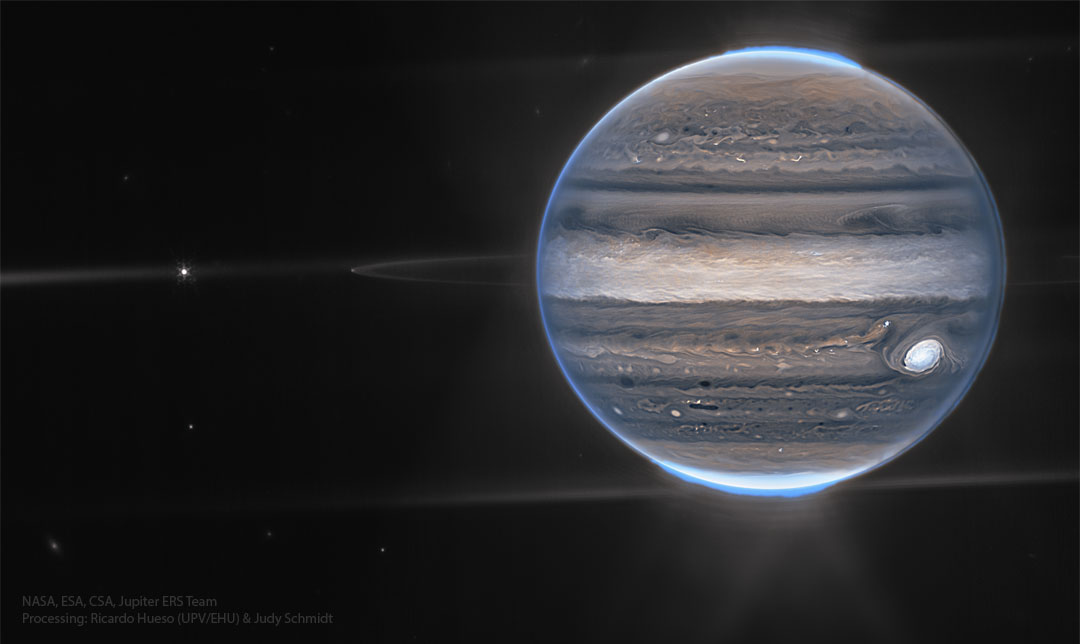
This is quite obviously an image of Jupiter, the large spot to the lower right of the planet is ummistakable. But it is also not the normal view of the planet. The colours are different for a start – and the spot isn’t red (really a rust colour.) Notable, too, are the bright polar aurorae.

Also visible is Jupiter’s ring system with the satellite Adrastea at their leftmost edge and Amalthea further out.

From Astronomy Picture of the Day for 18/1/26 this is Jupiter in infra-red light as imaged by the James Webb Space Telescope.

First Known Moon of an Asteroid

From Astronomy Picture of the Day (APOD) for 17/10/25. I’ve only just caught uop with this as the APOD website was down during the recent US government shutdown.

This is the asteroid 243 Ida. To its right in the picture can be seen its moon Dactyl. Ida was the first asteroid to have a moon to be discovered.

Jet Lightning

FromĀ Astronomy Picture of the Day for 9/9/25.

A view from the International Space Station of an uncommon type of lightning called Giant Jet Lightning. This arises from thunderstorms and moves upwards into the ionosphere.

Planet Formation

From Astronomy Picture of the Day for 8/9/25 via the Webb Space Telescope.

The picture shows a nebula spreading out from star IRAS 04302+2247 . The butterfly shape apparently indicates a planet-forming system. (There’s a nice spiral galaxy to the bottom left of the image as well.)


Crab Nebula and Pulsar

As featured in Astronomy Picture of the Day for 24/8/25.

The Crab Nebula as seen in visible light from the Hubble Space Telescope (purple,) X-ray light as imaged by the Chandra X-ray observatory (blue) and infra-red from the Spitzer Space Telescope (red.) The Crab Pulsar is the bright spot in the swirl’s centre:-

Fly over Pluto – and Charon

On 18/5/25 and 19/5 25 Astronomy Picture of the Day featured time-lapsed videos of photos of Pluto and Charon taken by the New Horizons spacecraft.

I haven’t embedded the videos as I think they are copyright but the links take you to them.

Stunning stuff.

To think that the first time I posted on the Plutonian system these worlds were mere dots.

Mountains on Pluto

A view taken by NASA’s New Horizons spacacraft from above Pluto. From Astronomy Picture of the Day for 15/5/25.

The ice mountains of Norgay Montes on left, with Hillary Montes along the horizon and Sputnik Planum to right. Clouds in the thin atmosphere appear to the top.

The Milky Way from the Side and Above

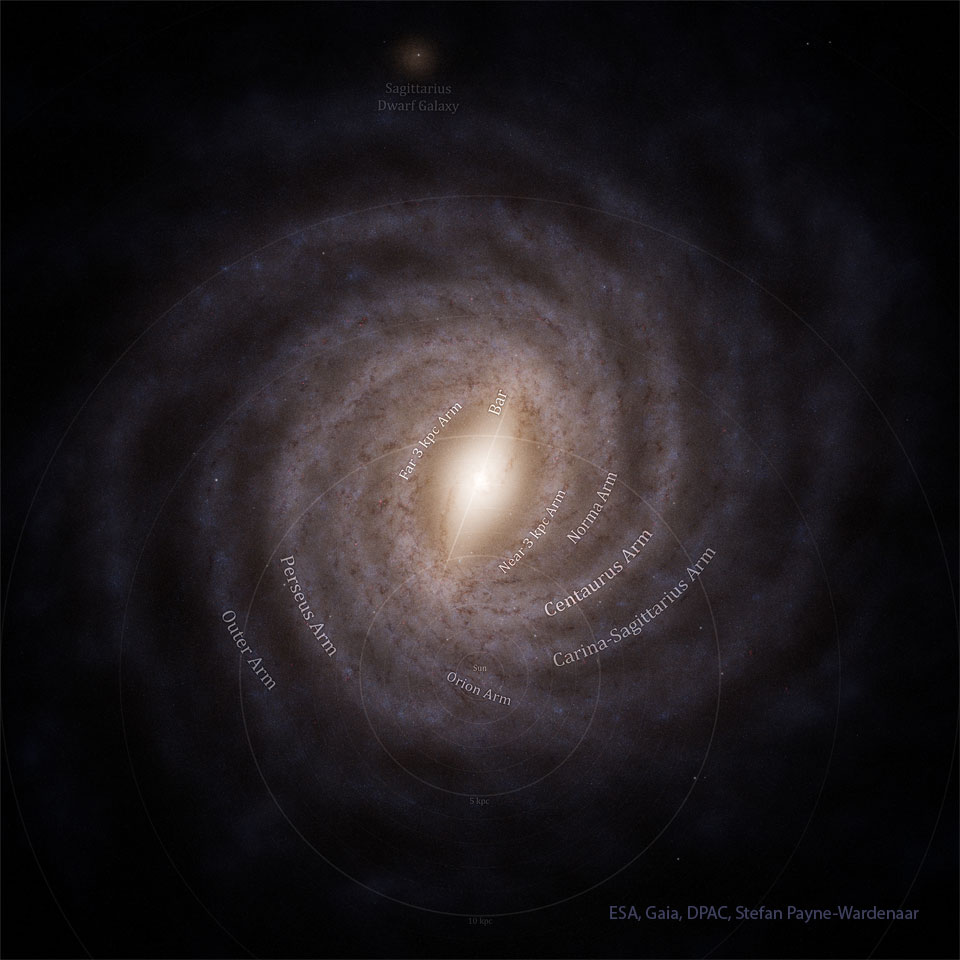
Recently (12/5/25 and 13/5/25) Astronomy Picture of the Day published two reconstructions (one each on consecutive days from data collected by the European Space Agency’s Gaia spacecraft) of how our home galaxy The Milky Way looks from the side and from above.

Side view:-

From above. Our sun is circled below within the galaxy’s Orion Arm:-
free hit counter script