Posted in Astronomy at 20:00 on 22 March 2020
Glancing at the image on Astronomy Picture of the Day for 16/3/20 you’d be forgiven for thinking so.
But it’s not Saturn.
It’s the Moon with a cloud partially obscuring it.
No Comments »
Posted in Astronomy at 20:00 on 20 March 2020
From You Tube via Astronomy Picture of the Day for 15/3/20. A scene constructed from 33 consecutive still images captured by the Rosetta spacecraft‘s camera over 25 minutes.
It’s not snow but dust and ice particles drifting near the comet’s surface. The brighter specks are most likely cosmic rays though. From the camera’s perspective background stars are moving from top to bottom.
No Comments »
Posted in Astronomy at 20:00 on 1 March 2020
What an odd apparition Jupiter’s magnetic field is, with various magnetic poles. At least as seen from NASA’s Juno spacecraft.
This is from YouTube via Astronomy Picture of the Day for 25/2/20.
No Comments »
Posted in Astronomy at 20:00 on 23 February 2020
Betelgeuse is a huge star as can be seen from this graphic from Astronomy Picture of the Day for 1/2/20.
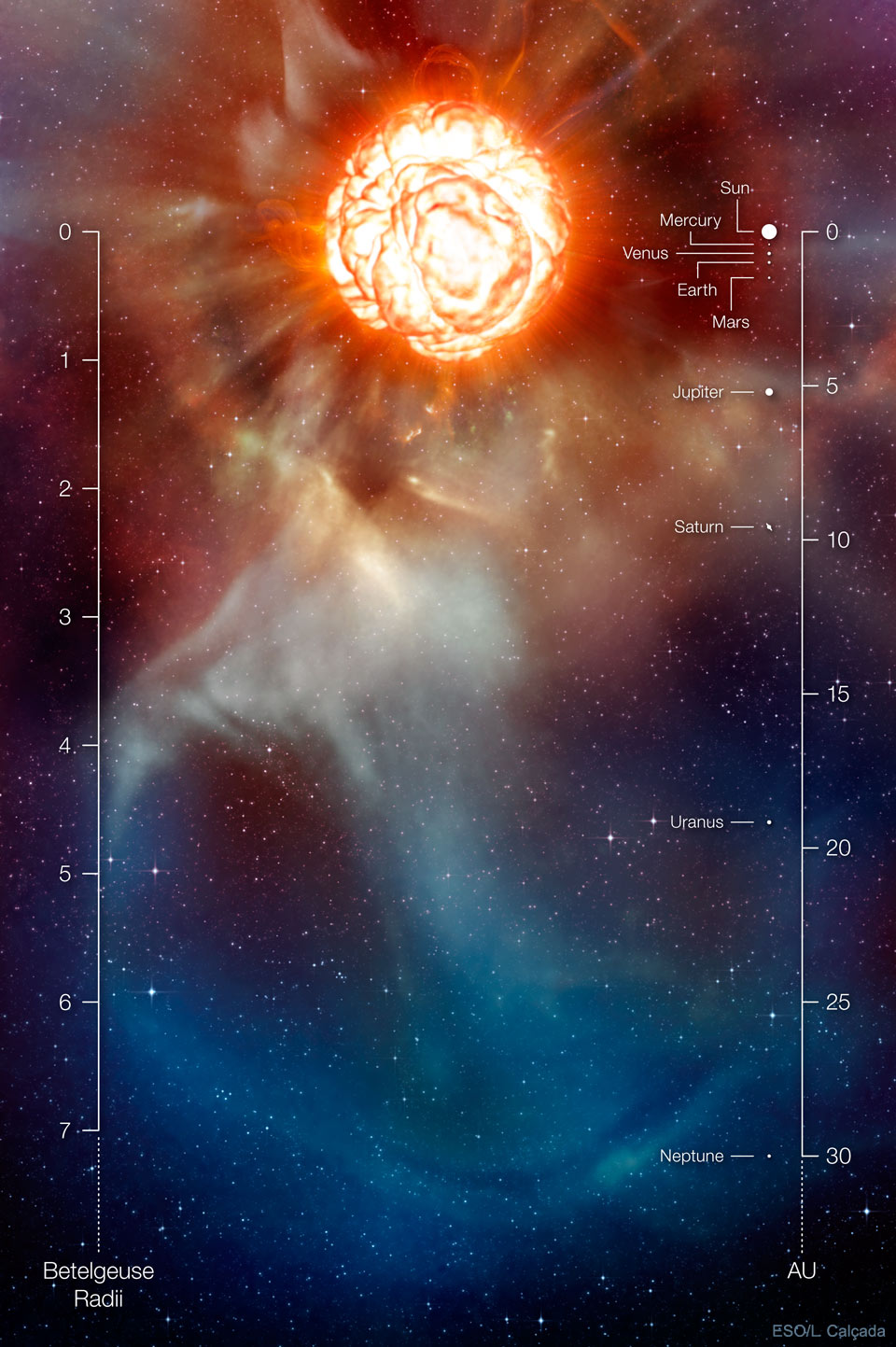
It is so huge it can be imaged from Earth-based telescopes.
Between January and December last year the appearance of the star changed and it also became dimmer. Whether this is a prelude to its imminently going supernova (as it will one day) is a matter for discussion.
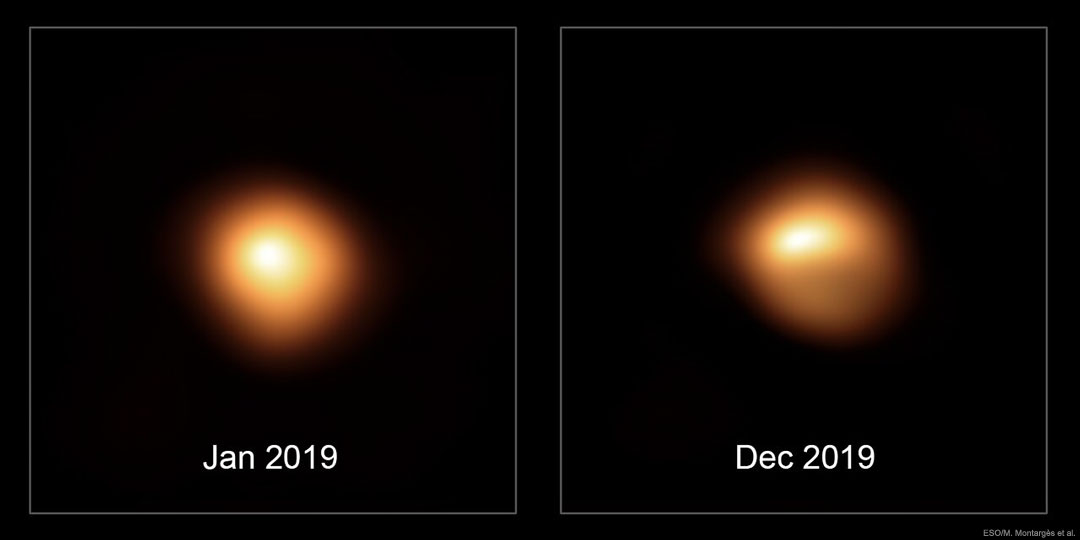
Photos from Astronomy Picture of the Day for 17/2/20
No Comments »
Posted in Astronomy at 20:00 on 7 February 2020
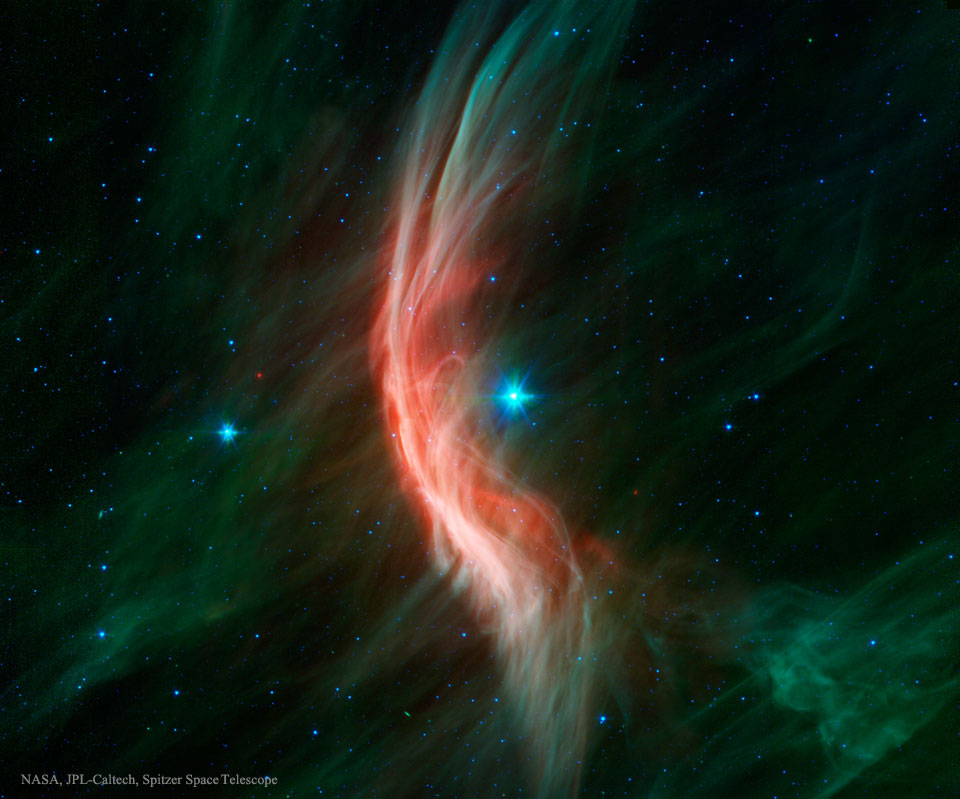
Seen in a false-coloured infra-red image on Astronomy Picture of the Day for 2/2/20 this shows the bow wave of runaway star Zeta Oph (centre, blue) travelling at 24 kilometres a second after its more massive companion star exploded and blew it out of the system.
Zeta Oph is 460 light years away and 65,000 times brighter than the Sun. Its true luminosity is obscured by dust though.
No Comments »
Posted in Astronomy at 20:00 on 5 February 2020
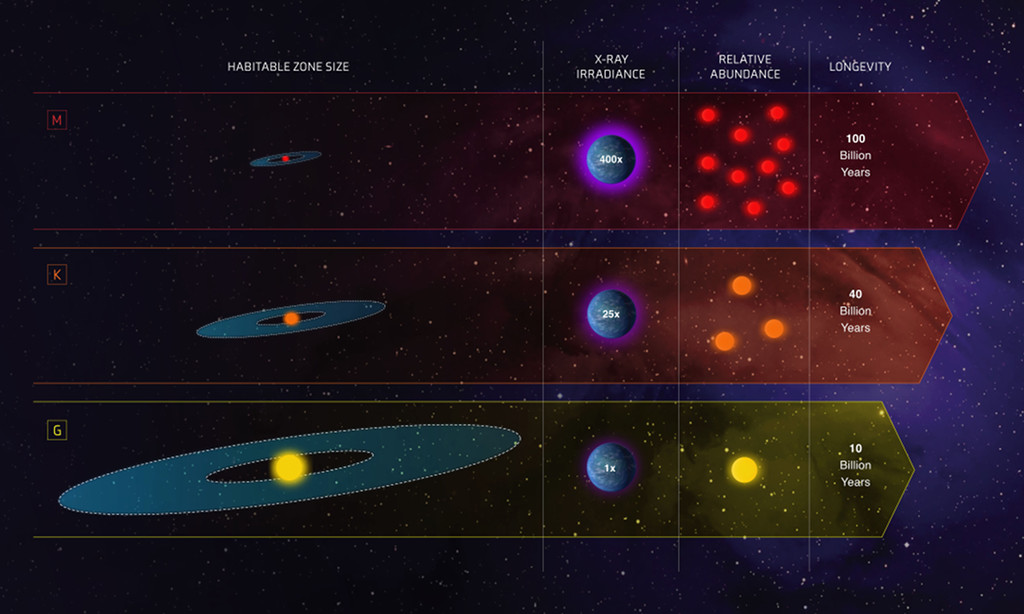
A Goldilocks Zone is the volume around a star in which a planet habitable by humans could exist. This volume is different for different types of star. Astronomy Picture of the Day for 31/1/20 had the graphic below showing such zones for three types of star but also their likely X-ray irradiation, relative abundance in the Milky Way and longevity.
Our sun is in the bottom category in the graphic, least long-lived, least abundant, but also with least irradiation.
No Comments »
Posted in Astronomy at 21:00 on 26 January 2020
The solar wind is of course not actually a sound wave but a stream of particles blown out from the Sun. However NASA’s solar probe has enabled scientists to translate the particles’ impacts and other data into sound. (The video feed is from Parker’s sideways viewing camera; if it pointed forward the Sun’s glare would destroy it.)
From You Tube via Astronomy Picture of the Day for 21/1/20.
No Comments »
Posted in Astronomy at 20:00 on 27 December 2019
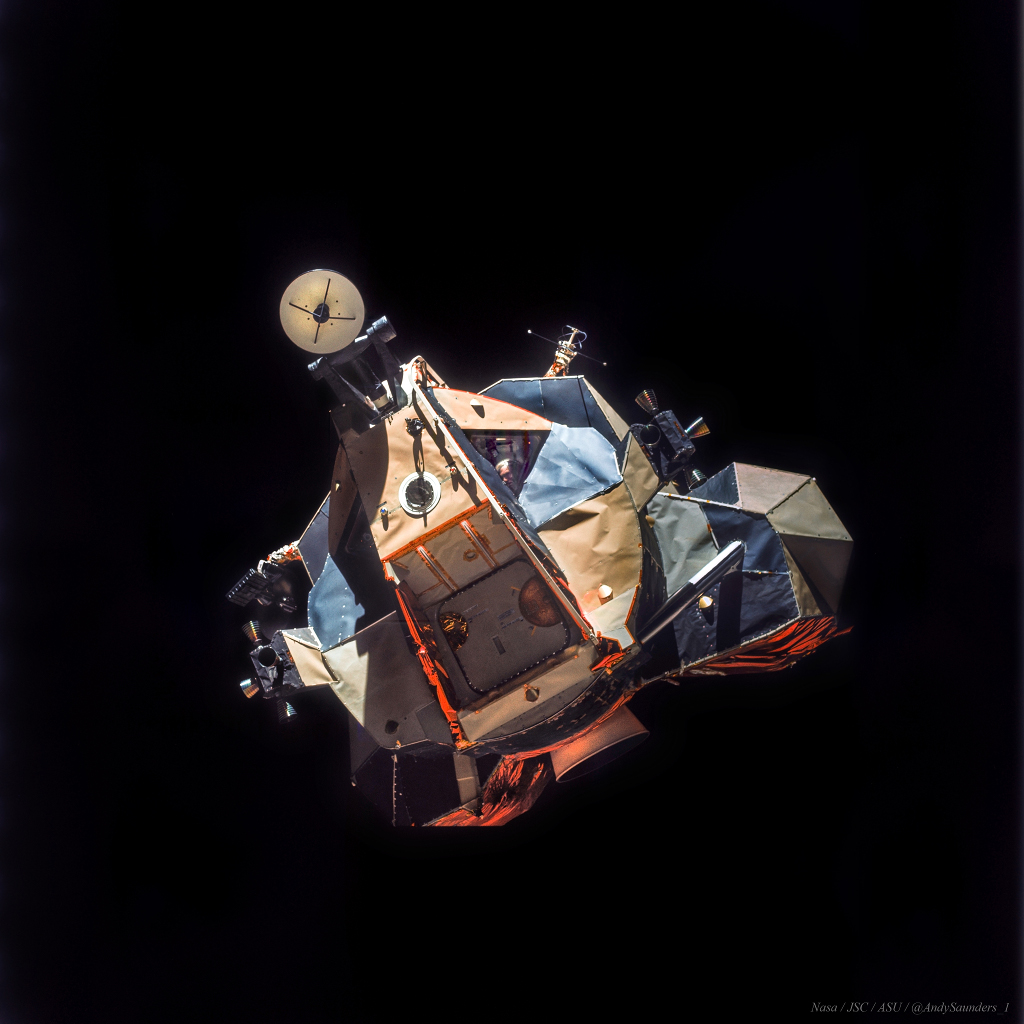
From Astronomy Picture of the Day for 19/12/19.
Apollo 17’s lunar module Challenger’s ascent stage.
Despite all the irregular angles these spacecraft had a kind of beauty.
Apollo 17’s mission commander Gene Cernan can be seen through the triangular window. This was the last mission to land men on the Moon.
47 years ago.
No Comments »
Posted in Astronomy at 20:00 on 24 December 2019
This is mind-boggling.
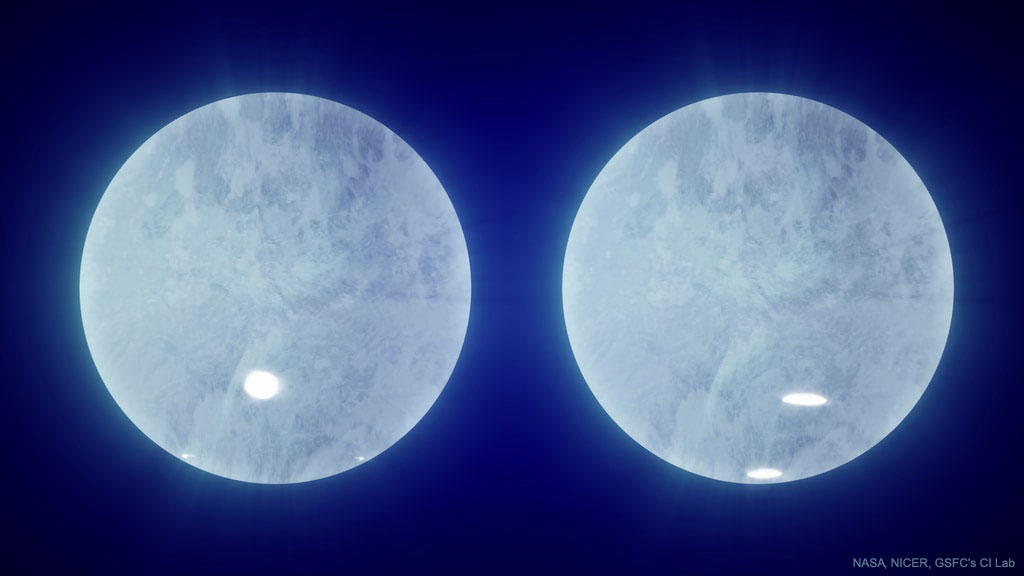
Okay, it’s not a real image in the sense that it’s not anything human eyes could actually see for themselves.
From Astronomy Picture of the Day for 18/12/19, this is a map of the surface of a neutron star generated from X-ray data.
This star spins once round every 0.0049 seconds! It’s 1,000 light years away. That’s going on for 6,000 million million miles distant.
Yet humans have managed to map its surface.
No Comments »
Posted in Astronomy at 20:00 on 23 December 2019
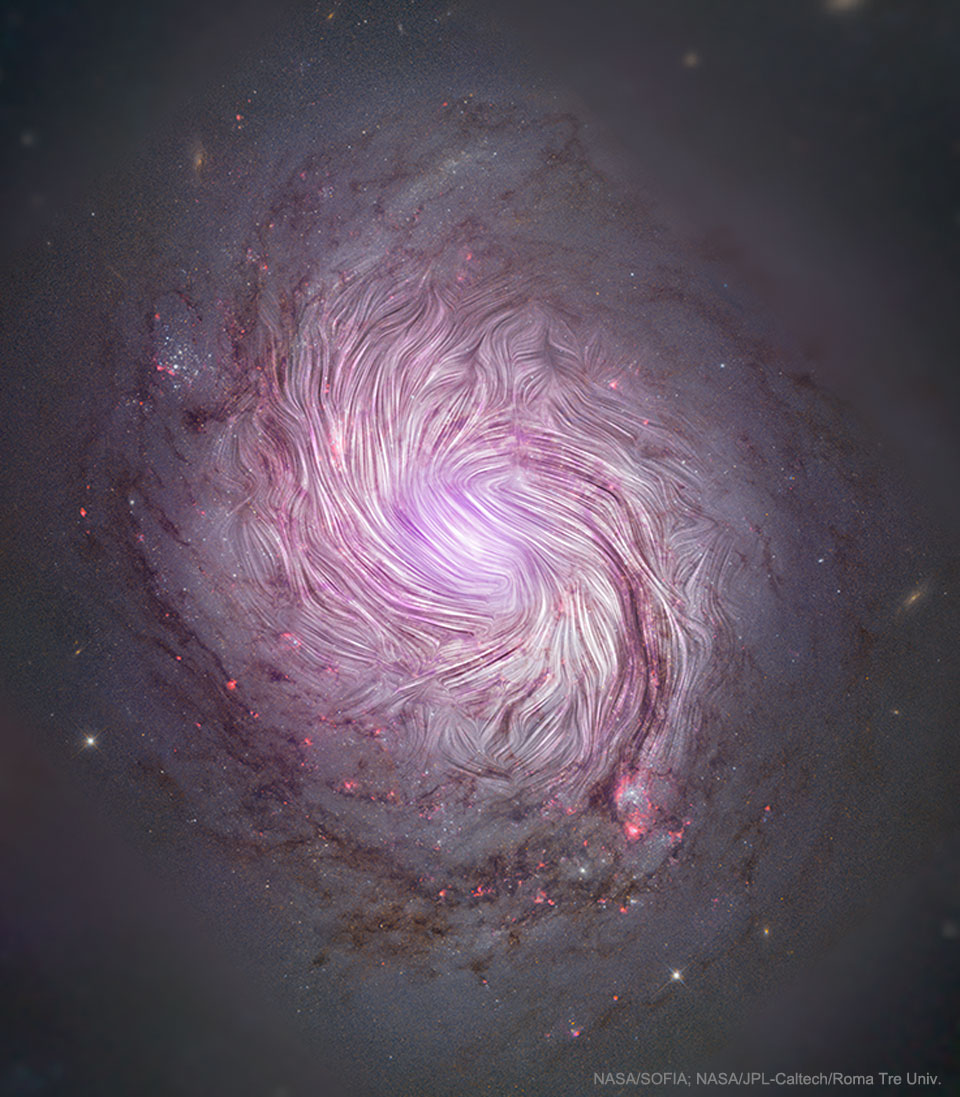
This is from Astronomy Picture of the Day for 16/12/19.
Galaxy M 77’s magnetic fields as revealed by polarised infra-red light superimposed over X-ray emissions and visible light. The fields do seem to take the same lines as the galaxy’s spiral arms:-
No Comments »
