Archives » Sally Magnusson

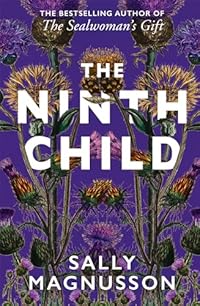
The Ninth Child by Sally Magnusson

Two Roads, 2020, 331 p, including 5 p Author’s Note and 1 p Acknowledgements.

At first this promises to be solely the story of Isabel Aird, married to a doctor, Alexander, who is disgusted by the conditions of the poor working class of 1856 Glasgow and wishes to alleviate them. To this end he is drawn to the position of physician to the construction works of the scheme designed to carry the pure waters of Loch Katrine in the Trossachs to the city in order to combat the ravages of cholera, an arduous project requiring tunnelling through extremely hard rock wth nothing but pickaxes, sweat and gunpowder, “the greatest engineering marvel since the construction of the aqueducts of Rome” – a system still in existence, whose flow is driven by gravity alone. The novel soon broadens out though into a wider account.

Isabel has suffered a multiplicity of miscarriages or still-births (the irony of her being married to a doctor is not lost on her) and at first is not keen on a move to the wilds but on her first visit to Loch Chon she is enchanted by the views and for all its deprivations becomes enthusiastic about living there.

Many of the chapters are related in third person from Isabel’s point of view but there are two first person contributions, one from the viewpoint of Robert Kirke, a kirk minister who disappeared into the world of faery in 1698 but has now returned with a commission from what in Gaelic are known as the sìthichean, and the other from Kirsty McEchern, the wife of a navvy working on the project, written as if it is the verbatim transcript of her memories as told to someone who for a long time remains unidentified. There are also curious interpolations from the life of Queen Victoria and Prince Albert, mostly in the form of letters from the Prince. (The Queen was famously entranced by the Trossachs – and Scotland in general – and did open the waterworks in 1859.)

Like many Scottish lochs Loch Chon has a legend of a supernatural denizen, in this case a black Dog who at times will rise from the surface to swallow human victims. This is one of the many tales of the sìthichean known to Kirsty, who, being an islander from Mull, is well versed in Gaelic superstition (or knowledge as she would have called it.) This legend is central to Kirke’s commission from the land of faery and to the novel’s denouement.

It is with this part of the book that I initially had least patience. Then I reflected that dealings with the supernatural – the Devil especially, but also faery – are a staple of Scottish literature. So too, exhibited here by Robert Kirke, is psychological duality. (In her Author’s Note Magnusson calls that a familiar trope. To my mind that enduring concern is something more profound than a trope; it is a deep reflection of the Scottish character – see the third and second last paragraphs in the link.)

A parallel between the lives of Isabel and Queen Victoria is that both had nine children. Well Victoria did, only Isabel’s ninth (the one of the book’s title) survived gestation and birth. The plot and the denouement both of course depend on this.

Magnusson writes really well, she expresses the ups and downs of the Airds’ marriage sensitively, captures superbly the voices, doubts and thoughts of both Kirke and Kirsty and her descriptions of the Trossachs landscape are evocative, while the necessary conveying of information about the construction works is never intrusive.

This is another example of the enduring fascination of the novel with love and death but unlike in Magnusson’s earlier The Sealwoman’s Gift sex is absent from the pages, though its consequences of course are not. The Ninth Child is not quite as accomplished as that previous novel but it is certainly good enough to be going on with.

(At the end of the book are appended eight “Reading Group Questions,” a practice I find patronising. Not reading groups themselves I hasten to add, rather the fact that they are held to need some sort of prompting to ask questions of a text.)

Pedant’s corner:- “‘as soon as another epidemic hoves into view’” (hove is the past tense (and it is in any case ‘hove’ not ‘hoves’,) so here it should be ‘heaves into view’,) “a Yorkshireman with exuberant facial hair by the name of Bateman” (his beard was called Bateman?) “he had sawed a couple of fingers off” (sawn,) Descartes’ (Descartes’s,) “‘the taste of those mean cruelties were back on my tongue’” (either ‘the tastes’, or ‘was back’,) a missing comma before a piece of direct speech (x 2,) Athole Highlanders (Atholl) powder your nose, (the phrase was in juse in the nineteenth century but I would have thought it an unlikely expression for a navvie’s wife though it was said many years after the events in the book and she had been in “polite” company in the interim,) maw (it’s not a mouth, it’s a stomach.) In the Reading group questions; “navvie’s wife” (navvy’s wife.)

The Legacy of Elizabeth Pringle by Kirsty Wark

Two Roads, 2014, 445 p.

 The Legacy of Elizabeth Pringle cover

Like Sally Magnusson, Wark is a female Scottish journalist who has turned her hand to writing novels – though Wark is probably more widely known and her novel was published first.

The titular legacy here (though its nature makes the reader suspect it may have a double meaning) is of a house in Arran – an island of which we are provided a map between the title page and the story proper – in response to a written request Elizabeth Pringle received from Anna Morrison, a summer visitor to the island in her daughters’ youth, that if she ever wished to sell, Anna would be interested in buying. Years later Pringle remembered this and almost on her death bed and with no close relatives to consider made the bequest. By this time Anna is developing dementia and it falls to her daughter Martha to accept the offer on her behalf and occupy the house. Chapters dealing with Martha’s experiences are interspersed with extracts from a journal Pringle made shortly before her death at the behest of a US citizen, Saul, now a Buddhist on the off- (Arran’s) shore Holy Isle, wherein her life story is unfolded.

Martha is troubled by the bequest, not least due to the presence of a Cadell ink-and-watercolour painting on one of the walls. (Cadell was one of the Scottish Colourists and his work is valuable.) The solicitor assures her Pringle was in her right mind and surely wished the painting to be included. She forms a friendship with Catriona, proprietrix of a hotel where she stays while setting the house to rights. Catriona’s brother Niall was Pringle’s gardener and very attractive. Martha’s problems with her mother’s ongoing dementia are exacerbated by the absence of her younger sister, Sue, working in Copenhagen, with whom her relationship is strained.

Pringle had on the surface an uneventful life, marred by the death of her father and subsequent loss of the farm he worked, which necessitated the move of her mother and herself to the house she would leave in her will. Her fiancé Robert had ambitions, and, given a chance of running a sheep station in Australia took it, but Martha was too attached to Arran and distressed by the recent death of her mother to go with him. She enjoyed walking in the Arran hills and during the Second World War helped with the parties searching for the many aircraft downed in fog or other unfortunate circumstances. Her only other liaison apart from Robert was with a US airman in his brief spell on the island. It is Pringle’s recollections which form the most interesting strand of the book even if Martha’s difficulties with her mother and sister are well enough handled. An entry in Pringle’s journal tells us one of her “favourite books was Sunset Song….. I would like to have met someone like Chris Guthrie…. If I had a heroine, it was her.” However, neither of the lead female characters here approaches Chris Guthrie’s stature. The journal also comments on the repressions endemic in a Scots upbringing before recent times. “It had always been a mystery to me why ministers would encourage children to believe they were sinners.”

The modern sections are more heavy going. There is something about the prose that is plodding, leaden, adjective-laden, with too much description of interiors. Despite Wark’s knowledge of Arran the occasional forays into its landscape do not fully spring to the mind’s eye and her handling of Martha’s romantic attachment to Niall verges on the Mills and Boon. The central event of the tale, Martha’s main discovery about Pringle’s life, is not adequately foreshadowed. We are told Martha feels apprehension about opening the door into the eaves which had been wallpapered over but have been given no prior reason for her to feel any such thing. Wark has written a second novel: I’m not in any great hurry to read it.

Pedant’s corner:- “Time interval later” count: 8. Otherwise; St Clements (St Clement’s,) “wiled away the years” (whiled away,) missing commas before and after pieces of direct speech, “aren’t I?” “Aargh!! Wark is Scottish, the speaker was Scottish. The phrase is, ‘amn’t I?’,) “the Botanical Gardens” (Usually referred to as the Botanic Gardens,) “before” (appears three times in the space of two lines, twice in succession at the end one sentence and the start of the next; a might excessive, I would submit,) “to go the graveside” (to go to the graveside,) Yeats’ (Yeats’s,) crafts (of ships, the plural then is ‘craft’,) a reversed double quotatiom mark at the beginning of ‘”splinter filled…”’, “since she’d had been” (either ‘she’d’ or ‘she had’,) “‘I looked it up the imternet’” (up on the internet,) Mrs Beetons’s (Mrs Beeton’s,) twin-engine (usually twin-engined,) airplane (aeroplane, please,) “the Waverly paddle steamer” (Waverley,) artemesia (artemisia,) soflty (softly,) clam (calm.)

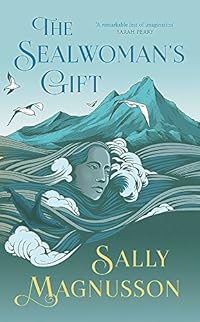
The Sealwoman’s Gift by Sally Magnusson

Two Roads, 2018, 368 p, plus i p A Note about Icelandic, iv p List of Characters, i p Maps and i p Contents.

 The Sealwoman’s Gift  cover

The author is well-known (in Scotland) as a television newsreader and possibly more widely as a presenter of Songs of Praise. (Her father Magnus also made a career in television – he was the questioner on the original Mastermind – and translated various works from Icelandic to English; see The Fish Can Sing.) In this book Magnusson draws on her Icelandic heritage to tell the tale of a woman, Ásta Thorsteinsdóttir, caught up in a traumatic incident of Icelandic history, the abduction and enslavement of hundreds of Icelanders by Barbary corsairs in the mid-1600s.

The novel begins on the corsair ship taking the pregnant Ásta and the rest of her kidnapped family to Algiers. Despite her pregnancy, her defiance – in contrast to the more accommodating attitude of her husband Ólafur, a priest in the staunch Icelandic Protestant mould but who wishes to converse with his captors – fatefully takes the eye of the ship’s captain, Wahid Fleming, a man of Dutch origin. On board, and just before she gives birth she receives a cryptic piece of advice, the gift of the title, from the dying Oddrún, who had long claimed to be a sealwoman who once took off her skin to bask in the midnight sun but found it stolen when it was time to return to the sea so had to make a life for herself as an Icelander.

In Algiers Fleming sells Ásta and her family to Ali Pitterling Cilleby, with the suggestion of petitioning the King of Denmark (Iceland’s ruler at the time) for their ransom. Cilleby’s wife had hoped for a seamstress, in which regard Ásta is a disappointment. Cilleby sends Ólafur on the long journey to Copenhagen with the ransom demand, which the King refuses. Once back on Iceland, Ólafur, with the local bishop’s encouragement, sets about raising the money by community effort, via the selling of knitted socks etc.

The Icelanders in Algiers make their own accommodations with their new life. Some convert to Islam in order to make their way, others remain true to their own traditions. Even as she realises that this society, with its sights, sounds, smells, opulence and food abundance so in contrast to the harsh realities of life in Iceland, is in many ways much more civilised than her own, Ásta is anguished when her daughter, brought up among the strange foreign customs, becomes more at home with them than with her mother’s.

The ransom not forthcoming, Cilleby’s attention falls on Ásta. Inviting her to his chamber one night, he is astounded by her refusal to lie with him, which by the laws of his state he may. Her understanding, she tells him, was that she was not bought as a concubine. Moreover, she is married so cannot take another man for herself. This clash of customs and the building of the relationship between them forms the majority of the book’s largest section. Cilleby’s interest in her becomes intellectual as well as sexual as she relates the details of Icelandic sagas, in which he manages to find material to contradict her abomination of slavery. It is here that the book explicitly riffs on the tales of the Thousand and One Nights (not that Ásta is in any danger of execution, as Scheherazade was.) Yet there cannot be a meeting of minds. Both are too steeped in their respective values.

Via a Dutch intermediary, the ransom eventually arrives – for all the Icelanders, not all of whom wish to return. Cilleby offers Ásta the choice, he will turn down the money if she wishes to stay. Though torn between her children and her husband, duty wins out. Ásta’s equally long return to Iceland, via Denmark, allows Magnusson to explore other instances of human frailty and the conflict between religion and emotion. Back in Iceland Ásta fails to recognise the old man her husband has become and has to come to terms with how her experiences have changed her.

This novel is many-layered; it is among other things a story about stories, about love and loss, the ties that bind, and the barriers between cultures. Magnusson’s writing is assured and even her minor characters have depth. This novel is very good indeed.

Pedant’s corner:- span (x 2, spun,) focussed (focused,) maws (x 2, a maw is a stomach, not a mouth,) smoothes (smooths.)

The Saltire Scottish Book of the Year Award

This award is supported by Creative Scotland.

This year’s winner and the Saltire Scottish Fiction Book of the Year surprised me.

It was The Book of Strange New Things by Michel Faber (whose name Sally Magnusson on Reporting Scotland pronounced as Michael. Is that how he does so?)

My review of it is here.

free hit counter script