Straw in the Wind by James Wilson
Posted in Reading Reviewed, Scottish Fiction, Scottish Literature at 12:00 on 28 October 2020
Hutchinson, 1960, 205 p
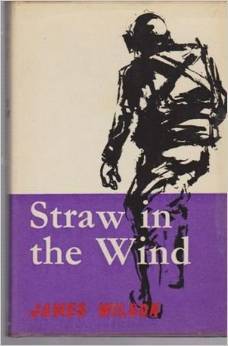
John Gavin was just too late to be involved in the Great War. He has nevertheless managed to learn to fly and after a period barnstorming in the US takes up a post in South America in a nascent air postal service. This book is very good indeed on the practicalities of early aviation, but especially its drawbacks. The rigours and contingencies of operating such a service in a potentially unstable country are also a major consideration. It is James’s relationships with his employer, the locals, his fellow pilots and their wives, which provide much of the substance here though. The characters, even those met briefly, ring true to life.
There are said to be only seven plots in literature. It would not be too much of a spoiler to say that the one deployed here is, “the getting of wisdom.” There is an element too of the Scottish novel’s penchant to lament time past, the something lost, as Gavin realises that the (not quite) carefree ‘knights of the air’ era is coming to an end. “For me, the biplane was part of the dream. It belonged with the free-roaming life of the barnstormer, and, when it went, that free, vagabond life went with it,” and later, “I had taken part in the end of an era, and in that I felt privileged as a man would feel privileged to have sailed in the last of the windjammers. But there was no going back. The freebooting days were gone for ever.”
There is too a recognition, in the form of a missionary storekeeper named Meikle, that the indigenous peoples will not be well-served by civilisation being brought to them.
Wilson could certainly write. I reviewed his Interrupted Journey here. It is a pity that he only ever published two novels. I would like to have read more.
Pedant’s corner:- Guinivere (Guinevere,) a missing quotation mark at the end of a piece of direct speech (x 2.)

