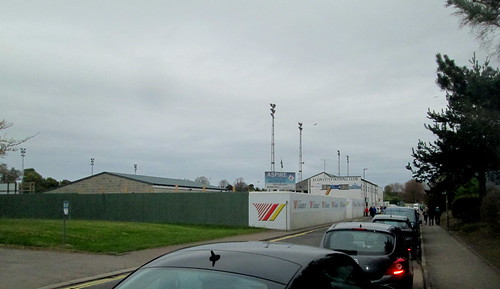
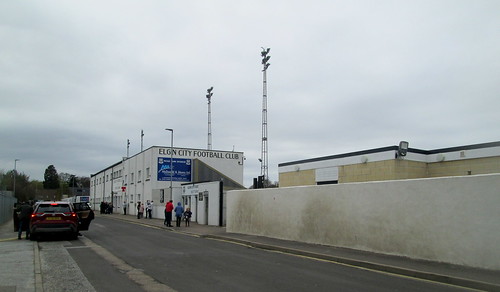
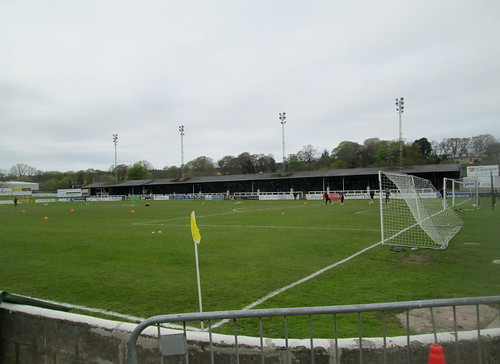
Scotland’s Football Grounds in the Black and White Era, D C Thomson Media, 2018, 257 p. With a foreword by Chick Young.
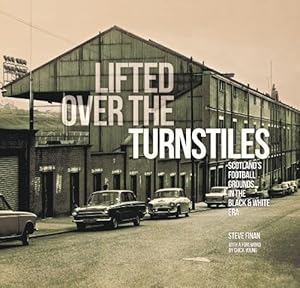
Annfield, Bayview, Boghead, Brockville, Broomfield, Cathkin Park, Douglas Park, Firs Park, Love Street, Muirton, New Kilbowie, Shawfield, Telford Street, Kingsmills. Names to conjure with – and all gone to dust (or housing, or supermarkets.)
To Scottish football fans of a certain age (which I am) this book is a magnificent nostalgia fest. It features 41 of the historic grounds of the present day SPFL football clubs, plus two more, Shielfield (at time of publishing Berwick Rangers were still in the SPFL,) and Firs Park. The only ones missing are Peterhead’s former ground at Recreation Park and Annan Athletic’s Galabank. The criterion for inclusion in the book was that a photograph had not been widely published before or else illustrated some quirk of the ground concerned. (I was somewhat disappointed that only one photo of Boghead, former home of the mighty Sons of the Rock, appears; but I have my own memories to savour.) And of course for Inverness Caledonian Thistle you get two former grounds, Telford Street and Kingsmills. In the course of following the Sons I have visited most of the stadia here in their heydays, excepting only those belonging to the ex-Highland League clubs (though I have walked past Telford Street Park several times and even been to Clachnacuddin’s Grant Street Park in Inverness for a game – a pre-season friendly they played against East Fife; in 1976, while I was in the town.) I have frequented many over the years since.
The book is a delightful celebration of the history of the beautiful game in Scotland – and also a memorial to what has been lost. Cathkin apart, all of the grounds on the list above have been replaced by bright(ish) new(ish) stadia but most of those have yet to invoke the glories of these now mouldered (Cathkin again) or vanished (most of the rest) temples to Scotland’s abiding sporting obsession. With only one exception, Hampden, the book tends not to delve as far back as pre-World War 2, hence the absence of even longer gone grounds such as the Gymnasium, home to St Bernard’s FC, of which photographs would in any case be vanishingly scarce.
There is a 1930s, Art Decoish-looking, building in the pictures of Shawfield that I don’t remember from my only visit there and which I assume was demolished years ago. My favourite old ground, Firs Park, is shown in the days before that huge concrete wall was erected at one end to stop the ball going on to the access road to the retail park beside the ground; before, even, the office building that overlooked that end of the park in the 1970s. That other redolent relic, Cliftonhill, is shown lying in a natural bowl perfect for siting a football stadium.
The text is studded with various titbits of arcane information. Glasgow had at one time three of the biggest football grounds in the world in Hampden, Celtic Park and Ibrox. And there were plans to extend Shawfield’s capacity to add to that list of superstadia. The world’s first penalty kick was awarded against Airdrieonians (away at Royal Albert in a charity Cup match) and was scored by a James McLuggage. (Not from a penalty spot, that had yet to be invented; from any point along a line twelve yards from goal.) A WW2 pillbox was constructed at Borough Briggs with slit windows/gun ports all round (those sly Germans could after all have attacked from any direction) and remained in place till Elgin City joined the SFL in 2000. It was Ochilview which hosted the first ever floodlit match in Scotland. Falkirk once held the world record for the highest transfer fee and Brockville was the venue for the first televised floodlit game. Rugby Park used to be ‘mown’ by a resident sheep – three in total over the years. Hampden’s square goal posts now reside in St Etienne’s museum as they were held by that club to be responsible for their defeat at the hands of Bayern Munich in the European Cup Final of 1976 since two of their team’s efforts rebounded out from the goal frame instead of scraping over the line. Les poteaux carres is still used as a phrase for bad luck in the city.
Attending football matches is no longer as economical as it was back in the day. One photo shows a 20p entrance fee at Firhill in 1970. After inflation that 20p would equate to £3 in 2018. Try getting into even a non-league ground for that now! Some things definitely were better in the good old days.
Pedant’s corner:- “the current club were established” (was established,) “the club were on the up” (the club was) sprung (sprang, x2.)