Territory of Light by Yūko Tsushima
Posted in Other fiction, Reading Reviewed at 12:00 on 11 April 2026
Penguin, 2019, 126 p. Translated from the Japanese 光の領分 (Hikari no ryōbun,) by Geraldine Harcourt. First published in 1978-1979 as a series in the literary monthly Gunzō.
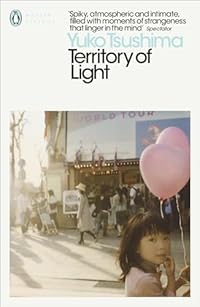
The book outlines in first person narration the life of an unnamed woman recently separated from her husband, Fujino, in the year following his leaving. They have a two-year-old daughter, also unnamed, who begins to react badly to her new life after mother and daughter move into an apartment on the fourth floor of a building which has mostly offices below. Its large windows flood the interior with light, hence the book’s title.
Over the course of the year we see the daughter’s behaviour deteriorate; she throws objects out of the window onto a roof below and gets into trouble at her daycare centre.
This is paralleled by her mother’s increasingly difficulty to cope with her life, turning up late for her job in a library, having a one-night stand with the father of another child at daycare.
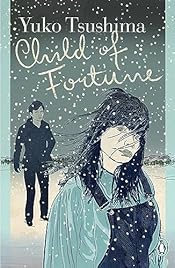
There are parallels here with the other of Tsushima’s novels I have read, Child of Fortune. whose protagonist is also separated from her husband (but in her case divorced.) The absence of Fujino, like that of Hatanaka in Child of Fortune, is core to the narrator’s sense of drift. This is an indictment of the men involved, though, not of the women they have left.
The book’s origins as a series of twelve monthly instalments in the magazine Gunzō (群像) lead to some repetitions in later chapters of information the reader already knows and which would have been unnecessary to include in a novel per se.
I note as an aside that the living space in Japanese dwellings is described in terms of how many tatami mats the rooms can accommodate.
Pedant’s corner:- a missing comma before a piece of direct speech embedded in a larger sentence (x 2,) a similar missing comma at the end of a piece of direct speech embedded in a larger sentence.