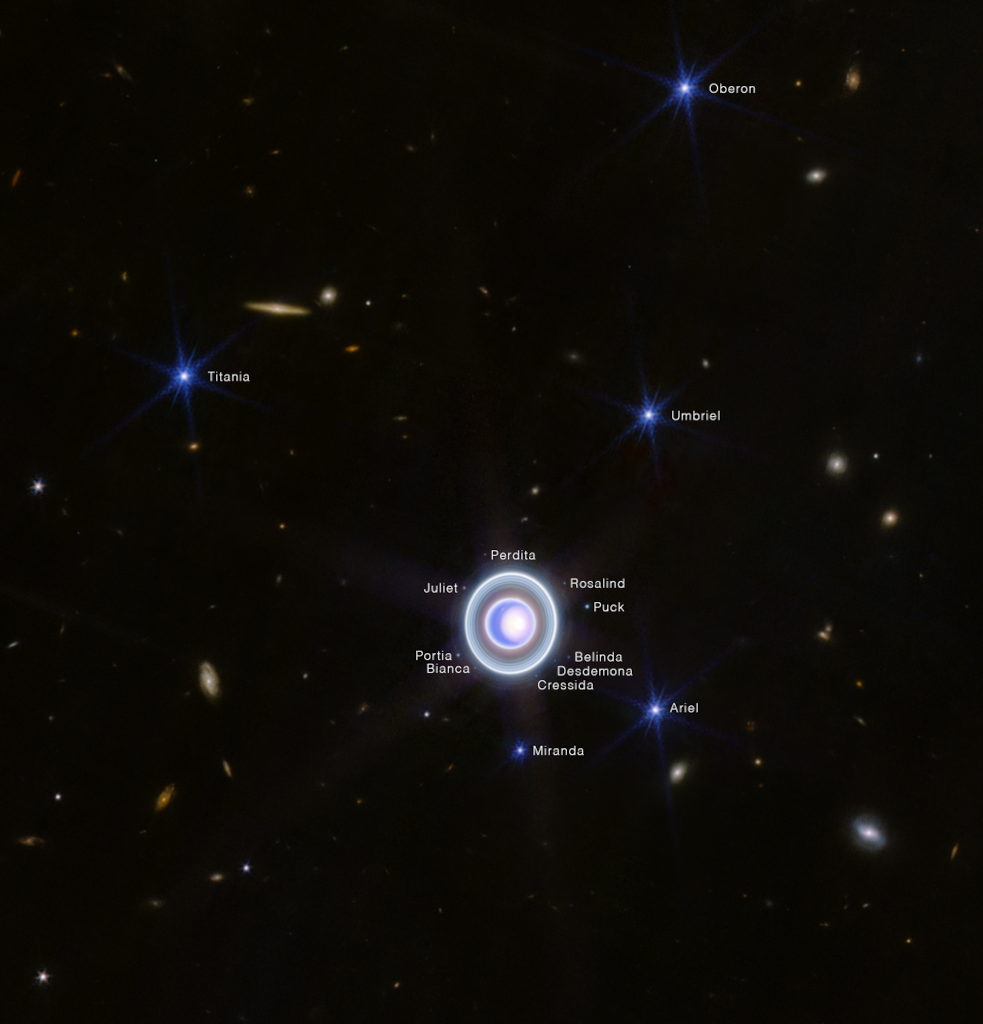
From Astronomy Picture of the Day for 29/12/23. This is an image of Uranus and some of its moons taken by the NIRCam (Near-Infrared Camera) on the James Webb Space Telescope. Uranus’s rings are also clearly visible. These moons are all named after characters in Shakespeare plays.
It never fails to astound me we can view such sharp images of faraway objects.
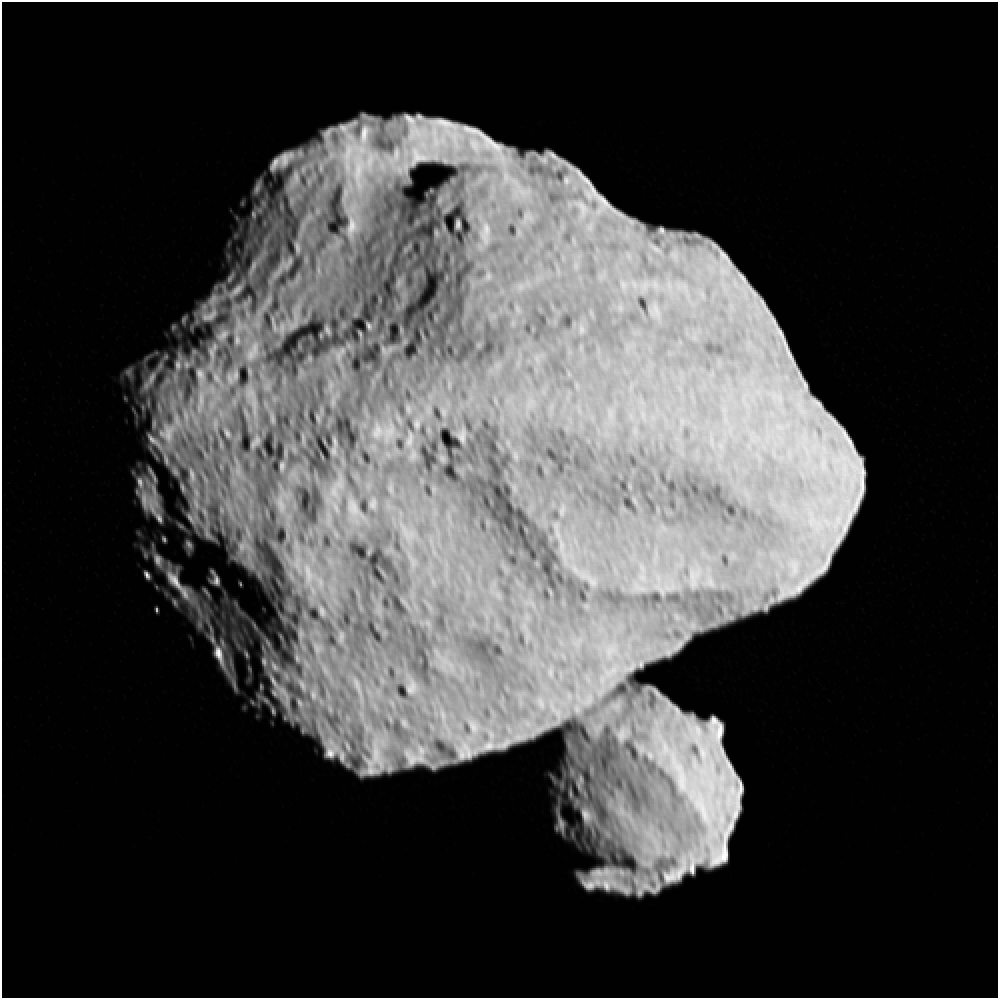
From Astronomy Picture of the Day for 4/11/23. This is an asteroid known as 152830 Dinkinesh. It’s only 800 or so metres wide. It was flown past by NASA’s Lucy spacecraft on 1/11/23 and the long range camera revealed that the asteroid has a moon. The moon is about a quarter the size of Dinkinesh.
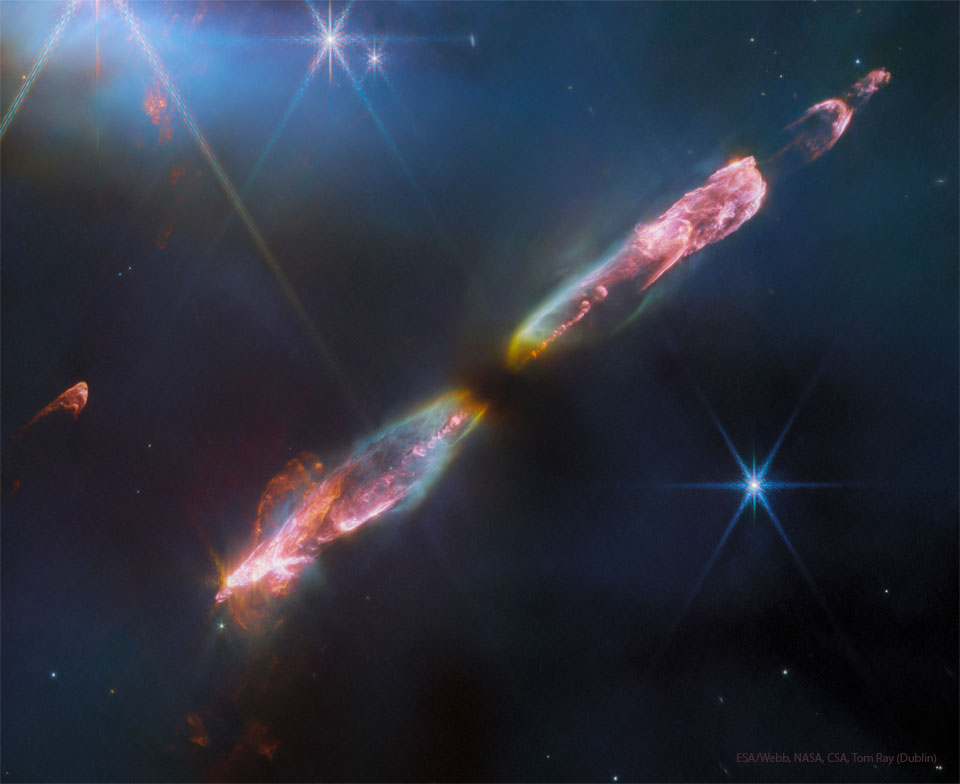
Herbig Haro objects are bright patches of luminosity found around stars which are in the process of forming or have recently formed. Whether all stars emit jets when they form is not known for sure.
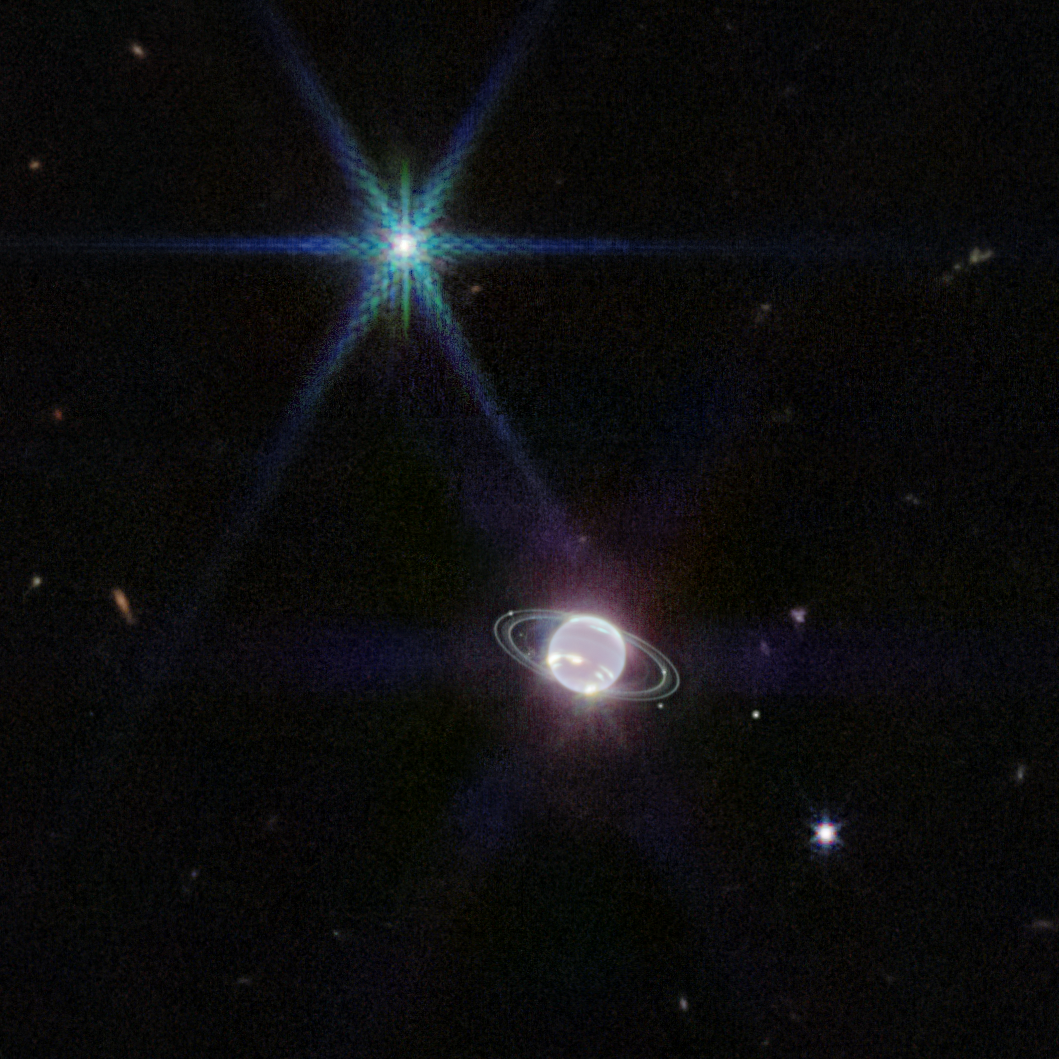
Does this somewhat eerie image, from Astronomy Picture of the Day for 19/8/23, depict Saturn and one of its moons? Or is it even from another solar system?
No. It is in fact the planet Neptune captured by the James Webb Telescope in infra-red light. Its largest moon, Triton, brighter than its primary in reflected sunlight, is at the top left showing the James Webb Telescope’s typical diffraction spikes.