Posted in Dunfermline, War Memorials at 12:00 on 10 June 2021
We quite often go into Dunfermline.
Late last October the town (Sorry, it’s a city now) was festooned with poppies in the run-up to Remembrance Day.
Carnegie Library, Abbot Street:-


Lower High Street:-

Carnegie Drive:-


On main roundabout

Appin Crescent:-

None of the last tfour photographs was taken by the driver!
No Comments »
Posted in Architecture, Bridges, Dunfermline, History at 20:30 on 5 January 2021
It’s mostly the Queensferry Crossing, not the two older bridges, you can see in this photo. (The white sail-shaped objects in the distance are the bridge’s cable stays.)

Looking the other way from the garden area there is a view of and Dunfermline Abbey and, to the left, the remains of Dunfermline Palace:-

Dunfermline Palace:-

No Comments »
Posted in Architecture, Dunfermline, Kirkcaldy at 12:00 on 5 August 2018
The Carnegie Library in Dunfermline was undergoing refurbishment for a long while. It reopened last year with exhibition and museum spaces alongside the library files. At least they didn’t get rid of the old library bookshelves in the way that happened at the main Kircaldy Library when it was refurbished a few yaers ago.
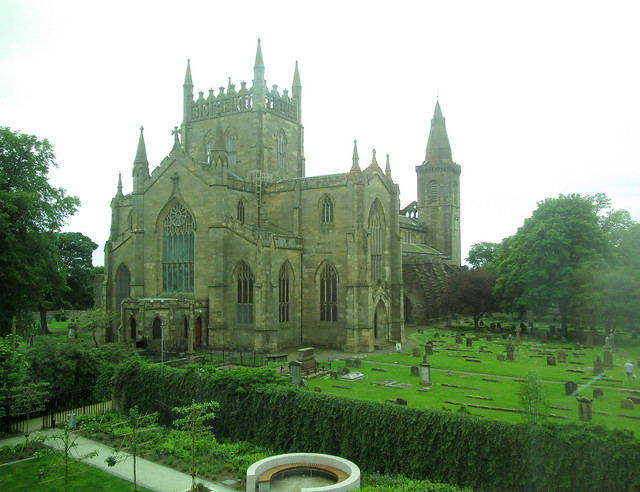
From one of the upper exhibition spaces at the new Carnegie there is a great view of Dunfermline Abbey (through glass.)
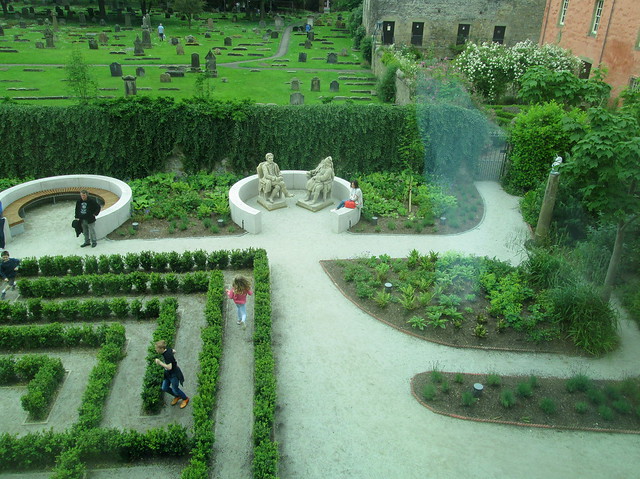
There is also a gardened area right beside the Carnegie Library with figures of Tam O’Shanter and Souter Johnnie in the circular seating space at centre here:-
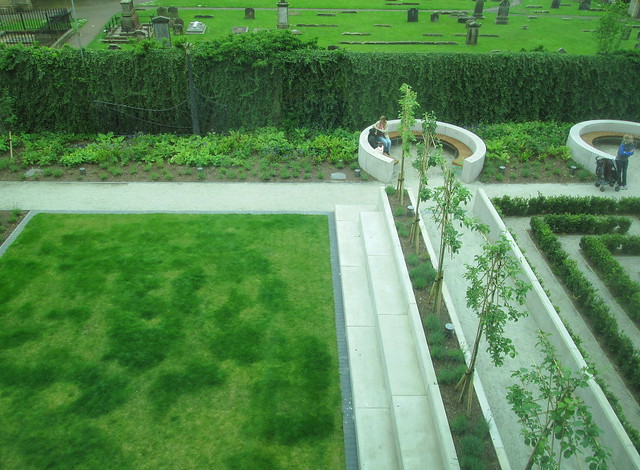
The box hedging gives way to a grassed area with intervening espaliered trees:-
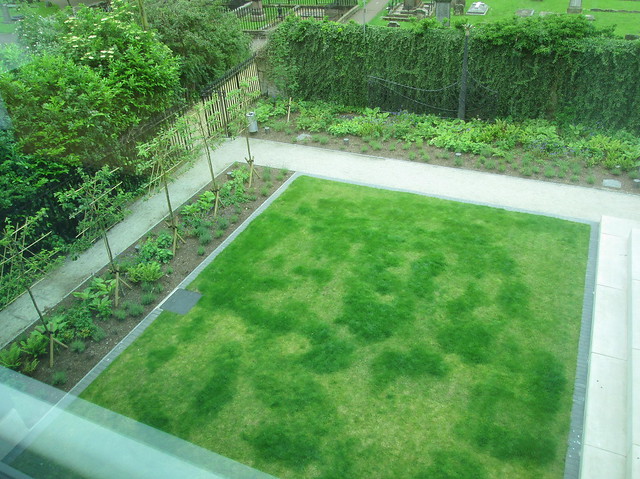
More espaliered trees finish the garden off:-
No Comments »
Posted in Architecture, Dundee, Dunfermline, Fife, Museums at 12:00 on 31 August 2016
19th century industrialist and steel magnate Andrew Carnegie was born in Dunfermline, Fife.
His birthplace is now a museum:-
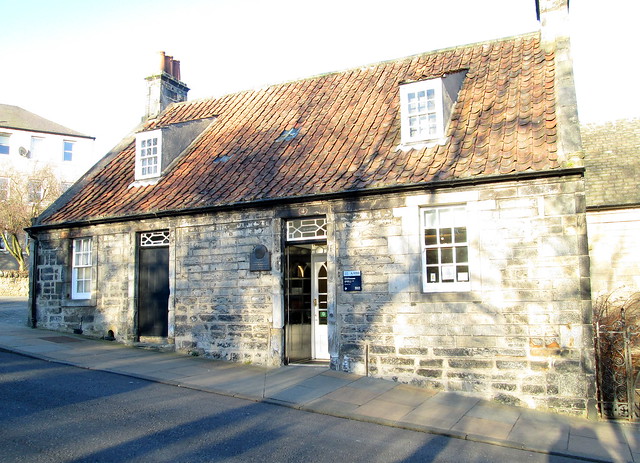
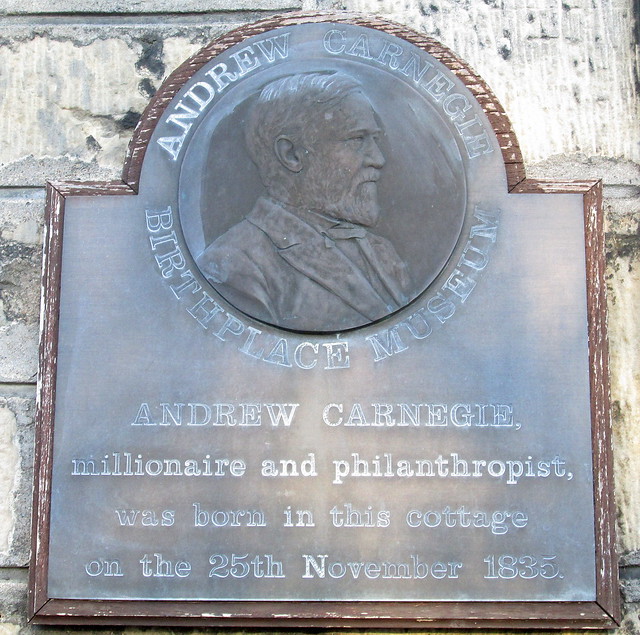
As the plaque on the cottage indicates, Carnegie became a noted philanthropist, endowing Dunfermline with a swinmming pool and over 3,000 towns worldwide with libraries. One of these was Dunfermline Library whose later extension I posted about yesterday.
In the museum I came across a drawing of another of these, Coldside Library in Dundee, and recognised it immediately:-
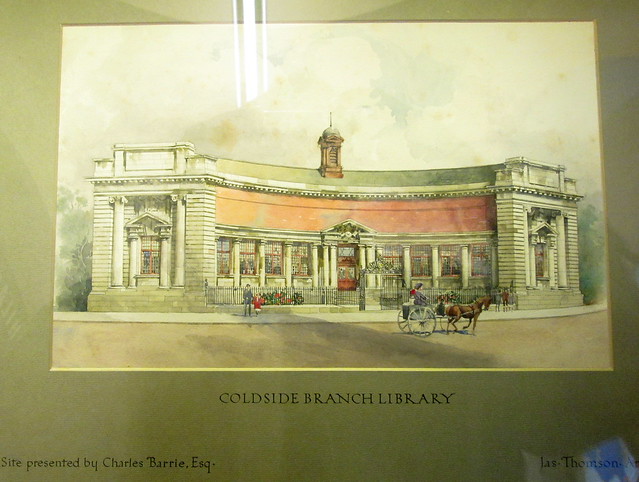
I have previously mentioned this fine building but at the time did not know it had anything to do with Carnegie, nor indeed its name.
No Comments »
Posted in Art Deco, Dunfermline at 12:00 on 30 August 2016
The library is at the moment being refurbished. Its entrance is on Maygate but this view is of the St Margaret Street aspect:-

Detail:-

From south:-

No Comments »
Posted in Bridges, Dunfermline, War Memorials at 12:00 on 29 August 2016
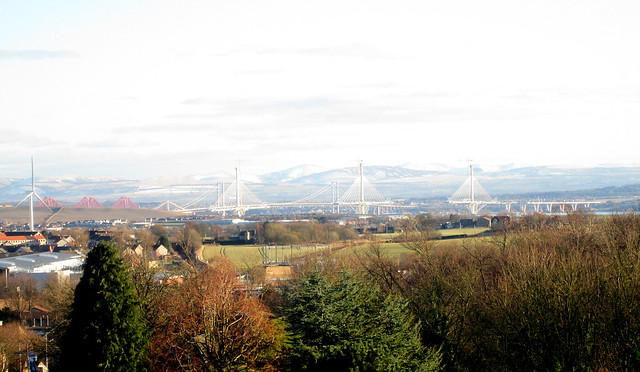
All three bridges as seen from Dunfermline:-
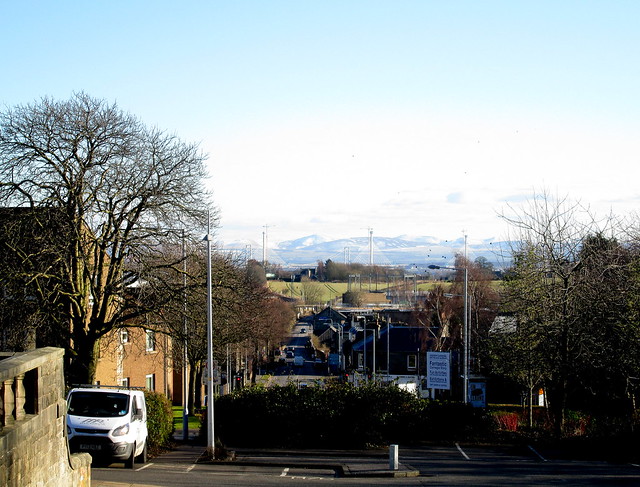
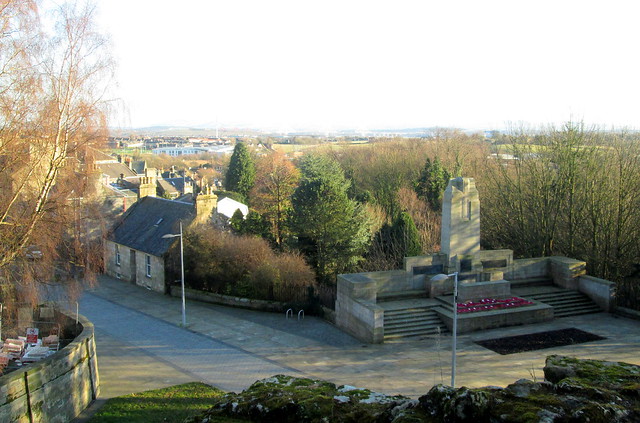
From grounds of Dunfermline Abbey, bridges in distance on middle left, Dunfermline Great War Memorial to right:-
Zoom on Forth bridges from Dunfermline Abbey:-
No Comments »
Posted in Art Deco, Dunfermline at 12:00 on 23 May 2016
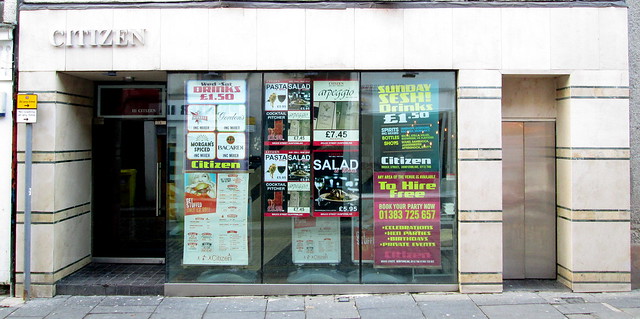
This is in the upper part of Bruce Street. The deco is mainly the “marble” cladding but there’s a kind of “rule of three” in the detailing lines:-
In the lower part of Bruce Street opposite Dunfermline Abbey lies Life. Both photos taken from the Abbey grounds:-

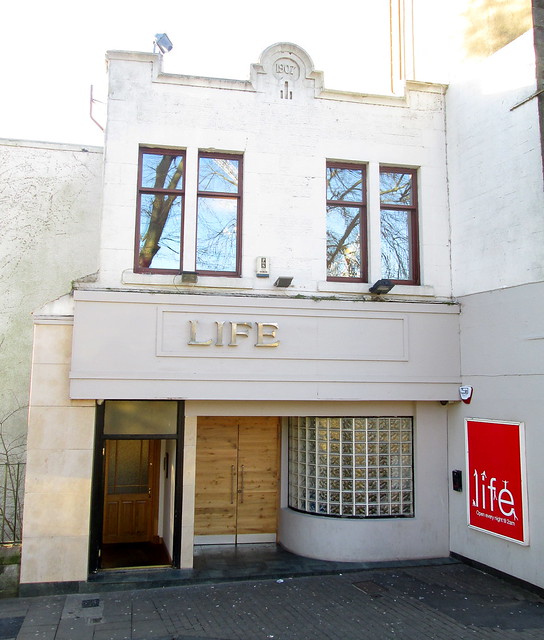
The cartouche says 1907 but that curved window wall and the glass bricks are deco features.
No Comments »
Posted in Architecture, Art Deco, Dunfermline at 20:00 on 14 April 2016
Giacomo’s is a café/baker’s shop in Cross Wynd. As the street name suggests it is rather a narrow thoroughfare. That made it very difficult to get a photograph. In addition these were taken in the depths of winter as light was fading. It’s the rounded bay and the windows which are the most deco features but the glazing is not original.
From the lower part of Cross Wynd:-

From the upper part of Cross Wynd:-

No Comments »
Posted in Art Deco, Dunfermline at 12:00 on 15 March 2016
This building is at the junction of St Margaret Street and Buchanan Street. Its roofline and decoration around and above the door mark its deco influences.
The first photo is from May 2010:-
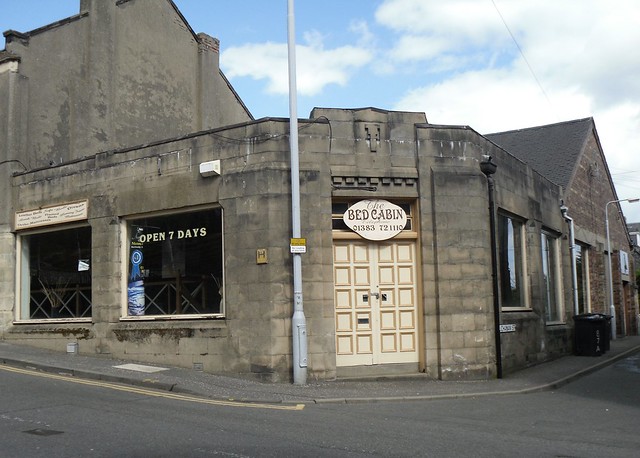
Sadly the shop is now empty and forlorn looking. This is from a week or so ago:-

No Comments »
Posted in Dunfermline, History at 12:00 on 3 June 2015
Dunfermline Abbey Church contains the tomb of King Robert 1 of Scotland (the Bruce.)
From North. The section on the left is relatively modern (1821.) That on the right is ancient.

From Southeast. Ancient part to the left here, modern to the right:-

The square tower has “King Robert The Bruce” picked out in stone on the balustrade:-


The Abbey Church contains some beautiful stained glass.
North Window:-
South Window:-
East Window:-
The interior decoration is splendid too. Archways and borders. Coats of arms on borders, sculpted faces on arch intersections:-

Part-vaulted ceiling under Square Tower:-

No Comments »
