Archives » 2010 » October

It’s That Time Of Year Again

Well congratulations!

That’s the first time I ever recall my first poppy sighting of the year not to be on the chest of a politician.

I caught one of Manchester City’s board wearing one while watching the Lech Poznan game on Thurday night.

Normal service was resumed on Friday when Tory MPs were sporting them in the House of Commons.

Saturday lunchtime and the Football Focus boys were also bedecked – even the behind the scenes ones supposedly preparing for Final Score. The BBC enforcers were obviously on the ball.

Every single one of these poppies was the kind with the green leaf. I.e. the ones us mere mortals of the public can no longer obtain.

It’s at least three weeks to Armistice Day. I can’t help feeling that such ostentatious display is more than a little unseemly.

Friday On My Mind 29: Pictures Of Matchstick Men

Full blown psychedelia from Status Quo?

Well, yes.

For this was how they announced themselves to the world in 1968. As apparently fully paid up members of the flower power tendency – complete with (short) styled hair, kaftan type jackets and phasing. And not a three chord boogie in sight – or sound.

They might have had more success initially if the follow-up single hadn’t been almost a carbon copy of Matchstick Men and so cheerily titled, Black Veils Of Melancholy. However that might have led to them breaking up and disappearing.

Another hit did come with the still psychedelia tinged Ice In The Sun later the same year (and a minor one with the more ballad-like Are You Growing Tired Of My Love? a few months on.)

It wasn’t till they covered (fruitlessly) the Everly Brothers hit The Price Of Love that they hit on the style they become known and loved/reviled for. Down The Dustpipe (1970) continued to show their inclinations but it was Paper Plane (1971) and Caroline (1973) that cemented them.

Status Quo: Pictures Of Matchstick Men

Anyone For A Double Dip?

The most alarming thing to me about George Osborne’s Spending Review yesterday was the figure given for direct job losses. It was 490,000; nearly half a million. There were also suggestions that indirect job losses in the private sector would match this in scale.

Nearly one million people extra out of work. Think about that for a minute.

Even if we take the smaller number that means, yes, half a million people not being paid by the government. But if there are no private sector jobs for them to move into (don’t forget the half million indirect job loses too, so there may be no slack there to be taken up) then they are going to be on the unemployment register – and being paid by the government.

Where exactly is the saving, then?

These newly unemployed people will also not be spending the amount of money they were when they were employed – if they spend any at all beyond food. This will inevitably affect private sector firms who will lose sales they might otherwise have had; thereby making the recession worse.

This savage cutting is surely a case of wearing a hair shirt for the sake of wearing a hair shirt. It is by no means inevitable.

I heard Mr Irresponsible saying that the Government didn’t want to make cuts; it had to make them. This is self evident nonsense. There was a choice to be made. And the cuts fall mainly on those on benefits; by definition those who can least bear them (and also those least to blame for the situation.) I don’t deny that some cuts are necessary but I dispute their rationale and decry their scale. Only lip service was paid to ensuring restitution from the real creators of the financial problem the Government has; the bankers. There was no black hole in the UK’s finances till their actions brought on the present situation, we had to bail them out, Government income plummeted due to the ensuing recession – and the bankers promptly carried on behaving exactly as before.

I thought one of the lessons of the 1930s depression was that you do not end one by cutting and cutting and cutting. You create employment by investing in infrastructure and the like. This injects money into the economy and the private sector starts to pick up.

Joseph Stiglitz says it better than I could.

And the dig at social housing was uncalled for. If there is a logjam in provision for social tenancies then the remedy is to build more houses for rent – at reasonable rental rates. (By the by, if local councils had been allowed to build more houses from the proceeds of Thatcher’s right-to-buy legislation there might not be a housing shortage now.) I noted too that they have already started to nibble at the BBC.

I well remember the Thatcher cuts and the devastation they wrought; from which many parts of the UK have still to recover.

This will be worse.

And it may not even get rid of the debt.

Powers by Ursula Le Guin

Orion, 2007. 391p

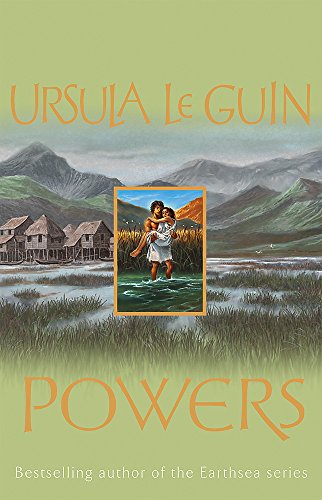
Powers cover

Powers is the third in the Annals Of The Western Shore, Le Guin’s latest story cycle for young adults. Gavir is a boy slave in the Household of Arcamand in the city of Etra. He and his sister are Marsh people stolen from their real home when they were very young. Gavir has visions of the future (the ability to remember things before they happen) but has to keep this talent secret as the city people don’t like those who have such powers.

Le Guin’s description of the relationships in the Household is masterful. The imbalance between the children of the house proper and the slaves is particularly well done. However there seems to be a default antiquity to the scenario – and pre-echoes of Le Guin’s Lavinia which I read recently but was published after Powers – which is perhaps a little too pat. (This could be a criticism of the Annals as a whole.) The inevitable tragedy occurs as Gav’s sister is killed and, in a daze after the burial, he wanders off and becomes a runaway. The remainder of the book is more or less a travelogue as Gav falls into one person’s orbit or another.

The various authorities (powers) with whom Gav comes in contact and in whom he trusts till he learns not to – The Father of Arcamand; Cuga, the hermit who first takes him in; Barna, leader of the runaway slave enclave Gav joins for a while; the elders of his Marsh people to whom he eventually returns – all have different flaws, faces to them which we can see but Gav doesn’t, till changed circumstances force his hand.

Gavir’s power is on the face of it a clever method of foreshadowing but is ultimately unsatisfying as it lessens tension. As a result, though others most certainly are, Gav himself never seems to be in jeopardy. Also, his ability as a seer is never really a focal point of the story, which does rather diminish the (ahem) power of the book’s title.

Not as convincing, then, as the previous instalments in the Annals Of The Western Shore, Gifts and Voices, but Powers is still a Le Guin and consequently a cut above the average.

Final aside. The book’s cover shows a figure, presumably Gavir, fording a river carrying a girl. When he finally does this in the story the girl is actually disguised as a boy.

Music For Another World

Last week I attended the Edinburgh launch for the new anthology Music For Another World.

Several authors including Writers’ Bloc‘s very own Gavin Inglis read extracts from their stories. All sounded excellent.

Highlight for me was Neil Williamson. This is the first time that I’ve witnessed an author accompany a reading on the piano.

After these extravaganzas we were treated to further musical performances by the Markee de Saw and Bert Finkle. Another first: witnessing a woman playing a saw in the flesh. (Or a man come to that. There were sometimes saw players on the TV when I was young but there have been none for a long time now I think.) The sound is weird and ethereal; a bit like a theremin but slightly less other worldly.

The Markee can sing well too.

Glasgow’s Art Deco Heritage 1. The University Chemistry Building

This was where I spent the better waking part of seven years of my life; four as an undergraduate (though there were only one lab per week and one lecture per day in 1st year; with an extra lecture and lab per week in 2nd) and three as a research student doing my Ph. D..

The building is in three main parts, oriented like three wheel spokes radiating out from a central hub. This is to reflect the fact that there were three main branches of Chemistry when it was built, Organic (chemistry of carbon compounds,) Inorganic (all other compounds,) and Physical (things to do with properties like melting point, boiling point, dipole moments, dielectric constants etc.)

There are two main entrances, situated between the central and the flanking blocks. This is one of them.

Here’s a close up on the above doorway so that you can see that officially it’s called The Institute Of Chemistry.

This is a (now disused I think) doorway on the end of a block.

This is part of one of the blocks.

Here’s a view from the rear of the building. As I recall the wooden bit at the top is a later addition.

Slightly to the left of this you can see up to the research labs.

Note the gas cylinders kept outside for safety reasons.

There’s a lovely curved end to the building’s frontage on University Avenue. This section is given over to medical research.

The railings separating this side of the building from University Avenue are nice too.

Editorial note:-
I have already featured the Glasgow buildings the Luma Factory, the Beresford Hotel, the Kelvin Court Flats and the Ascot Cinema under the title Scotland’s Art Deco Heritage since they are such iconic structures.

Edited to add an explanation of the designation, The University Chemistry Building:-
The venerable degree conferring institution which I attended titles itself The University, Glasgow. (When it was founded there was no other in the city, nor would there be for hundreds of years.)
Peterhead 1-0 Dumbarton

League goals against predictor:- 140

SFL Div 2, Balmoor Stadium, 16/10/10

League goals for predictor:- 16.

I was going to say back to dreading Saturdays, then. The thing is I wasn’t actually dreading today. There’s just an awful inevitability about the result. I was resigned to it even before I checked the score.

I feel it’s going to be a long time before things get any better. We’re likely going to draw some non-league – or even Junior – team in the Cup; and lose to them.

Ochilview next Saturday.

I suppose I’ll be there.

And it could be worse. At least I’m not a Dundee supporter.

Friday On My Mind 28: Something In The Air

This one kind of sums up that revolution that never happened thing.

While folk were singing songs like this the world went right on ignoring them. But it captured the aspiration.

Thunderclap Newman: Something In The Air

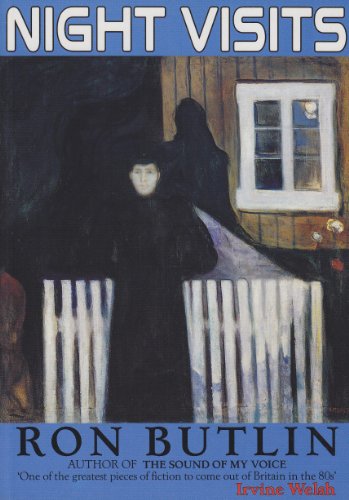
Night Visits by Ron Butlin

Scottish Cultural Press, 1997. 115p.

Night Visits cover

Ten year old Malcolm witnesses his father’s death at home in bed. His coping mechanism is to try to keep everything outside, so that there will be no pain. After the funeral he and his mother go to live with his Aunt Fiona who runs a care home for the elderly. Aunt Fiona is a disturbed, overbearing type, with strong religious convictions and a misunderstanding of children but also the urge to enter Mrs Goldfire’s room at night, where she tries in vain to restrain her wicked urges. Malcolm’s embroilment in this one-sided and slightly physically abusive relationship – Mrs Goldfire is asleep most of the time and incapable of much movement in any case – is intermingled with his and Aunt Fiona’s complicity in a mutual fascination, which acquires sexual overtones.

The narrative is multi stranded. The first two sections are strict third person, from an authorial perspective; thereafter narration is shared between Malcolm and Aunt Fiona. Malcolm’s passages are in the second person, a reflection of his estrangement from the world. Those from Aunt Fiona are in third. Butlin seems fond of second person narration; his earlier novel The Sound Of My Voice employed it throughout, though with the flow and ebb of Malcolm’s detachment it is not adhered to strictly here.

Night Visits is not as compelling as Butlin’s The Sound Of My Voice (see my review here) but is still an insightful study of obsession, loss and coming to terms with grief.

Scotland 2-3 Spain

Hampden Park, 12/10/10

Well this was much brighter. Two good goals and coming from behind to equalise. Against the World Champions* too. It just shows the benefits of having a go sometimes. Mind you I only watched the highlights show at 11.05.

The timidity of the (lack of) ambition in evidence against Lithuania and in the Czech Rep was shown up by this performance. We are capable of creating chances and of scoring them – even against the best. Okay it was at home and with a fierce vocal backing. But Spain are a much greater force than the two teams from whom we filched merely one point and who now have four and three respectively in our mini tournament to decide the upper lower (or lower upper if you prefer) placings in the group. Spain will win it overall, Liechtenstein will be bottom.

It’s all left us with too much to do.

*The official World Champions. Japan (!) are now the unofficial World Champions. That title has changed hands twice now since the World Cup.

free hit counter script