Archives » 2010 » May

The Last Station

It’€™s a long time since I’ve been to see a film. Partly this is because Kirkcaldy for some years now has no longer had a commercial cinema – the nearest one is on the outskirts of Dunfermline -€“ but also I have kind of lost interest in the medium.

However the local theatre (the Adam Smith) does put on films when it is not presenting stage productions -€“ December and January are particular deserts for this due to the annual pantomime – and I have attended there in the past.

Only about one film on their list has vaguely enthused me since I went to see Wall-E in Dunfermline – it was set in the 1930s and had David Tennant in it; I forget the title – and the one night it was on I was tired and it was raining so I gave it a miss.

However, the good lady perused the forthcoming attractions and thought The Last Station might be interesting. I was quite willing as I had read a short story a couple of years ago (sadly I can remember neither the title nor the author) which featured the peculiar circumstances of Leo Tolstoy’€™s death. We duly saw the film last night.

It tells the tale of Tolstoy’€™s last years through the viewpoint of a literary secretary, Valentin Bulgakov, played by James McAvoy, who is taken on by the head of the Tolstoyan Movement, Vladimir Chertkov (Paul Giamatti,) mainly to monitor Tolstoy‒s wife, the Countess Sonya, wonderfully played (as you would expect) by Helen Mirren.

The focus of the film is on the Countess’€™s struggle to prevent the royalties from Tolstoy‒s work being taken from the family and given to the Russian people (as Chertkov puts it) ie more or less to the Movement. As such the Countess’€™s motivation was easy to grasp, as was Chertkov’s – the classic hanger-on and leech to great celebrity. That of Tolstoy himself, though -€“ played by Christopher Plummer – was not at all well established and seemed unfathomable. The reasons for his actions remained wrapped in mystery – or in the mist that seemed to hang over Tolstoy’s estate of a morning.

Chertkov at one point stated to the Countess that —if I had a wife like you I’d blow my brains out: or go to America” (are the two equivalent?) but the relationship between Tolstoy and Sonya was still portrayed as affectionate. Certainly in the film the Countess’€™s stance was perfectly reasonable.

Bulgakov starts out as an ardent Tolstoyan, a movement whose tenets included pacifism and celibacy. We probably did not need the depiction of the relationship between Bulgakov and Masha, a schoolteacher in the Movement’s settlement at Telyatinki, hard by the Tolstoy estate – an affair whose trajectory is inevitable from our first glimpse of her – to underscore for us the shortcomings of the latter part of that philosophy.

The Movement came over as incipiently religious with Chertkov as a kind of St Paul figure in relation to Tolstoy’€™s Jesus.

A nice touch was the inclusion of real archive footage of the characters beside the end credits as they were running.

Despite any caveats above, I enjoyed it.
Lo! It Has Come To Pass

And guess what?

We have an unelected Prime Minister.

(Well, I didn’t vote for him.

Only 33,973 people actually did.)

There has been an extremely unpleasant sub-text to the criticism Gordon Brown has suffered ever since taking over at No 10 – and even before that. He has been subjected to torrents of intolerant abuse; mainly, perhaps, because he is Scottish. We shall need to see what the future holds but at least until England has some sort of constitutional arrangement similar to those holding in the rest of the UK it may be that no Scot nor Welshman may ever be PM again.

I thought nothing became Gordon Brown so much as his leave-taking of office which was dignified, restrained and a rebuke to those who have characterised him so badly, but did play a bit too much on sentimentality.

And so we have a coalition government. I can only hope that the Lib Dems will be able to restrain the excesses the Tories would undoubtedly have inflicted had they governed alone.

But this is what government should be like. It hasn’t done Germany any harm. With coalitions we would almost certainly have had neither the Iraq War nor the Poll Tax. I also don’t think electoral reform would be in the offing without it.

The posturing of some Labour MPs unwilling to countenance a deal with the Lib Dems or, still less, PR was purely for party advantage reasons. They reckon Labour would some day be back in power on its own and to hell with the country and the depredations a Tory government might inflict on it in the meantime. (A similar consideration applies to those Tories opposed, but in the reverse sense.)

P R – even the minimum requirement of the Alternative Vote – is still not here, though. I wouldn’t put it past the Tories to find some way of sabotaging the proposed referendum. There will still be Labour MPs voting against it too.

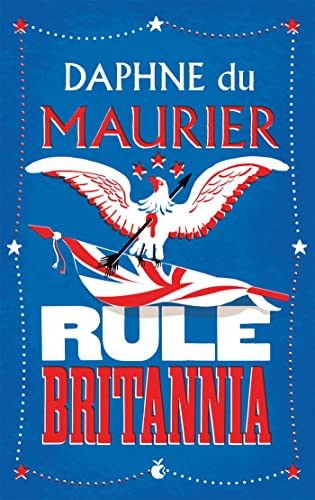
Rule Britannia by Daphne du Maurier

Virago, 2004. 322p

du Maurier is not my usual choice of reading matter but the good lady got this out of the library and I was intrigued by the premise.

Originally published in 1972, the novel perhaps illustrates du Maurier’s lingering resentment at the influx of US troops to Cornwall during WW2 and at the time of writing to the possible transformation of Cornwall into nothing but a theme park. The book extends this concern to Britain as a whole.

The UK has left the EU and is apparently bankrupt. Its inhabitants wake up one morning to no news on TV or radio and the presence of US troops on their streets. A union between the UK and the US (to be called USUK) has been arranged and imposed from on high. The book is concerned with the impact of all this on a strange mongrel household presided over by a determined matriarch, known as Mad.

du Maurier of course does not take this in the direction an SF writer would have done. Her focus is firmly on the locality – in and around a small town in Cornwall – though wider events are mentioned. Egged on by Mad, civil disobedience blooms and is presented as a trigger for the rest of the country to begin to resist the changes.

Despite the murder of a US serviceman, the destruction of a US warship and various other incidents there is a lightness of touch to the narration and as a result there is little sense of real jeopardy for the main characters, and a consequent failure to ensure the necessary suspension of disbelief.

Perhaps, though, the invaders of Iraq and Afghanistan might have benefited from reading this book as they may have gained more insight into how resentments at such takeovers are easily stirred, and not so easily calmed.

Will We Have A Team Next Year?

So. My premonitions about players leaving (or being pushed) has been fulfilled.

Big Mick has gone (why make a guy captain and then punt him at season’s end?)

Ross Clark has gone (one season after being player of the year.)

Stevie Murray has gone (okay he was a bit of a tanner ba’ merchant but I liked him.)

Denzil has gone (though that was inevitable when he was loaned out mid-season.)

Dr Jan has gone (no need now to complain about the BBC spelling his name wrongly every time he played.)

Roddy Hunter has gone (never got a sniff after Winters and Wyness arrived.)

Ross O’Donoghue has gone (he was too similar in style to Scott Chaplain and Ross Clark – and we all know who the manager preferred from that trio.)

David McEwan has gone (was he ever fit this season?)

I think only Alan Cook is actually signed but 13 players have been offered contracts.

If you were Ryan McStay and had been ignored most of the season (or kept on the bench like Del Boy) would you hang around?

Tramp The Dirt Down

As I write I have no idea how the talks between the Tories and the Lib Dems to form a “stable” government are going.

NIck Clegg is, though, treading dangerous ground. If he trades principle for a Cabinet seat and does not at the least get from the Tories a commitment to a referendum on a proportional voting system for Westminster elections and he subsequently actively props up a Mr Irresponsible premiership I suspect a large segment of the Lib Dem core vote will abandon them at the next election. Or before if any arrangement manages to last: there are elections to the Scottish Parliament next year, plus local elections.

Even with such an agreement many in Scotland may still do so.

BBC Scotland is tonight screening a programme titled Why Didn’t Scots Vote Tory?

I know 17% of those who voted in Scotland did actually do that very thing but why devote a programme to the subject?

I can answer the question in one word.

Thatcher.

It is almost impossible to overestimate the size of the scar her administrations left on the Scottish political psyche. The swing to Labour in Scotland on Thursday is a reflection of the abhorrence with which Scots voters still regard the possibility of a Tory government inflicting such depredations on the country again. It is almost in the nature of a folk memory. Parents probably imbibe their children with it along with their mother’s (or their formula) milk.

Similar feelings pertain in large parts of the north of England too – witness Rochdale staying Labour despite Bigotgate and a credible Lib Dem challenge.

Symptomatic of this feeling was a caller to a BBC Scotland phone-in with Annabel Goldie (the Scottish Tory leader) who asked apropos of a putative state funeral for the so-called Iron Lady, “Does she have to be dead first?” It can be found on the BBC iPlayer. It’s about 33-35 minutes in.

Elvis Costello perhaps summed it up best. (Warning. He swears in the preamble.)

The West Wing, Series 3

2004

The first episode is a one-off – a September 11th memorial special dealing with terrorism. The intro at the beginning, where all our favourite characters give a little spiel in support of a September 11th charity, may have been fine at the time but now seems a bit mawkish.

During the special itself Sam Seaborne asserts that terrorism never works. I’m loth to mention this as I don’t want to gave encouragement to any mad, murdering so-and-sos out there; but in fact it has. Israel was established in the late 1940s following a campaign of bombings/shootings etc by the Stern Gang and the Irgun. I suspect this fact would not have suited the mind set of those writing the episode, though, as Israel was put forward as the exemplar of a society/country daily threatened by terrorism. In saying this I do not for a moment argue with the main thrust of this special – that terrorism is barbaric and pluralism is worth defending. In a later episode Toby Ziegler says, with regard to the Arab world, “They’ll like us when we win.” Notwithstanding my earlier sentence, I beg leave to doubt that.

The thrust of this series is on the ramifications of President Bartlet’s MS having been made public, the subsequent congressional hearings and the (re)election primaries. Our tame Republican from season 2 makes only token appearances; some new characters belong to a firm of spin doctors/campaign directors. As the series goes on, Rob Lowe, the actor playing Sam Seaborne, increasingly wears an air of perpetual puzzlement, like a faithful, trusting dog suddenly betrayed.

The caricature of an aristocrat they have as the UK ambassador to Washington refers to the country he represents as England. I would have thought no one in his position would make such a gaffe. Moreover even such a stereotype upper class Englishman would surely know that the malt whisky – and the island where it is produced – is not pronounced Iss-lay but rather Isle-a. (That may have been a double bluff if the writers knew but didn’t think their viewers would – or they could have been suggesting the ambasador thought the person he was speaking to was ignorant.) The US military chief (Fitz) also refers to the “British” and French armies at Agincourt – three hundred years too early for the word in quotes, I’m afraid – and says in a comment on international law and the presence or absence of war that those who laid down their arms in those times were well treated. Henry V ordered prisoners killed at that very battle! Okay it shocked his contemporaries and those on his side who were looking forward to the ransoms; but it did happen.

The series is clearly only an entertainment. I get no sense that this is anything like a real West Wing, whether Bush’s or Clinton’s (or Obama’s.) Everybody’s motives are too pure.

A United Kingdom?

After all that money spent, all the hoo-hah, all the ferment, all the hyped up blatherings of the TV news types – don’t they just love all this? I think they think it makes them important – all the discussion of change, it turns out that Scotland returned exactly the same balance of representation to the UK Parliament as it did five years ago.

It kind of makes you wonder why we bothered.

But of course what Scotland overwhelmingly voted for it didn’t get.*

Does that remind anybody of anything?

I noticed David Mundell (the only Tory MP in Scotland and so the only candidate for Secretary of State in a Tory minority government, God help us) claiming that since it was a UK election the Tories would have a mandate to rule Scotland.

I hope we hear nothing from him then about MPs for Scottish constituencies not being able to vote on matters that come before them that pertain only to England, as that would rather undermine his argument, would it not?

*Neither, of course, did England. (At least, not yet.)

Friday On My Mind 5: God Only Knows

I’ve always been a sucker for male voices singing in harmony. (I would draw the line, though, at ecclesiastical recordings.)

I know most people’s choice for Beach Boys track of the 60s would be Good Vibrations. It is a magnificent work but maybe it tries a little too hard. And it depends for a lot of its effect on the theremin. It’s also a bit hiccuppy. Not as much as Heroes And Villains admittedly but still, it doesn’t flow.

A schoolfriend of mine was a great Beach Boys fan and he swore by a very short song called Wake The World. As well as God Only Knows I also have a soft spot for Friends.

My mother used to complain that to sing God Only Knows wasn’t nice; yet to me, the song never seemed to be blasphemous. The reverse in fact.

My memory of hearing this for the first time was on the sea front at Largs but I may be confusing this with something else as my childhood visits to Largs were surely all before its release date.

I still feel there is something pure about this recording. The singing in the round at the fade out always gets to me.

The Beach Boys: God Only Knows

Cyberabad Days by Ian McDonald

Gollancz, 2009. 313p

Cyberabad Days

This is a collection of shorter pieces of varying length, companions to McDonald’s novel River Of Gods. Cyberabad Days extends the vision of a future India laid out in the novel into a bigger round, replete with water wars, IT wars, robots, virtual reality technology embedded in earpieces called hoeks, AIs (Indianised to aeais) and nano dust, not to mention cricket and soap opera. As in Brasyl, McDonald once again manages to dragoon football into his scenarios.

McDonald’s focus is always on the characters caught up in the events surrounding them, whether it be a woman who marries an aeai, The Djinn’s Wife, another who is destined to be the unwitting agent of final victory in an inter-family feud, The Dust Assassin, a child who is made a Dalai Lama-like goddess (and a pawn) but has that role taken from her and has to find her own way in the world, The Little Goddess, a man used as a surrogate by an aeai to further an affair, An Eligible Boy, a Western child whose life is lived in a compound and who loses his best friend – an Indian boy – after they venture outside together, Kyle Meets The River. Then there is Vishnu At The Cat Circus on which I commented here.

This is big, bold SF treating with issues of concern to the world but never losing sight of the need to tell a story and of the necessity of rounded characters. That it is set outwith the confines of the Western world view is doubly refreshing. The India McDonald has constructed here feels entirely believable – and exciting.

The Price Of Oil

I’ve not written anything so far about the huge oil leakage in the Gulf Of Mexico as it’s not really something you can do anything about except deplore it. It’s also far enough away from Britain as not to be a main news story in the middle of an election.

I would say, though, that this has been an accident waiting to happen. It was almost certain that with widespread offshore drilling a major ecological catastrophe would ensue.

I suppose since the industry doesn’t have a good safety record overall it could have happened to any oil company engaged in deep sea drilling. So it was partly bad luck it was one of BP’s rigs that exploded. But BP do seem to have made a decision to go specifically for oil growth and not diversify into other options.

So; is this the price we have to pay for oil? Are we too wedded to the lifestyle oil has helped to foster? (A lifestyle encouraged by governmental decisions which have downplayed public transport options and failed to invest in them or, in the case of the US, deliberately in the 1920s and 1930s built infrastructure that relied on the motor car as a means of getting about.)

Despite its myriad other uses the main thing we do with the stuff is simply to burn it away – which is really a criminal waste. But it is still the cheapest and easiest way to carry on modern life.

Yet oil, via the motor car, is probably the prime factor in the atomisation of people’s lives which has led to the erosion of the civil society I recall from my youth.

Is a disaster like this enough to turn our species away from the path of exploiting ever more remote sources of the thick, sticky black liquid?

The answer to that last one is likely to be. No.

free hit counter script